Buying paint is one of the most common home improvement tasks, yet most people buy too much or too little. The difference between running out mid-wall and having leftover paint sitting in your garage for years comes down to one number: coverage per gallon.
This guide breaks down exactly how much area one gallon of acrylic paint covers, how surface type changes the math, and how to calculate your exact needs for any project.
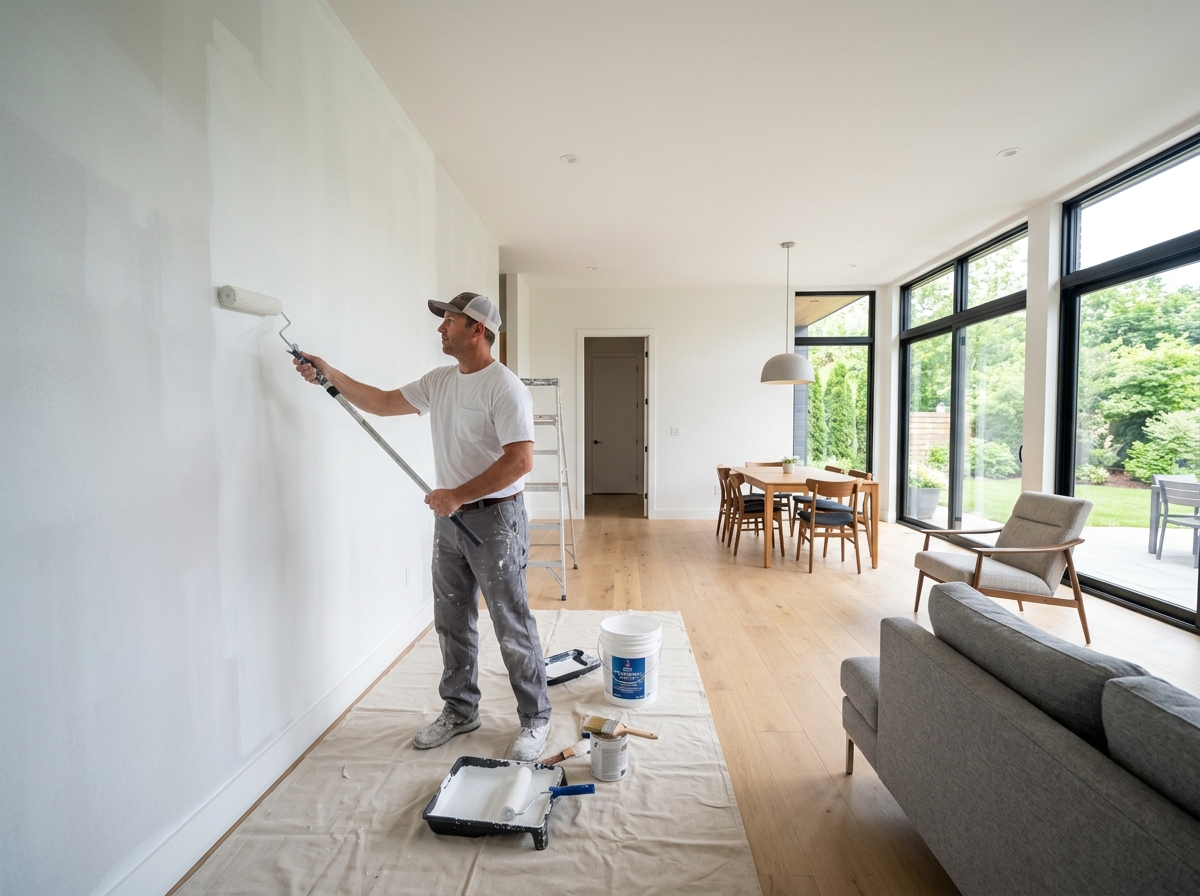
The Short Answer
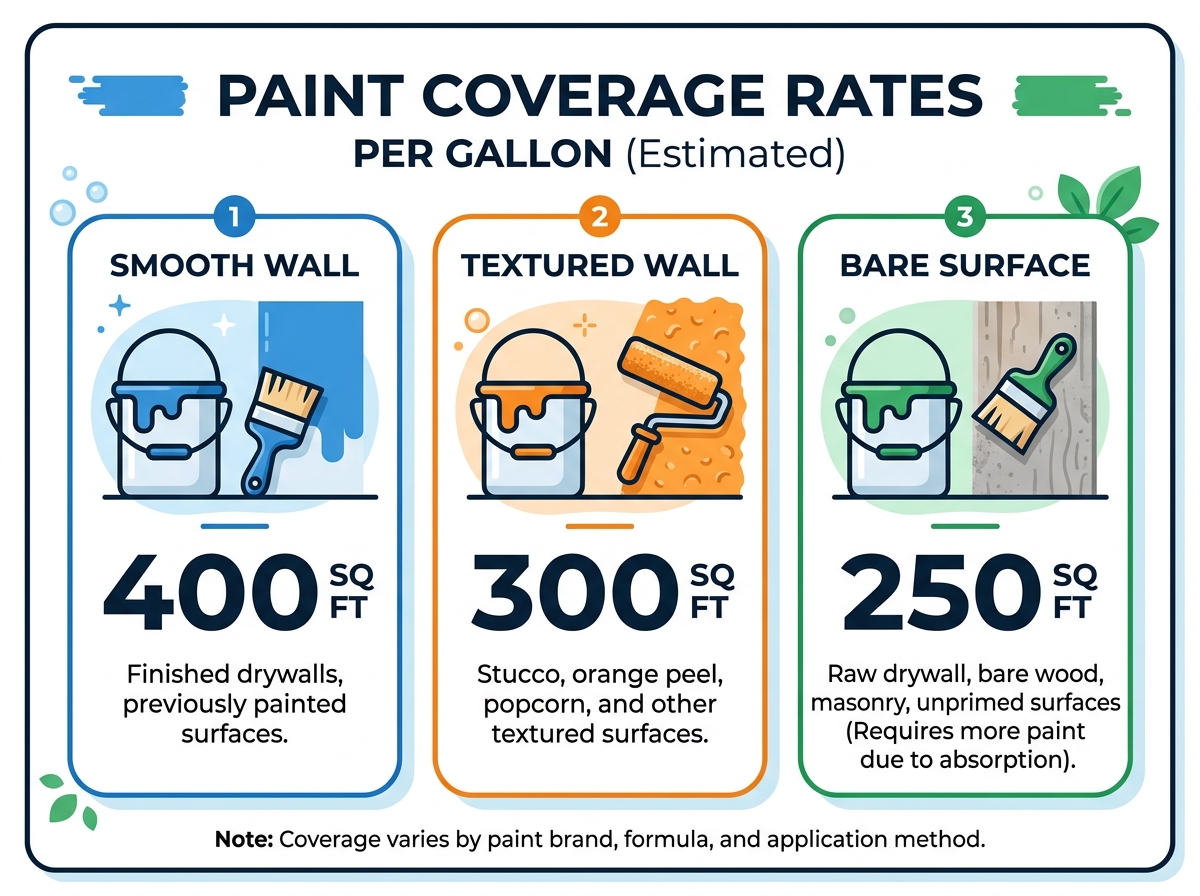
| Surface Type | Coverage per Gallon | Source |
|---|---|---|
| Smooth, primed drywall | 350 – 400 sq ft | Sherwin-Williams, Behr |
| Textured drywall | 300 – 350 sq ft | Lowes, PPG |
| Bare/porous surface | 250 – 300 sq ft | Behr, USG |
| Metal (with primer) | 300 – 350 sq ft | PaintAnswers |
| Concrete | 250 – 350 sq ft | Lowes |
| Exterior siding | 250 – 400 sq ft | Behr |
Use Our Free Acrylic Paint Coverage Calculator
Enter your surface area and number of coats — get exact gallons, quarts, and cost.
Acrylic Paint Coverage CalculatorWhat Affects Paint Coverage?
Coverage rates aren't just about the paint itself. Five major factors change how far a gallon stretches:
1. Surface Texture
This is the biggest variable. A smooth, sealed wall absorbs less paint than rough concrete or popcorn texture. Textured surfaces can reduce coverage by 25-50%. Always budget 300 sq ft per gallon for textured walls instead of 400.
2. Surface Porosity
Bare drywall, unpainted wood, and masonry are porous and absorb more paint. Priming first seals the surface and improves coverage by 20-30%. The primer itself uses about 300-400 sq ft per gallon.
3. Number of Coats
One coat is rarely enough. Two coats provide full color depth and even coverage. Dramatic color changes (light to dark or vice versa) may need three coats or a tinted primer. Always multiply your base calculation by the number of coats.
4. Paint Quality
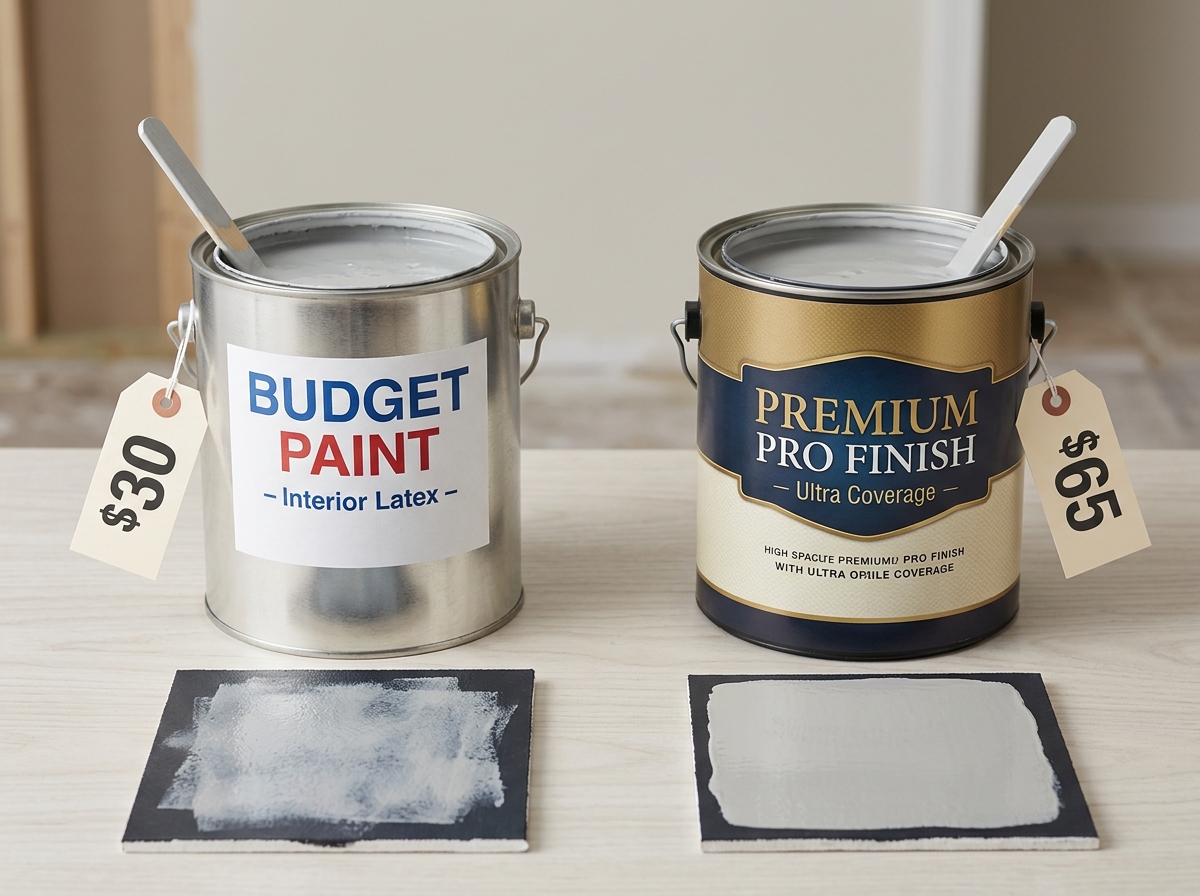
Premium paints ($55-$80/gallon) often cover 400-450 sq ft per gallon due to higher pigment concentration. Budget paints ($25-$35/gallon) may only cover 300-350 sq ft. You often save money with premium paint because you need fewer gallons.
5. Application Method
Brush and roller application wastes more paint than spraying. Spraying can reduce coverage by 10-20% due to overspray, but it's faster for large areas. Rolling is the most efficient method for interior walls.
How to Calculate Exactly How Much Paint You Need
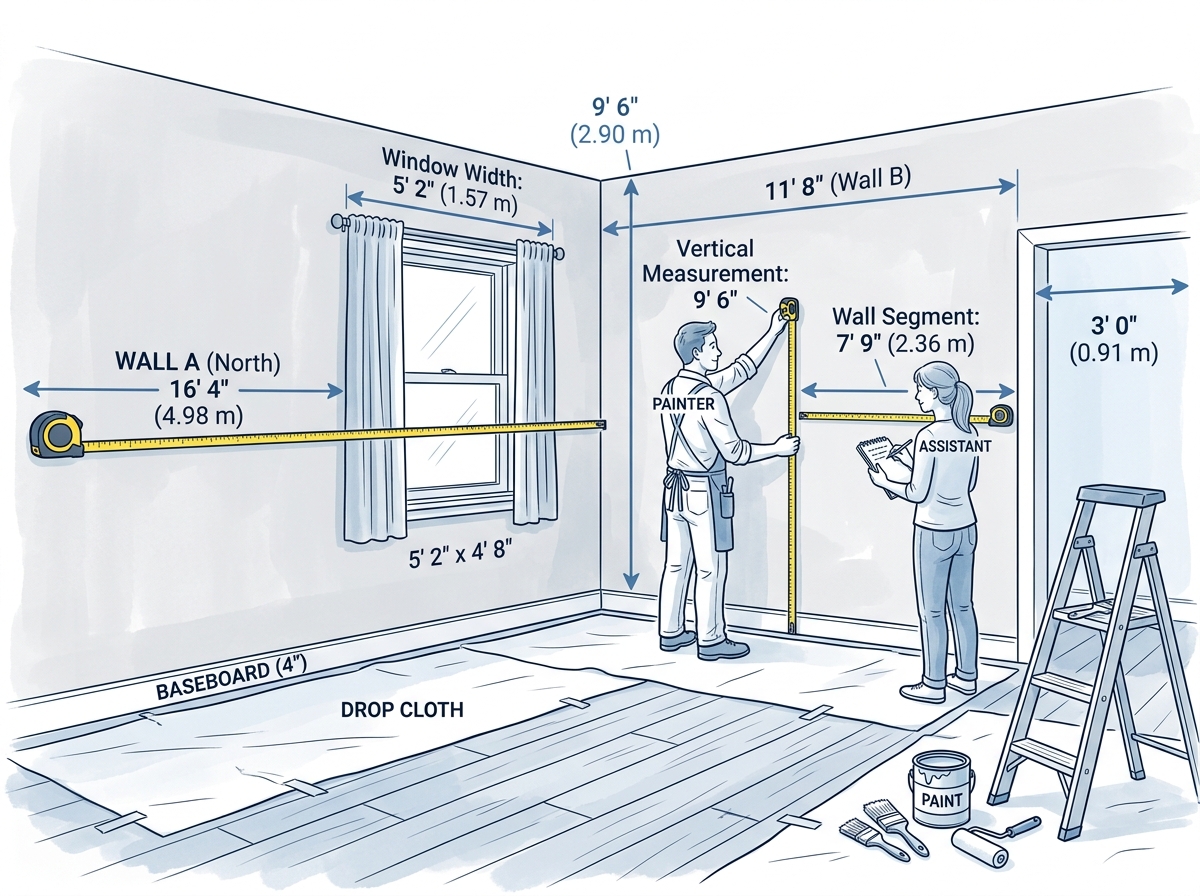
Add up the width of all walls and multiply by ceiling height. A 12x12 ft room with 8 ft ceilings: (12+12+12+12) x 8 = 384 sq ft.
Subtract 20 sq ft per door and 15 sq ft per window. Example: 384 - 20 (1 door) - 30 (2 windows) = 334 sq ft paintable area.
Divide paintable area by coverage per gallon. 334 sq ft / 350 sq ft/gal = 0.95 gallons for one coat.
0.95 x 2 coats = 1.9 gallons. Round up to 2 gallons.
Room Size Reference Chart
| Room Size | Ceiling | Wall Area | 2 Coats Needed |
|---|---|---|---|
| 8x8 ft | 8 ft | 256 sq ft | 1.5 gallons |
| 10x10 ft | 8 ft | 320 sq ft | 2 gallons |
| 12x12 ft | 8 ft | 384 sq ft | 2 gallons |
| 12x14 ft | 8 ft | 416 sq ft | 2.5 gallons |
| 14x16 ft | 9 ft | 540 sq ft | 3 gallons |
| 16x20 ft | 9 ft | 648 sq ft | 4 gallons |
These estimates assume 2 doors and 2 windows per room, 350 sq ft/gal coverage, and 2 coats. Adjust for your specific situation.
Cost Breakdown by Paint Tier
| Tier | Price/Gallon | Coverage | Cost per Sq Ft |
|---|---|---|---|
| Budget | $25 – $35 | 300 – 350 sq ft | $0.07 – $0.12 |
| Mid-Range | $35 – $55 | 350 – 400 sq ft | $0.09 – $0.16 |
| Premium | $55 – $80 | 400 – 450 sq ft | $0.12 – $0.20 |
What the data says: Premium paint costs more per gallon but often costs less per square foot because it covers more area and may require fewer coats. For a 400 sq ft room, budget paint at $30/gal needs 2 gallons ($60), while premium at $65/gal might only need 1.5 gallons ($97) but with better coverage and durability.
Common Mistakes
1. Not priming first. Bare surfaces absorb more paint. Primer costs $20-$40/gallon and covers 300-400 sq ft. It saves you from buying an extra gallon of finish paint.
2. Buying exactly what the calculator says. Always round up. Touch-ups, edge work, and uneven surfaces use more paint than pure math suggests.
3. Ignoring the label. Every paint can lists its specific coverage rate. Use that number, not the industry average.
4. Mixing sheens. Flat, eggshell, satin, and semi-gloss have different coverage rates. Flat typically covers best; high-gloss covers least.
Frequently Asked Questions
How much does one gallon of acrylic paint cover?
One gallon of acrylic paint covers 300-400 square feet for a single coat on smooth, primed surfaces. On textured or bare surfaces, coverage drops to 250-350 sq ft per gallon.
How many coats of acrylic paint do I need?
Most projects require 2 coats for full coverage and color depth. Primer counts as a separate coat. Dramatic color changes may need 3 coats or a tinted primer.
How much paint do I need for a 12x12 room?
A 12x12 ft room with 8 ft ceilings has about 384 sq ft of wall area. After deducting doors and windows, you need about 340 sq ft of paint. That requires approximately 1.7 gallons for 2 coats.
Does acrylic paint cover better than latex?
Acrylic and latex are often used interchangeably. True acrylic (100% acrylic) tends to have better adhesion and durability, but coverage rates are similar at 300-400 sq ft per gallon.
How much paint do I need for a ceiling?
Ceiling paint typically covers 350-400 sq ft per gallon. A 12x12 ft ceiling is 144 sq ft, requiring about 0.75 gallons for one coat. Most ceilings get one coat of flat white paint.
Data Sources
- Sherwin-Williams Paint Calculator
- Behr Paint Coverage Guide
- Lowes Paint Calculator
- PaintAnswers Coverage Guide (2025)
- Constructly Paint Calculator (2026)