You've heard the advice a thousand times: "Drink 8 glasses of water a day." But where did that number come from, and is it actually right for you? The truth is that your ideal water intake depends on your weight, activity level, climate, and overall health.
This guide breaks down what major health organizations actually recommend, how to calculate your personal water needs, and the signs that you're drinking too little or too much.
What Health Organizations Actually Recommend
| Organization | Women | Men | Notes |
|---|---|---|---|
| National Academies (NASEM) | 11.5 cups (2.7 L) | 15.5 cups (3.7 L) | Total water from all sources |
| Mayo Clinic | 11.5 cups (2.7 L) | 15.5 cups (3.7 L) | Includes ~20% from food |
| CDC | ~9 cups | ~13 cups | Based on U.S. Dietary Guidelines |
| U.S. Army | — | ~13 cups | Minimum for active soldiers |
Use Our Free Daily Water Intake Calculator
Enter your weight, activity level, and climate — get your personalized daily water needs.
Hydration CalculatorHow to Calculate Your Personal Water Needs
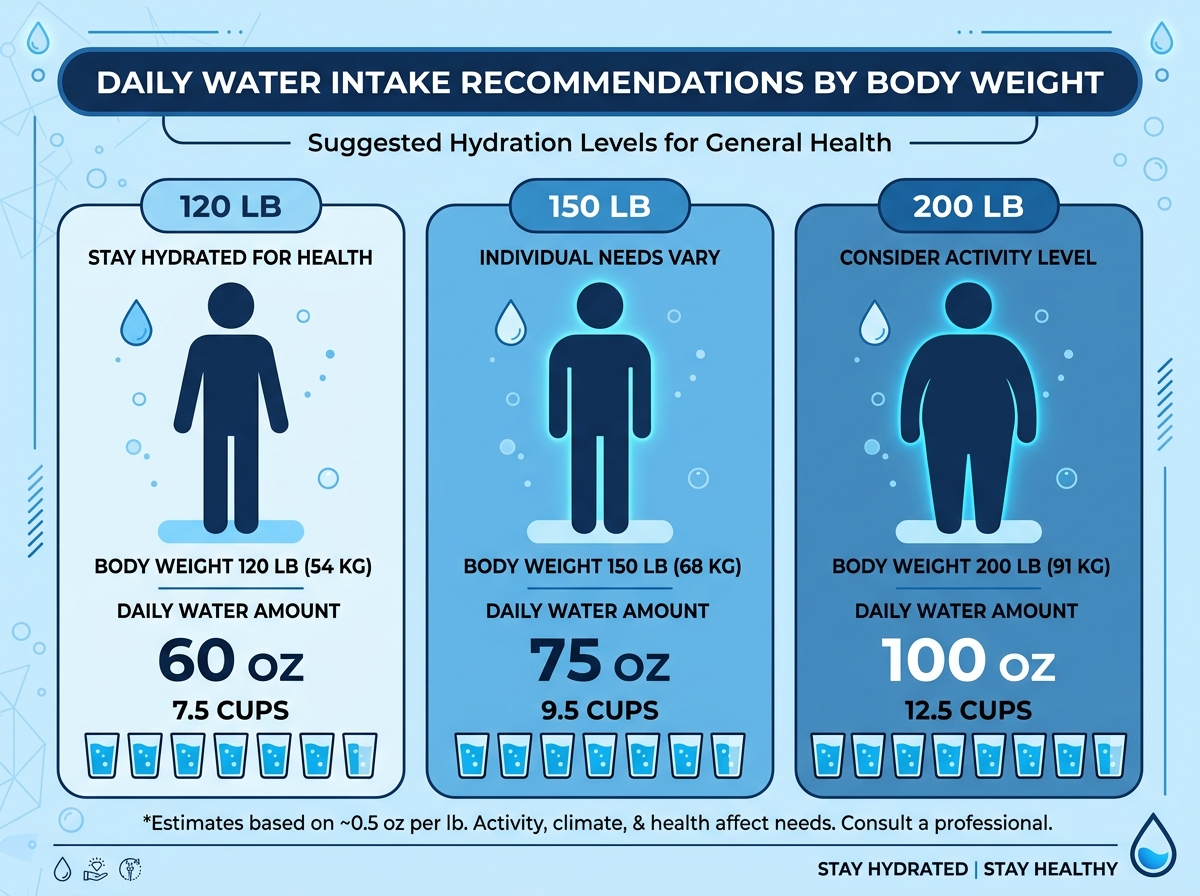
Your baseline need is about 0.5 ounces per pound of body weight. A 150 lb person needs ~75 oz (9.4 cups) as a starting point.
Light exercise (walking, yoga) adds 20%. Intense workouts add 30-50%. A 150 lb active person: 75 x 1.2 = 90 oz (11.3 cups).
Hot or humid climates add 10-15%. High altitude adds another 10%. Cold climates don't reduce your needs — dry winter air increases water loss through respiration.
Roughly one-fifth of your hydration comes from the food you eat — think watermelon, cucumbers, soups, and oranges. Your final calculator number is your total water target; aim to get about 80% of it from beverages.
Water Intake by Weight
| Body Weight | Baseline (0.5 oz/lb) | Active (+20%) | Very Active (+40%) |
|---|---|---|---|
| 120 lbs | 60 oz (7.5 cups) | 72 oz (9 cups) | 84 oz (10.5 cups) |
| 150 lbs | 75 oz (9.4 cups) | 90 oz (11.3 cups) | 105 oz (13.1 cups) |
| 180 lbs | 90 oz (11.3 cups) | 108 oz (13.5 cups) | 126 oz (15.8 cups) |
| 200 lbs | 100 oz (12.5 cups) | 120 oz (15 cups) | 140 oz (17.5 cups) |
| 250 lbs | 125 oz (15.6 cups) | 150 oz (18.8 cups) | 175 oz (21.9 cups) |
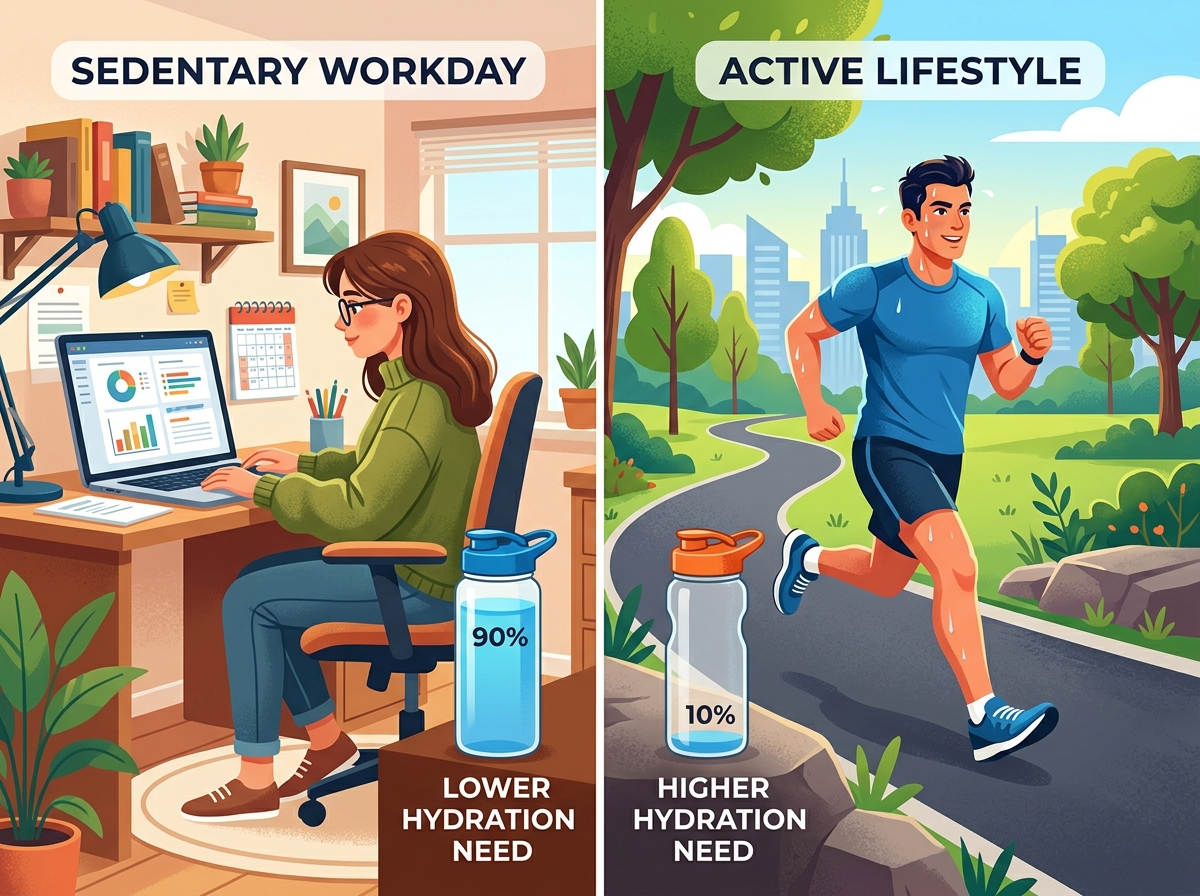
Here's the practical takeaway: someone weighing 150 lb who sits at a desk all day needs roughly 9 cups. If that same person goes for a 5-mile run, the requirement jumps to around 14 cups. That's a big swing — and it's why the generic "8 cups" advice falls short for many people.
Signs of Dehydration
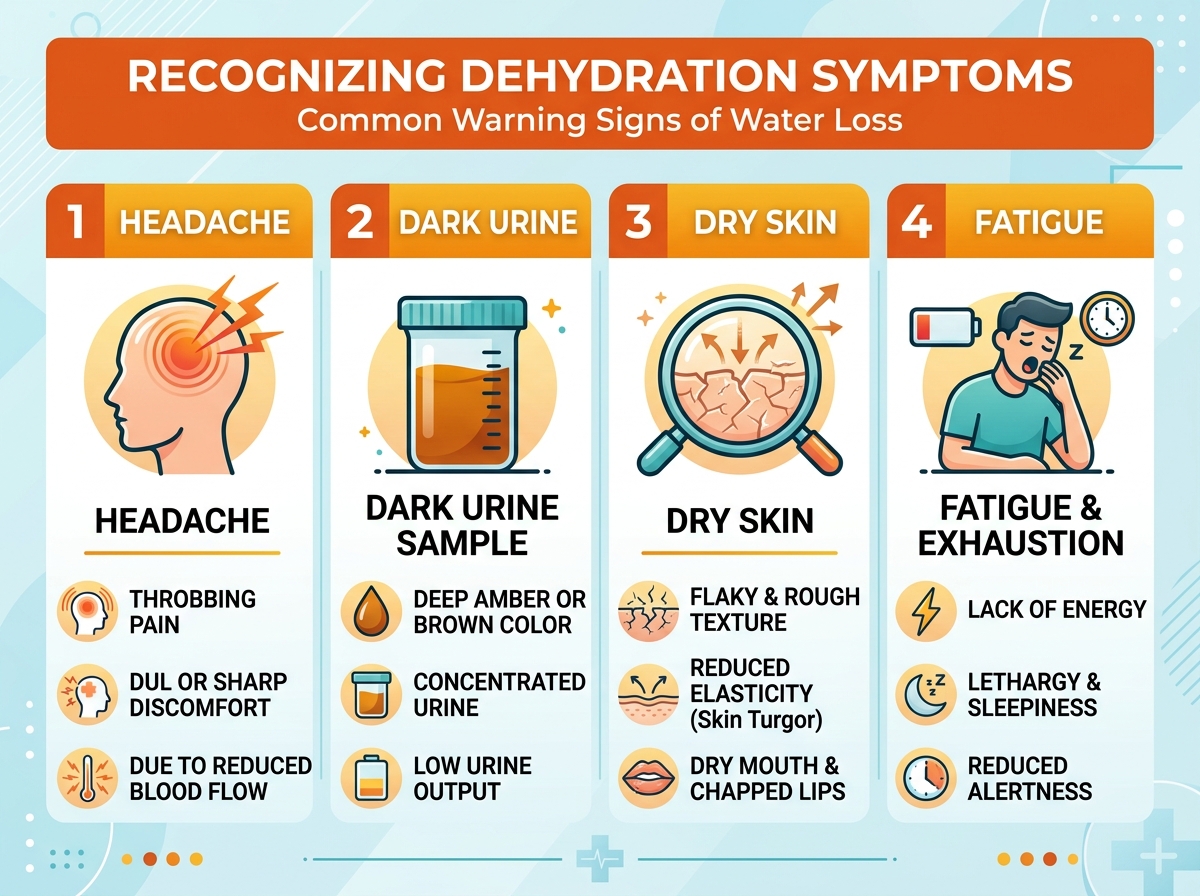
Thirst is actually a late signal — your body is already running low on fluids by the time you notice it. Watch for these clues:
Mild dehydration (1-2% body weight loss): Thirst, dry mouth, slightly darker urine, mild headache, reduced focus.
Moderate dehydration (3-5% body weight loss): Intense thirst, dry skin, dizziness, fatigue, decreased urine output, muscle cramps.
Severe dehydration (5%+ body weight loss): Very dark urine, rapid heartbeat, confusion, fainting. This is a medical emergency.
Signs You're Drinking Too Much
Drinking too much water is rarer, but it carries real risks:
Warning signs: Nausea, headache, confusion, swollen hands or feet, clear/odorless urine consistently throughout the day.
Risk factors: Endurance athletes (marathon runners, cyclists), people with kidney disease, those who drink more than 1 liter per hour during exercise.
Research from the National Academies warns that overdoing water consumption can wash out sodium in your bloodstream, leading to serious complications. For most healthy adults, staying under roughly 100 oz (12.5 cups) per hour during strenuous activity keeps you in a safe range.
Factors That Increase Your Water Needs
1. Exercise. Sweat loses 1-2 cups per 20 minutes of intense activity. Replace 16 oz for every pound of sweat lost during exercise.
2. Heat and humidity. Hot climates increase water loss through sweat by 30-50%.
3. Illness. Fever, vomiting, and diarrhea cause rapid fluid loss. The CDC recommends 1 extra cup per hour of illness.
4. Pregnancy and breastfeeding. Pregnant women need about 10 cups daily; breastfeeding mothers need about 13 cups (Mayo Clinic).
5. High altitude. Above 8,200 ft, increased urination and respiration increase water loss by 10-20%.
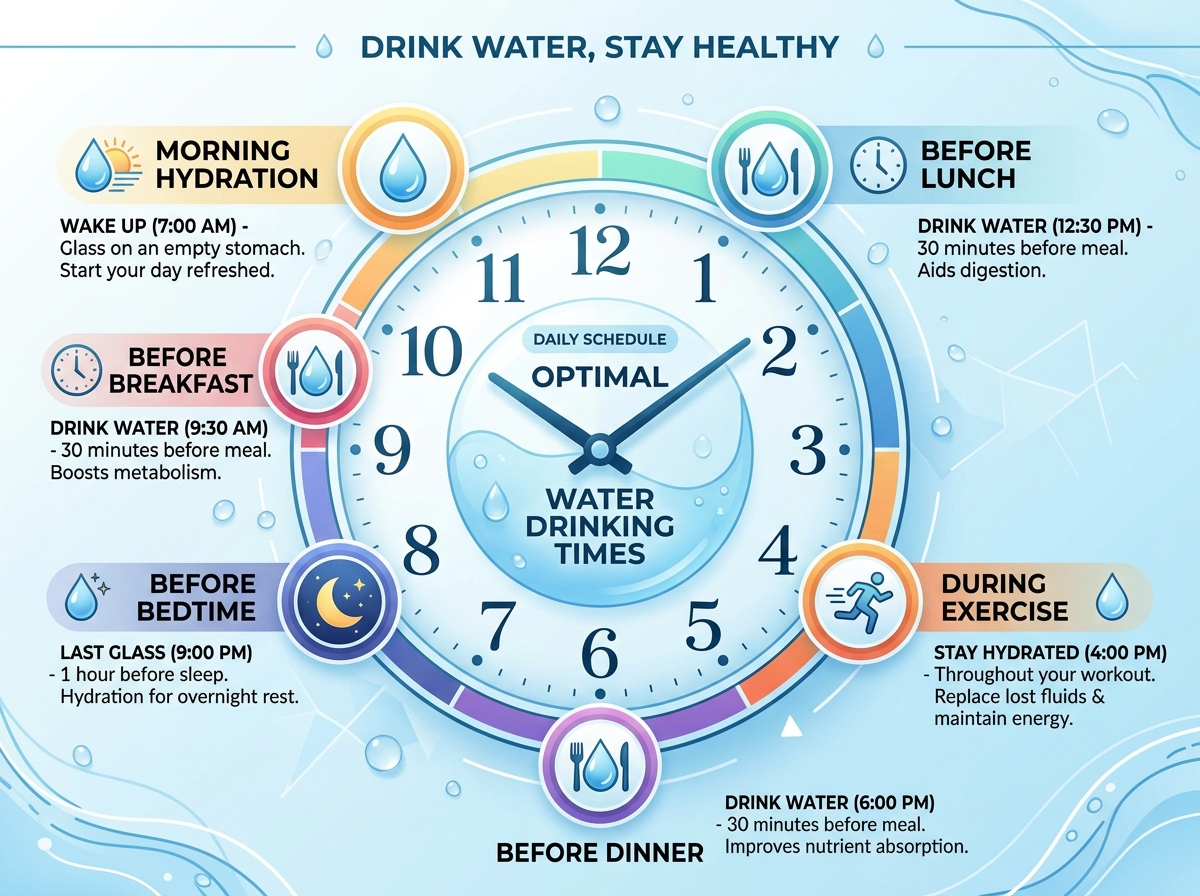
When to Drink Water
The best approach is consistent intake throughout the day rather than chugging at specific times:
Morning: Drink 1-2 cups upon waking to rehydrate after sleep.
Before meals: 1 cup 30 minutes before meals aids digestion.
During exercise: 4-8 oz every 15-20 minutes during activity.
Before bed: 1 cup, but not too much to disrupt sleep.
Frequently Asked Questions
How many cups of water should I drink a day?
Women generally need around 11.5 cups (2.7 liters) and men about 15.5 cups (3.7 liters) per day, based on National Academies guidelines. Those numbers cover water from all sources — drinks plus food.
How much water should I drink based on my weight?
A popular approach is to drink half your body weight in ounces each day. A 150 lb person would aim for about 75 oz, or roughly 9 cups. If you're physically active, bump that up by 20-50% depending on intensity.
Is 8 cups of water a day enough?
That number is a starting point, not a one-size-fits-all target. It doesn't factor in your body mass, how much you move, or the climate you live in. Most adults land somewhere between 11 and 15 cups when you account for all variables.
Can you drink too much water?
Yes. Overloading on water can dilute sodium in your blood to dangerous levels — a condition called hyponatremia. It's uncommon in everyday life, but endurance athletes who drink a liter or more per hour during intense exercise face higher risk.
Does coffee count toward daily water intake?
It does. Despite the caffeine, a cup of coffee still delivers about 96% of its volume as usable water. The Mayo Clinic has confirmed that caffeinated drinks contribute meaningfully to your daily hydration.
Data Sources
- National Academies of Sciences, Engineering, and Medicine (2004)
- Mayo Clinic: How Much Water Do You Need to Drink Daily?
- CDC: Plain Water — The Healthier Choice
- Harvard T.H. Chan School of Public Health: Water
- PubMed: Water Intake and Status (2011)