Choosing between concrete and asphalt for a new driveway is one of the biggest decisions homeowners face. Both materials are proven, widely available, and handle daily vehicle traffic well. But they differ significantly in upfront cost, lifespan, maintenance demands, and how they perform in different climates.
This guide compares concrete and asphalt driveways side by side across every factor that matters: price per square foot, total cost over 30 years, installation time, maintenance schedules, climate performance, and resale value. All pricing data is sourced from 2026 industry surveys and contractor pricing.
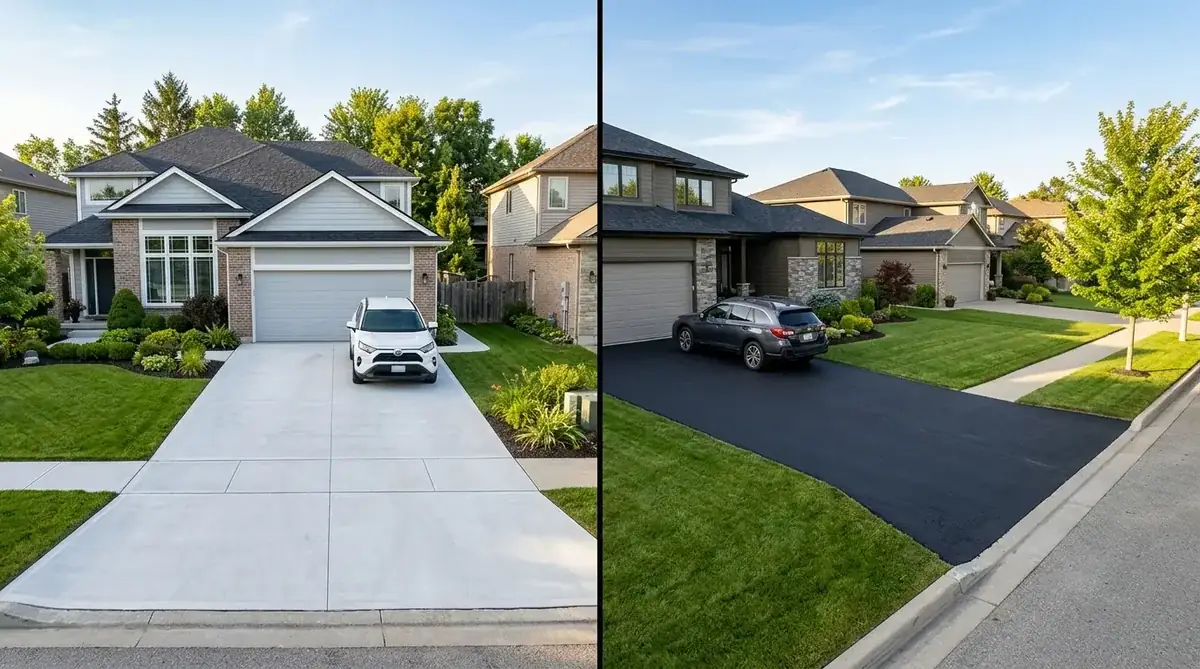
Concrete vs Asphalt: At a Glance
Here is a quick side-by-side comparison of the two most common driveway materials:
| Feature | Asphalt | Concrete |
|---|---|---|
| Installed Cost per Sq Ft | $7 – $15 | $8 – $18 |
| 600 Sq Ft Driveway (Total) | $4,200 – $9,000 | $4,800 – $10,800 |
| Lifespan | 15 – 20 years | 30 – 50 years |
| Maintenance Frequency | Sealcoat every 2 – 3 years | Seal every 3 – 5 years |
| Annual Maintenance Cost | $100 – $300/yr | $50 – $150/yr |
| 30-Year Total Maintenance | $7,400 – $19,650 | $2,100 – $12,800 |
| Installation Time | 1 – 2 days | 3 – 7 days |
| Usable After | 2 – 3 days | 7 days |
| Resale ROI | 70 – 75% | 75 – 80% |
| Design Options | Black only (standard) | Broom, stamped, colored, exposed aggregate |
| Best Climate | Cold / freeze-thaw | Hot / stable |
Cost Comparison: How Much Each Material Costs
Upfront cost is where asphalt wins clearly. Asphalt costs less per square foot to install than concrete in every U.S. market. The gap varies by region, but the pattern is consistent.
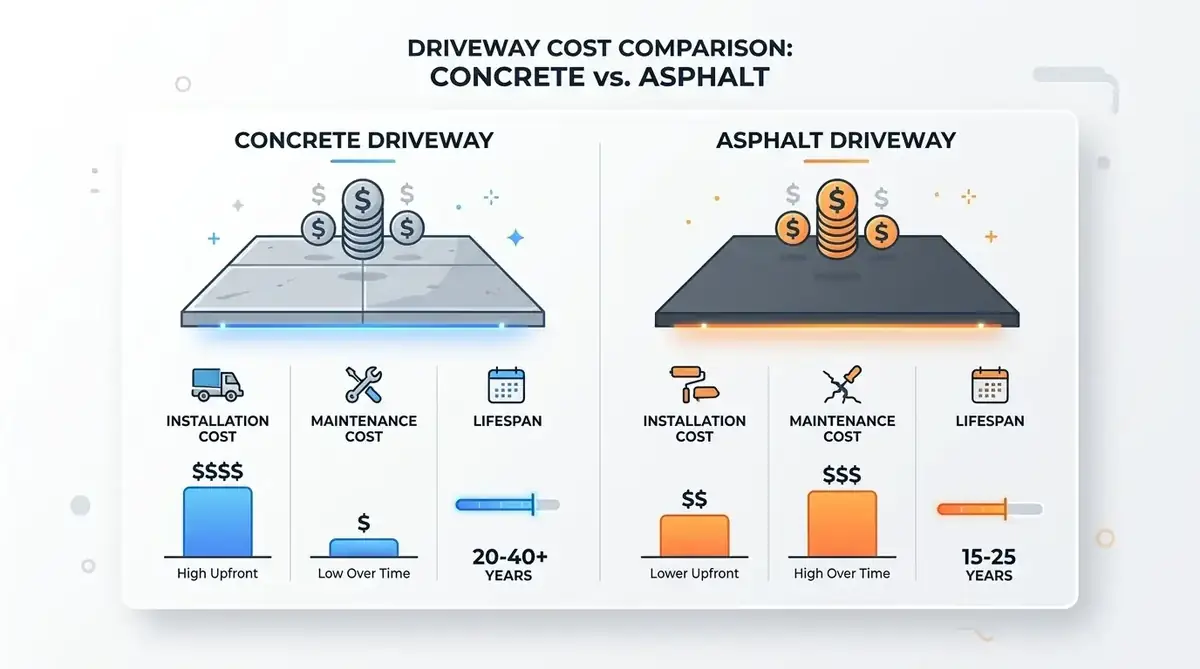
Cost per Square Foot
| Cost Category | Asphalt | Concrete |
|---|---|---|
| New Installation | $7 – $15/sq ft | $8 – $18/sq ft |
| Full Replacement | $6 – $12/sq ft | $8 – $18/sq ft |
| Resurfacing | $3 – $7/sq ft | $3 – $7/sq ft |
| Sealcoating / Sealing | $0.15 – $1.50/sq ft | $0.50 – $3/sq ft |
For a standard two-car driveway of 600 square feet, asphalt runs $4,200 to $9,000 installed, while concrete runs $4,800 to $10,800. The midpoint difference is roughly $600 to $1,800 depending on your region and site conditions.
What Drives the Price
Neither material has a single fixed price. Your final quote depends on several factors:
- Base preparation: A proper compacted gravel base (4-6 inches) is the single most important factor in how long any driveway lasts. Expect $1-$3 per square foot for excavation and base.
- Demolition and removal: Tearing out an existing driveway adds $1-$4 per square foot.
- Thickness: Standard residential asphalt is 2-3 inches; concrete is 4 inches. Thicker applications cost more but last longer.
- Site access and grading: Sloped lots, poor soil, or difficult access increase labor costs.
- Decorative finishes: Stamped, colored, or exposed aggregate concrete adds $3-$12 per square foot over plain broom finish.
Cost by Driveway Size
Here is how costs scale with driveway size for both materials. The per-square-foot price drops on larger projects because equipment mobilization is spread over more area.
| Driveway Size | Square Feet | Asphalt Range | Concrete Range |
|---|---|---|---|
| Small single-car | 200 | $1,400 – $3,000 | $1,600 – $3,600 |
| Standard single-car | 400 | $2,800 – $6,000 | $3,200 – $7,200 |
| Standard two-car | 600 | $4,200 – $9,000 | $4,800 – $10,800 |
| Large two-car | 800 | $5,600 – $12,000 | $6,400 – $14,400 |
| Three-car or wide | 1,000 | $7,000 – $15,000 | $8,000 – $18,000 |
30-Year Total Cost of Ownership
Upfront cost tells only part of the story. The true cost of a driveway includes installation, maintenance, resurfacing, and eventual replacement. Over a 30-year period, concrete often proves to be the more economical choice despite its higher initial price.
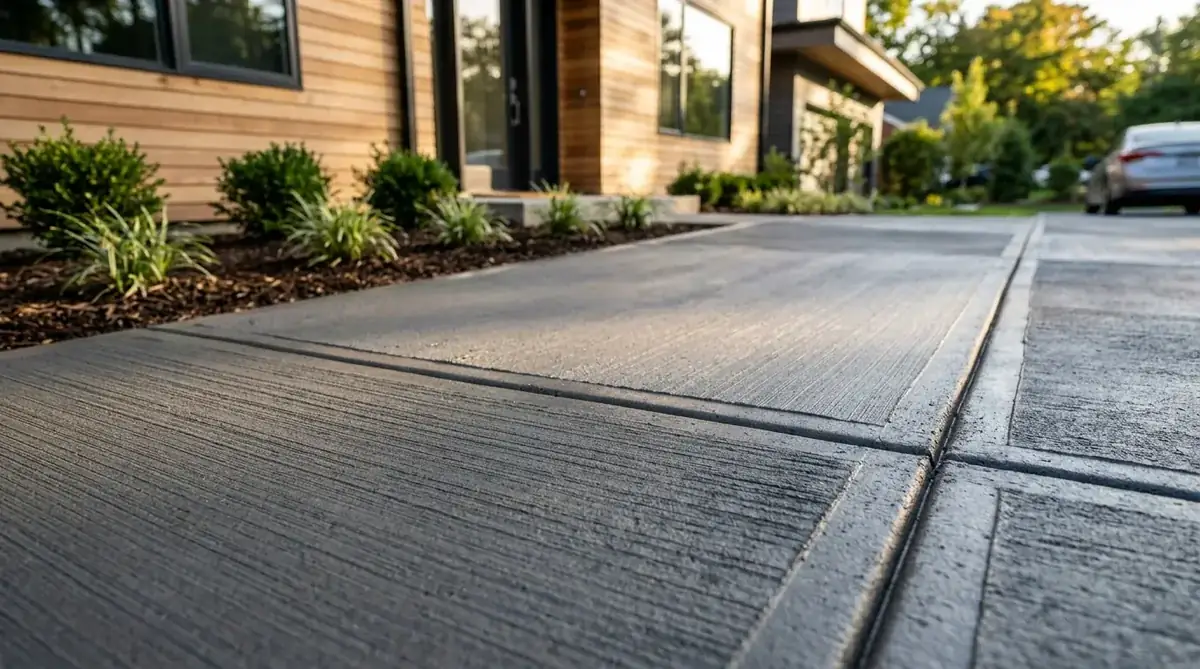
Asphalt 30-Year Cost Breakdown
| Cost Category | Amount |
|---|---|
| Installation (600 sq ft) | $4,200 – $9,000 |
| Sealcoating (every 2-3 years) | $1,500 – $6,750 |
| Crack filling and patching | $500 – $1,500 |
| Resurfacing (year 10-15) | $1,800 – $4,200 |
| Possible replacement (year 20-25) | $3,600 – $7,200 |
| 30-Year Total | $11,600 – $28,650 |
Concrete 30-Year Cost Breakdown
| Cost Category | Amount |
|---|---|
| Installation (600 sq ft) | $4,800 – $10,800 |
| Sealing (every 3-5 years) | $1,800 – $12,000 |
| Crack repair (occasional) | $300 – $800 |
| Replacement within 30 years | Not typically needed |
| 30-Year Total | $6,900 – $22,800 |
Climate Guide: Which Material Works Where
Your local climate is one of the most important factors in this decision. Each material has a climate where it performs best.
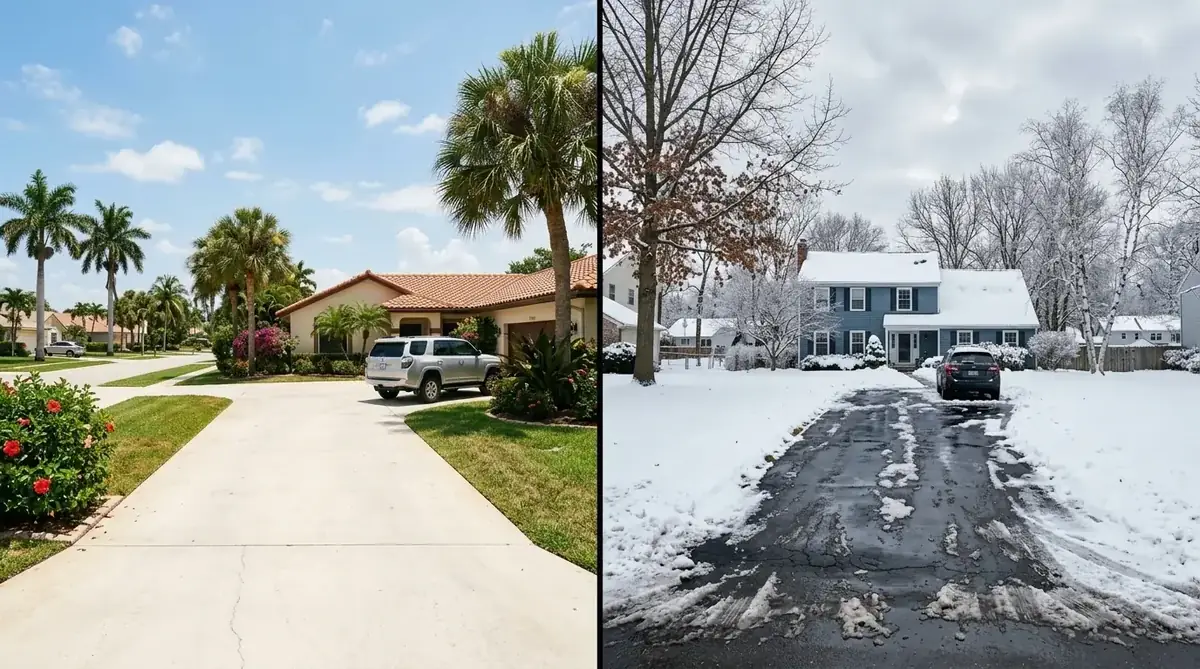
Cold Climates (Freeze-Thaw): Asphalt Wins
In northern states with harsh winters, repeated freezing and thawing is the biggest threat to any driveway. Asphalt handles this better than concrete for two reasons:
- Flexibility: Asphalt flexes with temperature changes instead of cracking. Concrete is rigid and can crack when the ground shifts beneath it during freeze-thaw cycles.
- Salt tolerance: Road salt and deicing chemicals damage concrete by causing surface spalling (flaking and pitting). Asphalt tolerates salt much better.
- Snow melting: Dark asphalt absorbs more heat from sunlight, helping ice and snow melt faster than on lighter concrete surfaces.
States like Minnesota, Wisconsin, Michigan, and the Northeast generally favor asphalt for these reasons.
Hot Climates (Sun Belt): Concrete Wins
In southern states with sustained high temperatures, asphalt has a significant weakness: it softens. When surface temperatures exceed 120-140 degrees Fahrenheit (common on a 95+ degree day), the petroleum-based binder in asphalt loses rigidity. Parked vehicles can leave ruts and indentations.
Concrete handles heat well. It stays rigid regardless of temperature and reflects more sunlight, keeping the surface cooler. In the Sun Belt states like Texas, Florida, Arizona, and Georgia, concrete is the dominant choice for driveways.
Moderate Climates: Either Works
In regions with mild winters and warm summers, both materials perform well. The choice comes down to budget, aesthetics, and how long you plan to stay in the home.
Maintenance Comparison
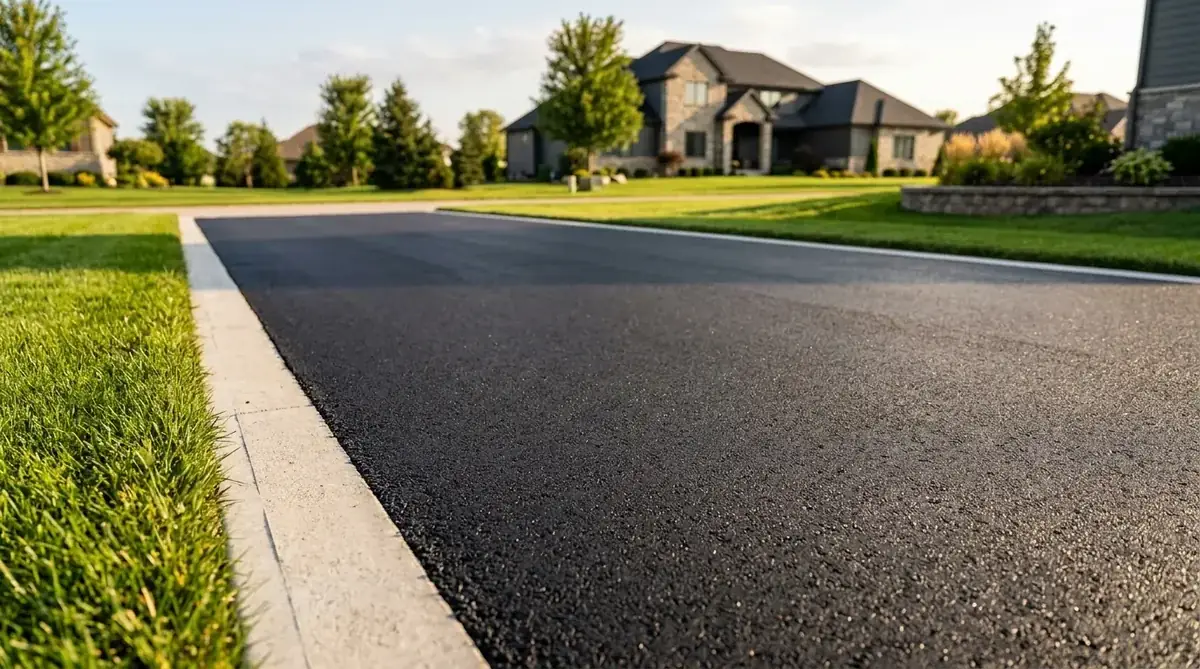
Maintenance is where concrete pulls significantly ahead. Asphalt requires regular, ongoing maintenance to reach its full lifespan. Concrete is largely set-and-forget.
| Maintenance Task | Asphalt | Concrete |
|---|---|---|
| Sealcoating / Sealing | Every 2-3 years: $150-$450 per application | Every 3-5 years: $300-$1,200 per application |
| Crack Filling | Annually (spring): $50-$200/yr DIY | As needed: $15-$50 per crack DIY |
| Pothole Patching | As needed: $15-$50 per hole DIY | Rare if properly installed |
| Power Washing | Annually: $50-$100 DIY | Annually: $50-$100 DIY |
| Resurfacing | At year 10-15: $1,800-$4,200 | Not typically needed |
| Total Annual Cost | $100 – $300/yr | $50 – $150/yr |
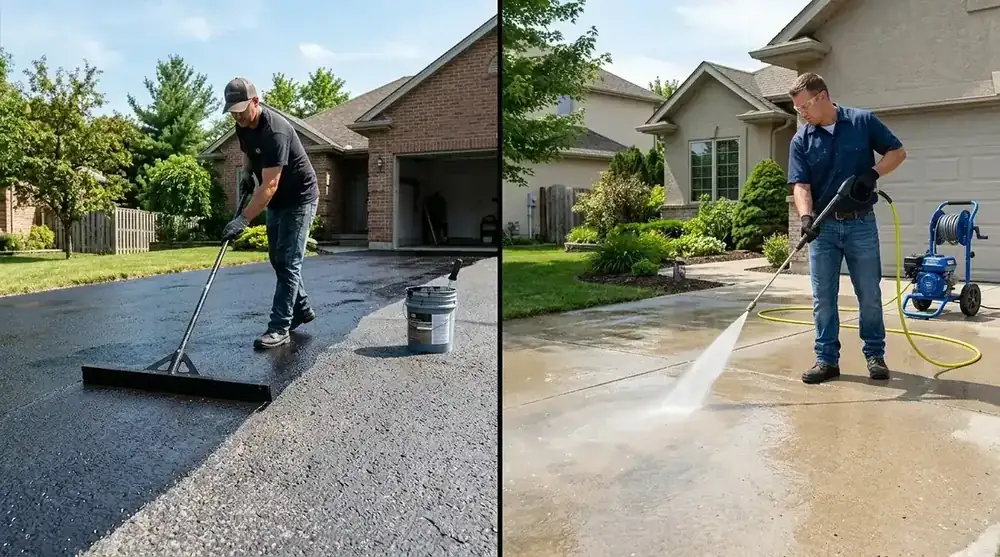
Asphalt Maintenance Schedule
Asphalt needs consistent maintenance to reach its full 15-20 year lifespan. Skipping sealcoating is the number one reason asphalt driveways fail early. Here is the recommended schedule:
- Year 1: Do not sealcoat for at least 90 days (6-12 months is better) to allow proper curing.
- Years 2-3: Apply first sealcoat. Then reseal every 2-3 years.
- Every spring: Inspect for cracks wider than 1/8 inch and fill them before water penetrates the base.
- Year 10-15: Consider resurfacing (overlay) to extend life another 10-15 years.
Concrete Maintenance Schedule
Concrete requires less frequent maintenance, but what it needs matters:
- Year 1: Wait 28 days before any sealing. Apply penetrating silane/siloxane sealer.
- Every 3-5 years: Reapply sealer to maintain water resistance.
- Winter care: Avoid chloride-based deicers (rock salt, calcium chloride) on concrete. Use sand for traction or calcium magnesium acetate (CMA) as a safer alternative.
- As needed: Fill cracks with flexible polyurethane caulk before winter.
Resale Value and ROI
Both materials add value over gravel or a deteriorating surface, but concrete has a measurable edge in return on investment.
| Factor | Asphalt | Concrete |
|---|---|---|
| ROI at Resale | 70 – 75% | 75 – 80% |
| Value on $6,000 install | $4,200 – $4,500 | $4,500 – $4,800 |
| Buyer perception | Standard / maintenance needed | Permanent upgrade / low maintenance |
| Appearance at 15 years | Approaching end of life | Still has 15-20 years left |
The resale difference becomes more pronounced as the driveway ages. A 15-year-old concrete driveway still looks presentable and has decades of life remaining. A 15-year-old asphalt driveway is approaching replacement age and may look worn to potential buyers. In higher-end neighborhoods, buyers may see aging asphalt as a future expense.
If you plan to sell within 5-8 years and your current driveway is in poor condition, asphalt lower upfront cost gets you a fresh, clean surface that photographs well for listings. If you plan to stay 15+ years, concrete ROI and longevity make it the better investment.
Pros and Cons
Asphalt: Pros
- Lower upfront cost: Typically 20-40% less expensive than concrete to install.
- Fast installation: Most asphalt driveways are completed in 1-2 days and usable within 2-3 days.
- Cold climate performance: Flexes with freeze-thaw cycles and tolerates road salt better than concrete.
- Easy to repair: Cracks and potholes can be patched affordably and the repairs blend in with the dark surface.
- Snow melting: Dark surface absorbs more heat, helping ice and snow melt faster.
Asphalt: Cons
- Shorter lifespan: 15-20 years versus 30-50 for concrete.
- Regular sealcoating required: Every 2-3 years at $150-$450 per application for a standard driveway.
- Softens in extreme heat: Can develop ruts from parked vehicles when surface temperatures exceed 120-140 degrees Fahrenheit.
- Limited appearance: Standard asphalt only comes in black. No color or pattern options.
- Petroleum-based pricing: Asphalt costs are tied to crude oil prices and can fluctuate significantly.
Concrete: Pros
- Longest lifespan: 30-50 years with proper installation and minimal maintenance.
- Low maintenance: Occasional sealing every 3-5 years. No regular sealcoating cycle.
- Design flexibility: Stamped, colored, exposed aggregate, broom finish, and many other options.
- Higher resale value: Returns 75-80% of cost at resale versus 70-75% for asphalt.
- Heat performance: Stays rigid in high temperatures. Does not soften or rut.
Concrete: Cons
- Higher upfront cost: 20-40% more expensive than asphalt to install.
- Cracks are harder to repair: Patching is visible and does not blend with the surrounding surface.
- Salt damage risk: Deicing chemicals can cause surface spalling (flaking and pitting) in freeze-thaw climates.
- Stains show easily: Oil, rust, and tire marks are more visible on light-colored concrete.
- Longer curing time: Full curing takes 7 days before vehicles can drive on it.
Installation Process
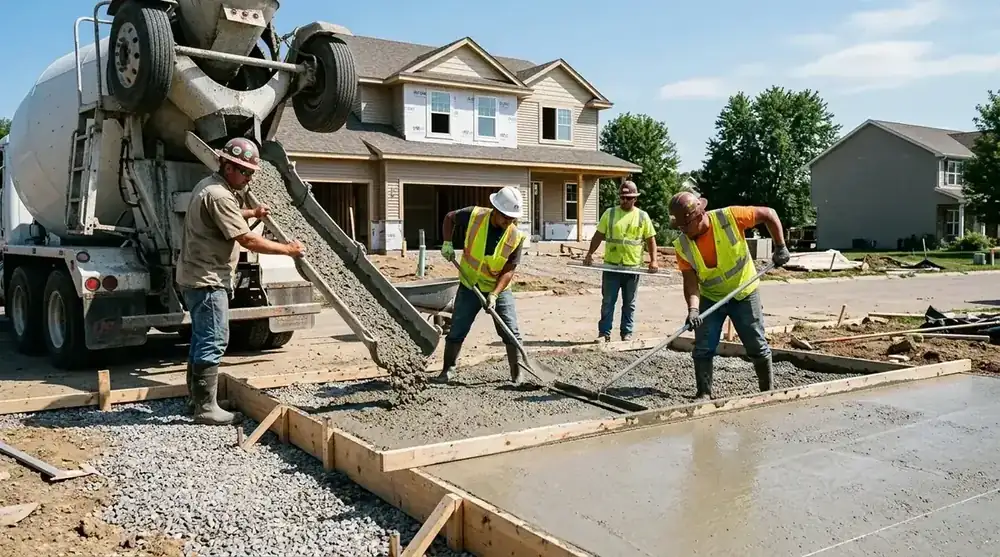
Knowing the installation steps helps you spot a contractor who is cutting corners on the part that matters most: the base.
Asphalt Installation
Remove existing surface and soil to proper depth. Grade for drainage away from structures.
Install 4-6 inches of compacted crushed stone base. This is the foundation of everything. Skimping here causes premature failure.
Lay 2-3 inches of hot-mix asphalt over the prepared base. Compact with a roller to achieve proper density.
Edge seal the perimeter. Driveway is usable in 2-3 days. Allow 6-12 months before first sealcoat.
Concrete Installation
Remove existing surface. Grade and compact soil for proper drainage and slope.
Install 4-6 inches of compacted gravel base. Add wire mesh or rebar for reinforcement.
Set forms to define the driveway shape. Pour 4 inches of concrete at 4,000 PSI or higher. Finish with broom, stamp, or other texture.
Maintain moisture for 7 days minimum. Full cure takes 28 days. Usable after 7 days. Apply sealer after 28 days.
Decision Guide: Which Should You Choose?
Follow this simple decision process to find the right material for your situation:
If your budget is under $6,000 for a standard two-car driveway, asphalt is more likely to fit. If you can invest $6,000-$10,000+, concrete becomes competitive on a total-cost basis.
Freeze-thaw winters with road salt favor asphalt. Hot summers with surface temperatures above 120°F favor concrete. Moderate climates work with either.
Selling within 5-10 years? Asphalt lower upfront cost may make more sense. Staying 15+ years? Concrete saves money long-term and adds more resale value.
If you do not want to think about your driveway, concrete is the answer. If you are comfortable with a sealcoating schedule every few years, asphalt is fine.
Quick Decision Summary
- Choose asphalt if: You want the lowest upfront cost, live in a cold climate with freeze-thaw winters, or plan to move within 10-15 years. Asphalt costs $7-$15 per square foot installed.
- Choose concrete if: You want a long-lasting driveway with minimal maintenance, live in a warm climate, value design options and curb appeal, or plan to stay in the home 15+ years. Concrete costs $8-$18 per square foot installed.
Estimate Your Concrete Driveway Cost
Enter your driveway dimensions to get an instant cost estimate for a concrete slab, including materials, labor, and regional pricing.
Concrete Slab CalculatorFrequently Asked Questions
Is concrete or asphalt cheaper for a driveway?
Asphalt is cheaper upfront, typically $7-$15 per square foot installed versus $8-$18 for concrete. However, concrete lasts 30-50 years compared to 15-20 for asphalt. Over a 30-year period, concrete lower maintenance costs and longer lifespan often make it the cheaper option overall, especially in warm climates where it performs best.
How much does a concrete vs asphalt driveway cost for a standard two-car driveway?
A standard 600 sq ft two-car driveway costs $4,200-$9,000 for asphalt and $4,800-$10,800 for concrete in 2026. The exact price depends on your region, slab thickness, site preparation, and whether you are doing a new installation or replacing an existing driveway.
How long do concrete and asphalt driveways last?
A properly installed asphalt driveway lasts 15-20 years with regular sealcoating every 2-3 years. Without maintenance, it can fail in 8-12 years. A concrete driveway lasts 30-50 years with minimal maintenance. Climate significantly affects these ranges: asphalt lasts longer in moderate climates and shorter in extreme freeze-thaw conditions.
Which driveway material is better for cold climates?
Asphalt performs better in cold, freeze-thaw climates. It flexes with temperature changes instead of cracking, tolerates road salt better than concrete, and its dark surface absorbs more heat to melt ice and snow faster. Concrete can crack and spall when exposed to repeated freezing and deicing chemicals.
Which driveway material is better for hot climates?
Concrete performs better in hot climates. It stays rigid in high temperatures while asphalt can soften and develop ruts from parked vehicles when surface temperatures exceed 120-140 degrees. Concrete also reflects more sunlight, keeping the surface cooler than dark asphalt.
How much maintenance does each driveway material require?
Asphalt needs sealcoating every 2-3 years ($150-$450 per application), annual crack filling ($50-$200/yr), and possibly resurfacing at year 10-15 ($1,800-$4,200). Total annual cost: $100-$300/yr. Concrete needs sealing every 3-5 years ($300-$1,200 per application) and occasional crack repair. Total annual cost: $50-$150/yr.
Which driveway adds more resale value?
Concrete driveways return 75-80% of their cost at resale, while asphalt returns 70-75%. Concrete signals permanence and low maintenance to buyers. At 15+ years, a concrete driveway still has decades of life remaining, while an asphalt driveway is approaching replacement age, which buyers may see as a future expense.
Can I pour concrete over an existing asphalt driveway?
It is possible but not recommended. Pouring concrete over asphalt (called "whitetopping") requires the asphalt to be in excellent condition, properly milled for bonding, and reinforced with rebar. Without proper preparation, the concrete will crack prematurely. Most contractors recommend full removal for best results, which adds $1-$4 per square foot to the project cost.
How thick should a driveway be?
For asphalt, 2-3 inches of compacted hot-mix asphalt over a 4-6 inch gravel base is standard for residential driveways. For concrete, 4 inches at 4,000 PSI with wire mesh or fiber reinforcement is the minimum for residential use. If you park heavy vehicles (RVs, trucks), specify 5-6 inches with rebar.
Data Sources
- Angi - Concrete Driveway Cost Data (2026)
- HomeGuide - Asphalt vs Concrete Driveway Cost (2026)
- NerdWallet - Asphalt vs Concrete Driveway Cost (2026)
- HomeCostLab - Concrete vs Asphalt Driveway Cost 2026
- AsphaltPro - Asphalt Driveway Cost per Square Foot by State (2026)
- Angi - Asphalt Driveway Cost Data (2026)
Related Posts
- Concrete Slab Cost by Size: Complete 2026 Guide
- Concrete Slab Cost in 2026: What the Data Actually Says
- Pea Gravel vs River Rock: Cost, Coverage and Which Is Better (2026)
Related Calculators
- Concrete Slab Calculator
- Mulch & Soil Calculator — Estimate materials for driveway landscaping
- Landscape Rock Calculator — Calculate gravel base material