Choosing between pea gravel and river rock is one of the most common decisions homeowners face when planning a landscaping project. Both materials look attractive, handle drainage well, and are easier to install than concrete or pavers. But they are fundamentally different materials with different costs, coverage rates, maintenance needs, and ideal applications.
This guide compares pea gravel and river rock side by side across every factor that matters — price, coverage, durability, drainage, installation, maintenance, and long-term cost. You get the exact numbers to make an informed decision, plus a free calculator to estimate your project cost in seconds.
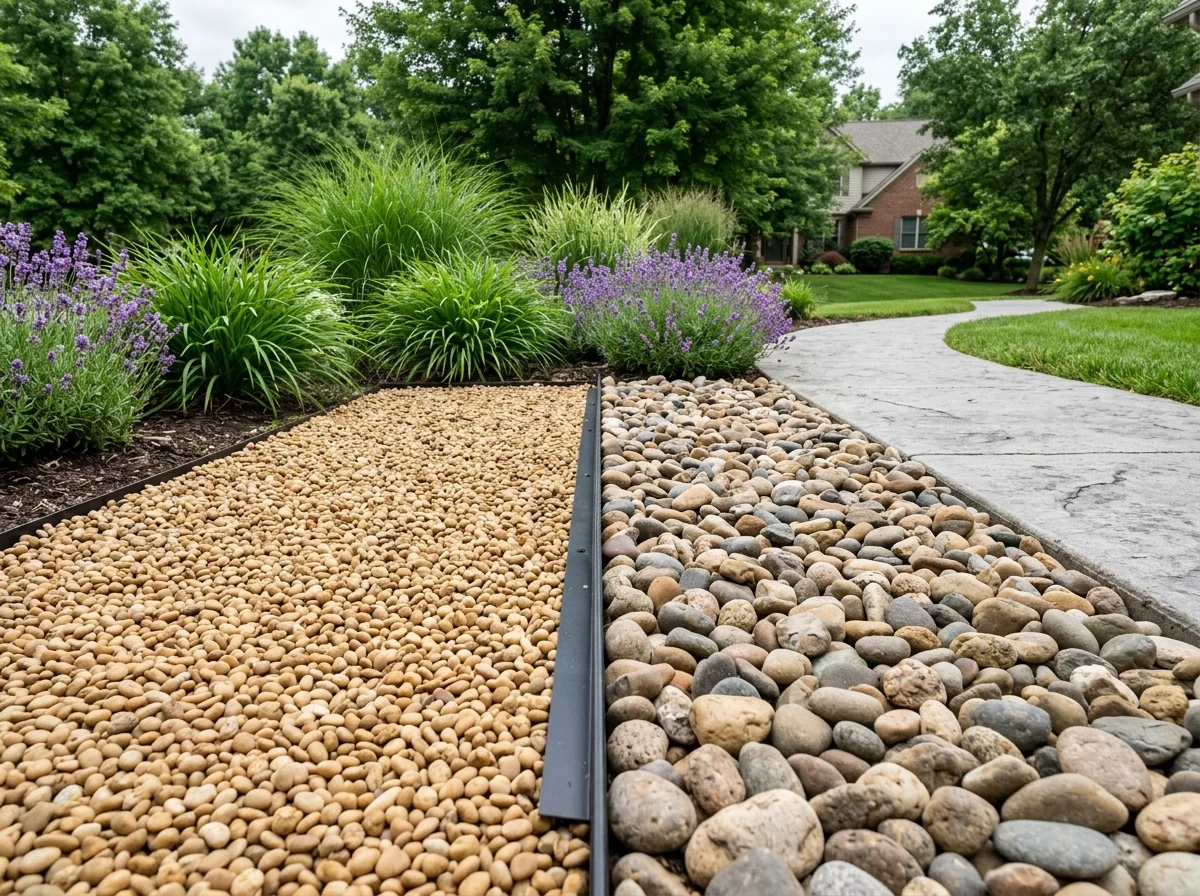
Pea Gravel vs River Rock: At a Glance
Before diving into the details, here is a quick side-by-side comparison of the two materials:
| Feature | Pea Gravel | River Rock |
|---|---|---|
| Stone Size | 1/4 to 3/8 inch diameter | 1 to 3 inches diameter |
| Density | ~100 lb/ft³ | ~105 lb/ft³ (varies by size) |
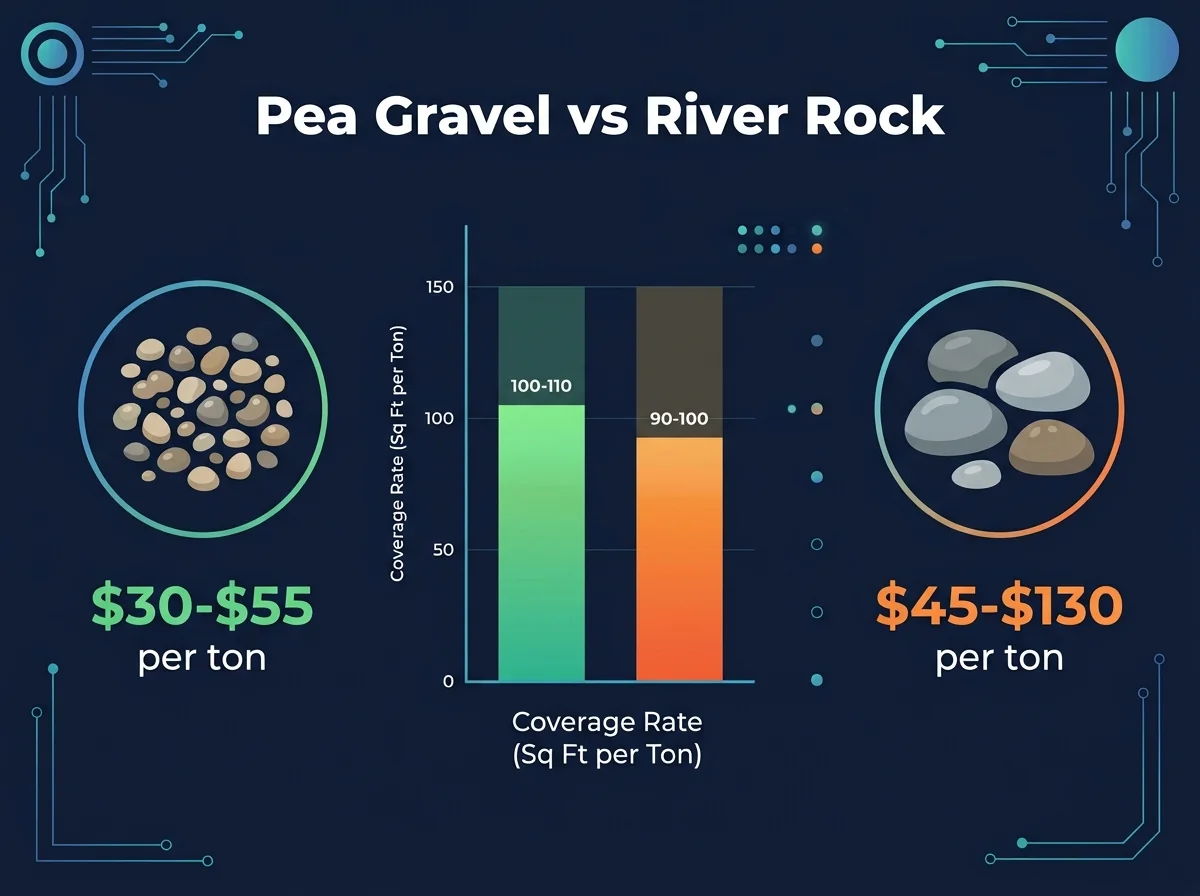
| Cost per Ton | $30–$55 | $45–$130 |
| Cost per Cubic Yard | $40–$75 | $50–$160 |
| Bag Cost (0.5 ft³) | $4–$7 | $8–$20 |
| Coverage at 2 in | ~120 ft²/ton | ~100–125 ft²/ton |
| Coverage at 3 in | ~80 ft²/ton | ~80–85 ft²/ton |
| Lifespan | 10–15 years (with top-ups) | 15+ years, often decades |
| Comfort Underfoot | Excellent | Poor — too large and uneven |
| Best For | Paths, patios, playgrounds, dog runs, fire pits, pool surrounds | Dry creek beds, borders, erosion control, downspout drainage, French drains |
Size and Appearance
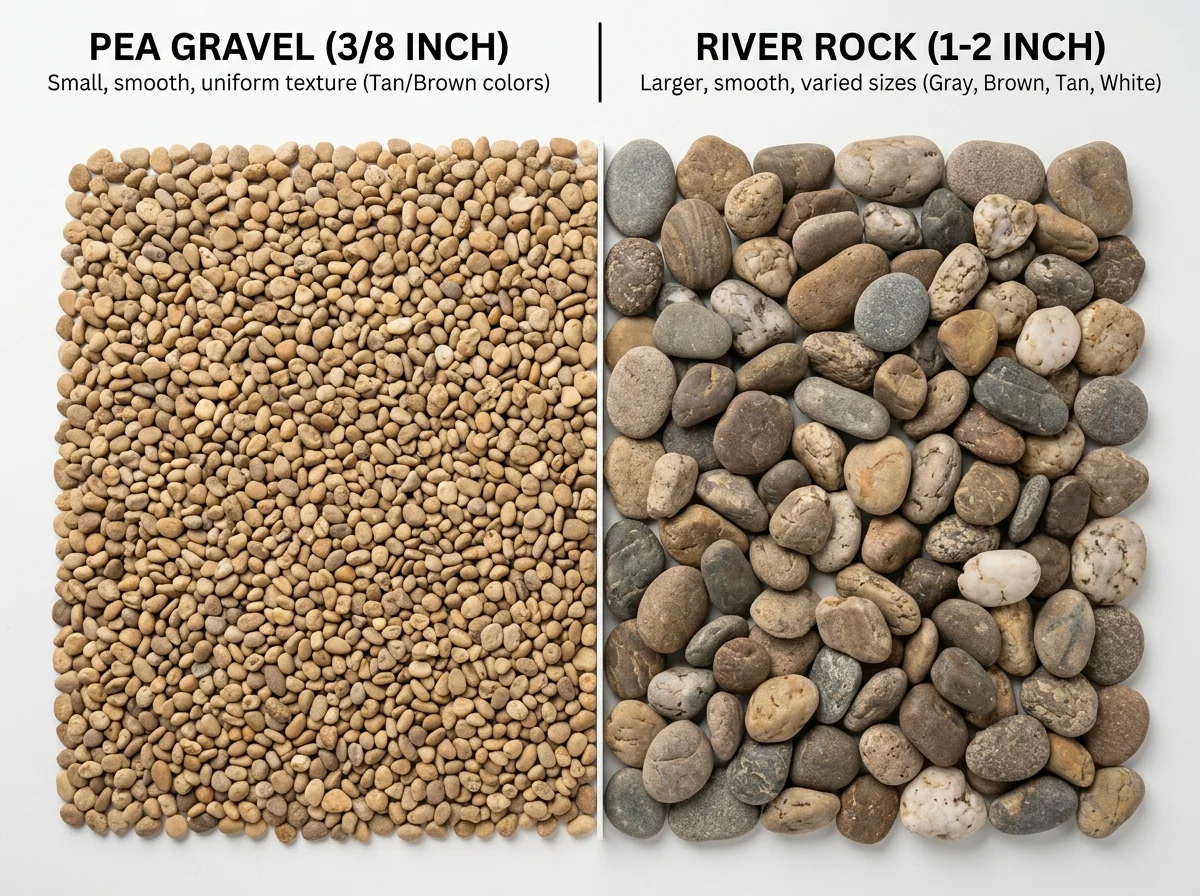
The most obvious difference between pea gravel and river rock is size. Pea gravel consists of small, smooth, rounded stones typically 1/4 to 3/8 inch in diameter. The name comes from the fact that the individual stones are roughly the size of a pea. Pea gravel is available in a range of natural colors — tan, white, gray, brown, and mixed blends — making it versatile for almost any landscape design.
River rock features much larger stones, typically 1 to 3 inches in diameter. Like pea gravel, river rock is naturally rounded by water erosion, but the larger size gives it a more substantial, decorative presence. River rock comes in a wider range of colors including whites, grays, blacks, tans, and multi-color mixes. The larger stones create a bolder visual statement that works well for focal points and borders.
Cost Comparison: Pea Gravel vs River Rock
Cost is often the deciding factor, and there is a clear winner here. Pea gravel is significantly cheaper than river rock across every pricing metric.
| Pricing Metric | Pea Gravel | River Rock | Winner |
|---|---|---|---|
| Cost per Ton | $30–$55 | $45–$130 | Pea gravel |
| Cost per Cubic Yard | $40–$75 | $50–$160 | Pea gravel |
| Bag Cost (0.5 ft³) | $4–$7 | $8–$20 | Pea gravel |
| Delivery | $50–$150 per load | $50–$150 per load | Tie |
| Installation (DIY) | Lower (lightweight) | Higher (heavy, more labor) | Pea gravel |
The price difference adds up quickly on larger projects. For a 200 sq ft area at 3 inches deep, pea gravel costs about $125 at $50/ton while river rock costs about $160 at $65/ton. That is a $35 difference on a relatively small project. On a 500 sq ft project, the gap widens to $90 or more.
However, raw material cost is only part of the equation. River rock lasts much longer and requires fewer replacements over time, which changes the long-term cost picture considerably. We will break down the 10-year total cost comparison later in this guide.
Delivery Costs
Delivery is an additional cost that many homeowners overlook. Most suppliers charge $50–$150 per delivery depending on distance and load size. Delivery truck capacities vary by supplier, but many local suppliers deliver several tons per load. Ordering in bulk reduces the per-ton delivery cost significantly. For example, a 10-ton order with $100 delivery adds only $10 per ton to your material cost. A 2-ton order with the same $100 delivery adds $50 per ton.
Installation Costs
If you hire a professional, installation costs run $2–$5 per square foot including labor, landscape fabric, and edging. Pea gravel is lighter and easier to spread, making it slightly cheaper to install. River rock is heavier and requires more labor to place properly, especially when larger stones need to be positioned first. For a 200 sq ft area, that is $400–$1,000 in labor alone. DIY installation saves significant money — the process is straightforward and many homeowners can complete a small landscape project over a weekend.
Coverage Rates: How Far Does Each Material Go?
Coverage rate tells you how many square feet one ton of material covers at a given depth. This is critical for estimating how much material you need and how much your project will cost.
| Depth | Pea Gravel Coverage | River Rock Coverage | More Efficient? |
|---|---|---|---|
| 2 inches | ~120 ft²/ton | ~100–125 ft²/ton | Pea gravel |
| 3 inches | ~80 ft²/ton | ~80–85 ft²/ton | Pea gravel |
| 4 inches | ~60 ft²/ton | ~60–65 ft²/ton | Pea gravel |
| 6 inches | ~40 ft²/ton | ~40–45 ft²/ton | Pea gravel |
The coverage advantage means you need less material by weight with pea gravel. For a 200 sq ft area at 3 inches deep, you need about 2.50 tons of pea gravel versus about 2.78 tons of river rock. Combined with the lower price per ton, pea gravel delivers a significant cost advantage on material alone.
Density and Weight
Density affects both coverage and handling. The denser a material, the more it weighs per cubic foot, and the fewer square feet one ton covers.
| Property | Pea Gravel | River Rock |
|---|---|---|
| Density | ~100 lb/ft³ | ~105 lb/ft³ (varies by size) |
| Weight per Cubic Yard | ~1.50 tons | ~1.58 tons |
| Weight per Ton | 2,000 lb | 2,000 lb |
| Handling Difficulty | Light — easy to shovel and wheelbarrow | Heavy — more strenuous to move |
The density difference is modest, but it has practical implications. Pea gravel is noticeably lighter and easier to handle during installation. You can comfortably carry bags of pea gravel, shovel it from a wheelbarrow, and spread it without excessive fatigue. River rock, especially larger pieces, is heavier per unit and more physically demanding to work with.
Pros and Cons
Each material has distinct strengths and weaknesses. Here is an honest breakdown of both.
Pea Gravel: Pros
- Affordable: The cheapest landscape rock option at $30-$55 per ton, significantly less expensive than river rock.
- Comfortable underfoot: Small, smooth stones feel pleasant to walk on barefoot, making it ideal for patios, pool surrounds, and play areas.
- Easy to install: Lightweight and easy to shovel, spread, and rake smooth. Most homeowners can complete a project over a weekend.
- Good drainage: The gaps between stones allow water to percolate through, reducing puddles and runoff.
- Attractive colors: Available in tan, white, gray, brown, and mixed blends that complement most landscape designs.
Pea Gravel: Cons
- Shifts without edging: Pea gravel migrates easily, especially on slopes or in high-traffic areas. Proper edging is essential.
- Needs periodic top-ups: Because it shifts and settles, you need to add more material every 1-3 years to maintain depth.
- Not suitable for slopes or driveways: The small, rounded stones do not lock together and will slide on slopes or shift under vehicle weight.
River Rock: Pros
- Beautiful appearance: Large, smooth stones create a bold, natural look that works well for focal points, borders, and water features.
- Extremely durable: Lasts 15+ years, often decades, without needing replacement. The larger size and heavier weight keep it in place.
- Stays in place: Heavy enough to resist shifting from wind, rain, and foot traffic. Does not scatter like pea gravel.
- Low maintenance: Requires only occasional debris removal and minimal repositioning. No periodic top-ups needed.
- Excellent drainage: Large gaps between stones handle heavy water flow, making it ideal for dry creek beds and erosion control.
River Rock: Cons
- Expensive: Costs $45-$130 per ton, roughly 2-3 times the price of pea gravel per ton.
- Heavy and difficult to handle: Larger stones are physically demanding to move, transport, and position. Installation requires more labor.
- Uncomfortable to walk on: The large, rounded surfaces are unstable underfoot and can cause ankle strain. Not suitable for walking paths or patios.
Installation Comparison
Both materials follow the same general installation process, but there are important differences in how they are handled and placed.
What Both Materials Need
- Clearing: Remove existing vegetation, debris, and level the soil surface.
- Landscape fabric: Use woven geotextile fabric and overlap edges by 6-12 inches for full coverage.
- Edging: Install metal, plastic, or stone edging to contain the material and prevent migration.
Pea Gravel Installation
Clear vegetation, remove debris, and level the soil. Grade the surface slightly away from structures for proper drainage.
Lay woven geotextile fabric over the entire area, overlapping seams by 6-12 inches. Install edging around the perimeter to contain the pea gravel.
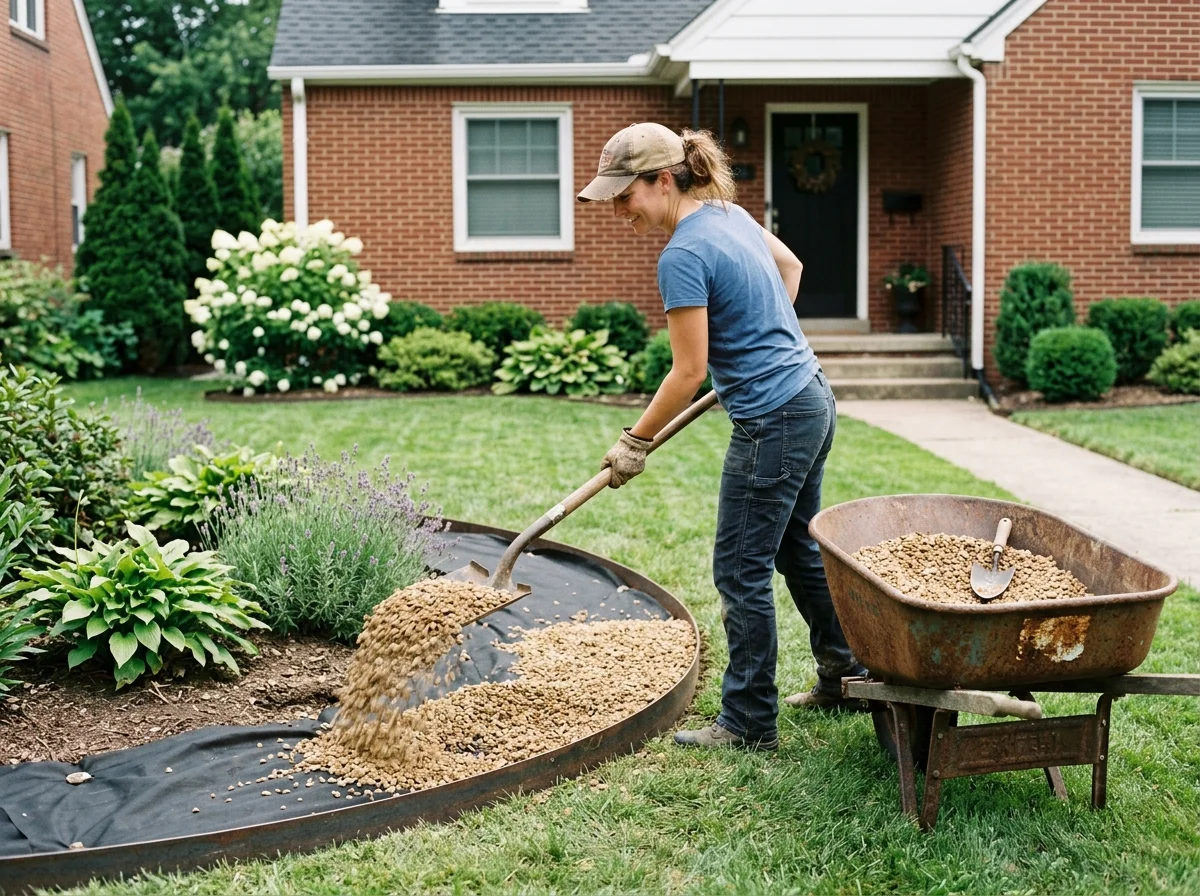
Pea gravel is lightweight and easy to spread with a shovel and rake. Work from the far corner toward the exit. Aim for uniform 2-3 inch depth across the entire area.
Pea gravel does not need compaction because of its rounded shape. Simply rake it level and walk on it a few times to settle the surface.
River Rock Installation
Same as pea gravel — clear, level, and grade the soil surface for proper drainage.
Use woven geotextile fabric with 6-12 inch overlaps. River rock requires sturdier edging due to its weight and tendency to push against boundaries.
River rock ranges from 1 to 3 inches in diameter. Place larger stones first, especially at edges and in drainage areas. Then fill gaps with smaller stones for a natural look.
River rock installation depth varies by use: 2-3 inches for decorative ground cover, 3-4 inches for borders, and 4-6 inches for drainage projects and dry creek beds. The larger stones require more material by volume to achieve consistent depth.
Maintenance Comparison
Maintenance is where river rock pulls ahead. While pea gravel requires regular attention to stay in place, river rock is essentially set-and-forget once installed.
| Maintenance Task | Pea Gravel | River Rock |
|---|---|---|
| Raking | Monthly — keeps surface level and smooth | Occasional — only when debris accumulates |
| Top-ups | Every 1-3 years to replace shifted material | Not needed |
| Edging checks | Regular — pea gravel pushes against edging over time | Minimal — larger stones are less likely to migrate |
| Weed control | Moderate — fabric helps but weeds can grow in the gravel itself | Low — larger stones suppress weeds more effectively |
| Cleaning | Blow or rake debris; hose down periodically | Remove leaves and debris by hand or blower |
The maintenance difference is significant over time. Pea gravel requires monthly raking to keep it level and attractive, plus periodic top-ups every 1-3 years as material shifts and settles. River rock stays in place with minimal intervention — occasional debris removal is all that is needed.
Drainage Performance
Both pea gravel and river rock handle water well, but they perform differently depending on the drainage application.
- Pea gravel provides fast drainage through the small gaps between stones. Water percolates quickly, reducing puddles and surface runoff. It works well for general drainage around foundations, under downspouts, and in garden beds.
- River rock handles heavier water flow because the larger gaps between stones allow more volume to pass through. It is the preferred material for dry creek beds, French drains, and areas where water needs to be directed along a specific path.
- For French drains: River rock is typically better because the larger stone size creates larger voids that move water more efficiently. Pea gravel can compact and restrict flow over time.
- For downspout extensions: River rock works well at the discharge point to dissipate energy and prevent erosion. Pea gravel can scatter under heavy water flow.
Long-Term Cost Comparison
Raw material cost tells only part of the story. When you factor in maintenance, replacement, and top-ups over time, the total cost picture changes. Here is a 10-year cost comparison for a 200 sq ft area at 3 inches deep:
| Time Period | Pea Gravel Cost | River Rock Cost |
|---|---|---|
| Year 0 (initial purchase) | $125 | $160 |
| Year 3 (top-up) | +$30–$50 | $0 |
| Year 5 (top-up) | +$30–$50 | $0 |
| Year 10 (top-up) | +$35–$60 | $0 |
| 10-Year Total | $220–$285 | $160 |
This means the decision often comes down to preferences other than cost: Do you want a comfortable walking surface (pea gravel) or a low-maintenance decorative feature (river rock)? Do you want to save money now or avoid ongoing maintenance later?
Climate Considerations
Your local climate affects how each material performs over time. Here is how pea gravel and river rock respond to different weather conditions:
| Climate Factor | Pea Gravel | River Rock |
|---|---|---|
| Heavy Rain | Can scatter on slopes; stays put on flat areas with proper edging | Stays in place even on slopes; handles heavy water flow |
| Freeze-Thaw | Can shift as ground freezes and thaws; may need re-raking in spring | Resists frost movement better due to larger size and weight |
| Strong Wind | Can scatter, especially lighter-colored varieties | Too heavy to move; stays firmly in place |
| Snow Removal | Difficult — shovels catch on loose stones; blower scatters material | Easier — larger stones stay put during shoveling and blowers pass over |
For homeowners in areas with heavy rain, freeze-thaw cycles, or strong winds, river rock offers better long-term stability. For mild climates with flat terrain and minimal weather extremes, pea gravel performs well with proper edging.
Best Uses for Each Material
Each material excels in specific applications. Here is a quick guide to choosing the right material for your project:
Choose Pea Gravel For:
- Walkways and paths: Comfortable underfoot, affordable, and easy to install.
- Patios: Creates a casual, relaxed surface that works well for outdoor seating areas.
- Playgrounds: Smooth, small stones provide a safer surface for children than larger materials.
- Dog runs: Comfortable for paws, easy to clean, and provides good drainage.
- Fire pit surrounds: Non-combustible, attractive, and comfortable for seating areas.
- Pool surrounds: Smooth surface that is comfortable for bare feet and provides drainage.
Choose River Rock For:
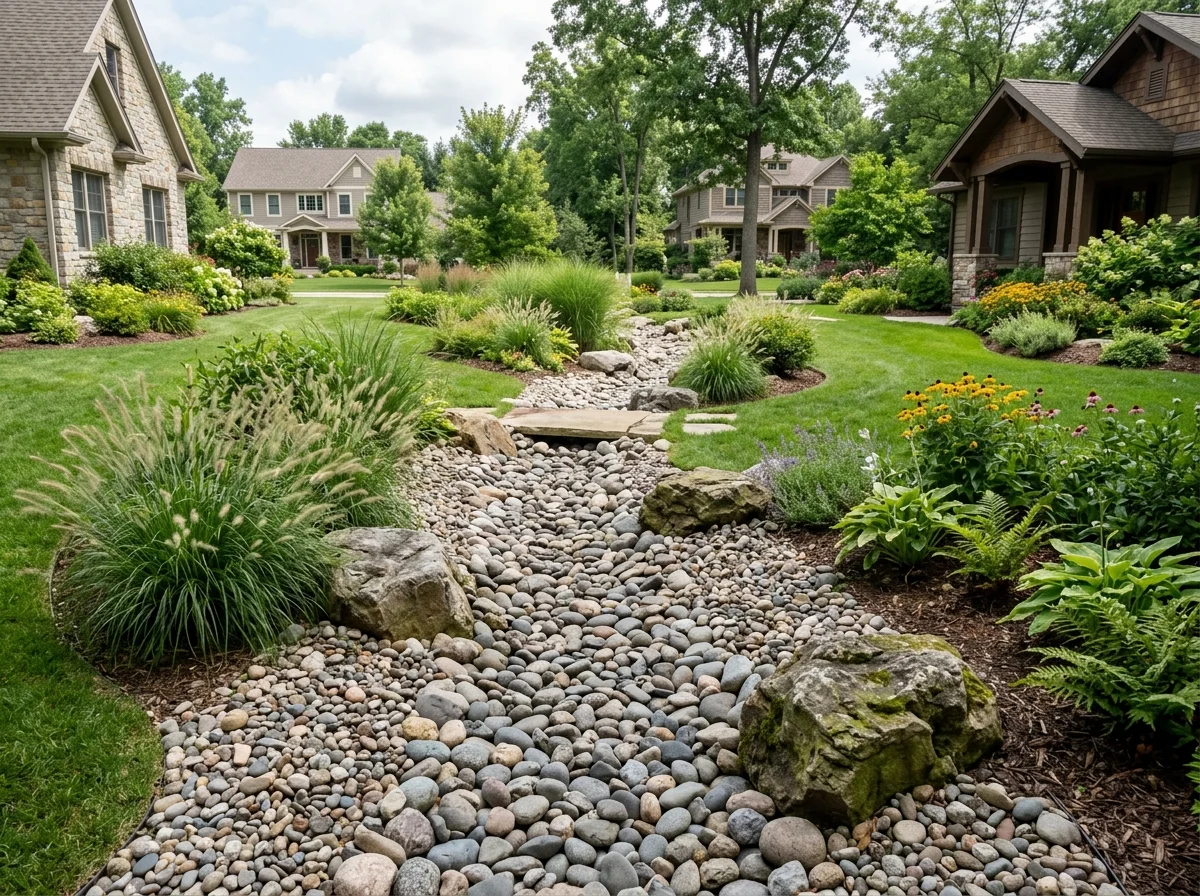
- Dry creek beds: Creates a natural-looking water feature that handles drainage beautifully.
- Garden borders: Stays in place permanently, creating clean lines between beds and lawn.
- Erosion control: Heavy stones hold soil in place on slopes and around structures.
- Downspout drainage: Dissipates water energy and prevents erosion at discharge points.
- French drains: Large voids between stones move water efficiently through drainage systems.
- Decorative accents: Creates visual focal points around planters, trees, and water features.
Use Our Free Landscape Rock Calculator
Enter your project dimensions, choose between pea gravel or river rock, and get instant estimates for cubic yards, tons, coverage, and cost.
Landscape Rock CalculatorWorked Example: 15 x 8 ft Path at 3 Inches Deep
Let us calculate the exact material requirements and cost for a 15 by 8 foot walking path installed at 3 inches deep with both pea gravel and river rock.
15 ft x 8 ft = 120 ft²
120 ft² x (3/12) = 30 ft³ = 1.11 cubic yards
Pea gravel: 30 ft³ x 100 lb/ft³ = 3,000 lb = 1.50 tons
River rock: 120 ft² ÷ 82 ft²/ton = 1.46 tons
Pea gravel at $50/ton: 1.50 x $50 = $75 (material only)
River rock at $65/ton: 1.46 x $65 = $95 (material only)
Add $50-$100 for delivery, $0.30-$0.50/ft² for landscape fabric ($36-$60), and edging costs.
| Item | Pea Gravel | River Rock |
|---|---|---|
| Material Needed | 1.50 tons | 1.46 tons |
| Material Cost | ~$75 | ~$95 |
| Delivery (avg) | ~$75 | ~$75 |
| Landscape Fabric | ~$42 | ~$42 |
| Edging | ~$30 | ~$35 |
| Estimated Total | ~$222 | ~$247 |
The pea gravel path costs about $25 less than the river rock path for this project. But remember — pea gravel will need top-ups every 1-3 years while river rock will not. Over 5 years, the costs converge as you add more pea gravel material.
How to Choose: 4-Step Decision Guide
Not sure which material is right for your project? Follow this simple decision process:
Are you building a walking surface, a decorative feature, or a drainage solution? Walkways, patios, and playgrounds favor pea gravel. Dry creek beds, erosion control, and borders favor river rock. If you need both a path and a border, use pea gravel for the path and river rock for the border.
Estimate material cost by multiplying your area (in square feet) by your desired depth (in feet), then divide by the coverage per ton. Pea gravel costs $30-$55 per ton while river rock costs $45-$130 per ton. Factor in delivery fees of $50-$150. Use our landscape rock calculator for instant estimates.
Consider your local weather patterns. In heavy rain areas, river rock stays in place better on slopes. In freeze-thaw climates, river rock resists frost movement. In windy areas, river rock is too heavy to scatter while pea gravel can blow away. If drainage performance is critical, river rock handles heavier water flow.
Decide how much ongoing maintenance you want. Pea gravel needs monthly raking, top-ups every 1-3 years, and edging checks. River rock needs only occasional debris removal and minimal repositioning. If you want a set-it-and-forget-it solution, choose river rock. If you prefer a comfortable surface and do not mind occasional maintenance, pea gravel is the way to go.
Frequently Asked Questions
Which is cheaper, pea gravel or river rock?
Pea gravel is significantly cheaper. Pea gravel costs $30-$55 per ton compared to $45-$130 per ton for river rock. On a per-bag basis, pea gravel runs $4-$7 versus $8-$20 for river rock. Over a 10-year period for a 200 sq ft area at 3 inches, pea gravel costs about $220-$285 (including top-ups) while river rock costs about $160 upfront with no further material costs.
Which is better for drainage, pea gravel or river rock?
Both materials offer excellent drainage. Pea gravel provides slightly faster drainage through its small gaps and works well for general garden and patio drainage. River rock handles heavier water flow due to larger gaps between stones, making it better for dry creek beds, French drains, and downspout extensions where directing large volumes of water is the priority.
Can you use pea gravel and river rock together?
Yes, and it is a popular design approach. A common combination uses river rock for borders, dry creek beds, and erosion-prone areas while pea gravel fills walkways, patios, and seating areas. River rock also works well as a transition zone between pea gravel and garden beds. Be aware that pea gravel can shift into the gaps between river rock over time, so a clean edge between the two materials helps maintain the design.
How deep should pea gravel or river rock be?
Pea gravel should be installed 2-3 inches deep for most applications — 2 inches for decorative ground cover and 3 inches for walkways and high-traffic areas. River rock can be installed 2-6 inches deep depending on the use case: 2-3 inches for decorative ground cover, 3-4 inches for borders, and 4-6 inches for drainage projects and dry creek beds. Always install over landscape fabric for best results.
Do pea gravel and river rock need landscape fabric?
Yes, both materials benefit significantly from landscape fabric. Use woven geotextile fabric and overlap edges by 6-12 inches. Fabric prevents weeds from growing through, stops rock from sinking into soil, and makes future removal much easier. Budget $0.30-$0.50 per square foot for quality woven fabric. Without fabric, both materials will sink into the soil within 1-2 years and weeds will appear from below.
How long do pea gravel and river rock last?
Pea gravel lasts 10-15 years but needs top-ups every 1-3 years because it shifts underfoot and settles over time. River rock lasts 15+ years, often decades, because its larger size and heavier weight keep it firmly in place. River rock is the clear winner for long-term durability and requires virtually no ongoing material costs after installation.
Which is better for walkways, pea gravel or river rock?
Pea gravel is much better for walkways. Its small, smooth stones are comfortable underfoot and shift gently with each step, creating a pleasant walking experience. River rock is too large and uneven for comfortable walking — its rounded surfaces are unstable and can cause ankle strain. Use pea gravel for paths, patios, pool surrounds, and any area where people walk regularly.
How much does delivery cost for pea gravel or river rock?
Delivery typically costs $50-$150 per load depending on distance and load size. Delivery truck capacities vary by supplier, but many local suppliers deliver several tons per load. Ordering in bulk reduces the per-ton delivery cost significantly. A 10-ton order with $100 delivery adds only $10 per ton to your material cost, while a 2-ton order with the same $100 delivery adds $50 per ton. Ask your supplier about free delivery thresholds and available truck sizes.
Can you put pea gravel or river rock directly over grass?
No. Both materials require proper site preparation for best results. Remove all grass, weeds, and organic debris first. Organic material trapped under rock will decompose, create uneven surfaces, and promote weed growth. Clear the area to bare soil, level the surface, and install landscape fabric before adding any rock material. Skipping this step leads to poor results and costly rework within 1-2 years.
Does pea gravel attract bugs or pests?
Pea gravel itself does not attract bugs, but the gaps between stones can provide shelter for insects like earwigs, spiders, and ants. Landscape fabric underneath helps reduce this issue. River rock, with its larger gaps and heavier weight, tends to harbor fewer pests because there is less protected space at ground level. If pest control is a concern, keep the area clean of organic debris and consider river rock for areas near your home's foundation.
What size gravel is best for drainage projects?
For French drains and general drainage, 2-inch river rock is the most versatile choice. The larger voids between stones handle moderate to heavy water flow without backing up. For dry creek beds carrying concentrated runoff, use 2-3 inch river rock. For lighter drainage around garden beds and patios, pea gravel (3/8 inch) works well. Many professionals use a combination: pea gravel around the pipe at the bottom of a trench, topped with larger river rock for better surface flow.
Data Sources
- USGS National Minerals Information Center – Sand and Gravel Statistics
- National Stone, Sand & Gravel Association (NSSGA) – Industry Data
- HomeGuide – Landscape Rock Pricing Data (2026)
- For Construction Pros – Crushed Stone and Aggregate Cost Survey
- Bureau of Labor Statistics – Construction Labor Cost Data
- University of Missouri Extension – Landscape Materials Guide
- HomeAdvisor – Landscape Gravel Cost Guide (2026)
- Angi – Landscape Rock Cost Data (2026)
Related Posts
- River Rock Calculator Guide — Tons, Yards & Cost
- How Much Landscape Rock Do I Need? Calculator, Coverage & Cost Guide
- How Much Mulch Do I Need? Calculator & Guide
- Concrete Slab Cost in 2026: What the Data Actually Says