How Much Mulch Do I Need?
To calculate mulch, multiply the length and width of the area, convert the mulch depth from inches to feet, calculate the total cubic feet, then divide by 27 to get cubic yards. Most garden beds need 2–3 inches of mulch for effective weed control and moisture retention.
This guide walks you through the formula, depth recommendations, mulch types, bulk vs bagged pricing, and a free calculator that does all the math for you.
Who should use this guide: Homeowners planning a garden bed project, landscapers estimating material quantities, and anyone using the Mulch & Soil Calculator who wants to understand the numbers behind the results.
How to Use the Mulch Calculator
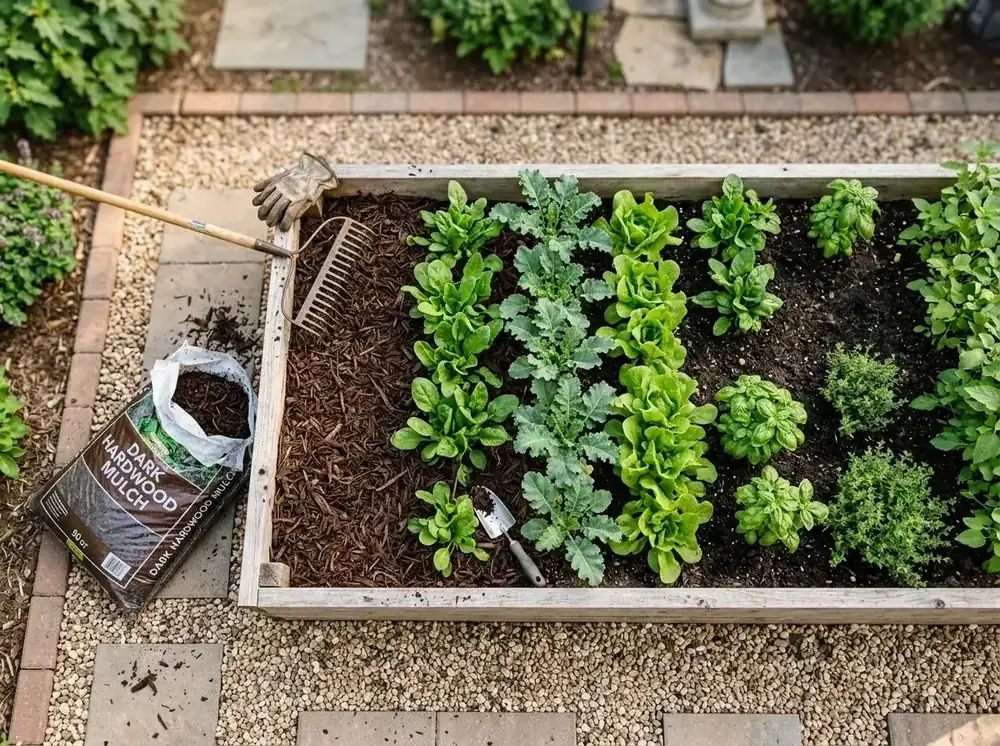
Our free Mulch & Soil Calculator does the math for you. Here's how to get accurate results:
Measure the longest side of your garden bed in feet. For irregular shapes, break them into rectangles and measure each separately.
Measure the width perpendicular to the length. Multiply length × width to get the total square footage of the bed.
Enter the desired depth in inches. 2–3 inches for flower beds, 3–4 inches for trees and shrubs, 4–6 inches for playgrounds.
Choose from cedar, hardwood, pine bark, rubber, or other materials. Each has different weight and cost per cubic yard.
The calculator shows cubic feet, cubic yards, bag count, total weight, and estimated cost for both bulk and bagged options.
Use Our Free Mulch Calculator
Enter your bed dimensions and get cubic yards, bag count, and estimated cost instantly.
Mulch & Soil CalculatorMulch Calculation Formula
The formula for mulch volume is straightforward:
Variable breakdown:
- Length & Width — Dimensions of your garden bed in feet
- Depth — Desired mulch depth in inches (divide by 12 to convert to feet)
- ÷ 27 — Converts cubic feet to cubic yards (27 cubic feet = 1 cubic yard)
- Bag Size — Standard mulch bags are 2 ft³ or 3 ft³
Worked Example
Let's calculate mulch for a 15 × 10 ft flower bed with 3 inches of cedar mulch.
Volume (ft³) = 150 × (3 ÷ 12) = 150 × 0.25 = 37.5 ft³
Cubic Yards = 37.5 ÷ 27 = 1.39 yd³
Bags (2 ft³) = 37.5 ÷ 2 = 18.75 → 19 bags
Bulk Cost: 1.39 × $40 = $55.60
Bag Cost: 19 × $6 = $114.00
Savings with bulk: $58.40
Result: 1.39 cubic yards or 19 bags. Bulk delivery saves nearly $60 on this project. Use the calculator to model your own bed.
Recommended Mulch Depth
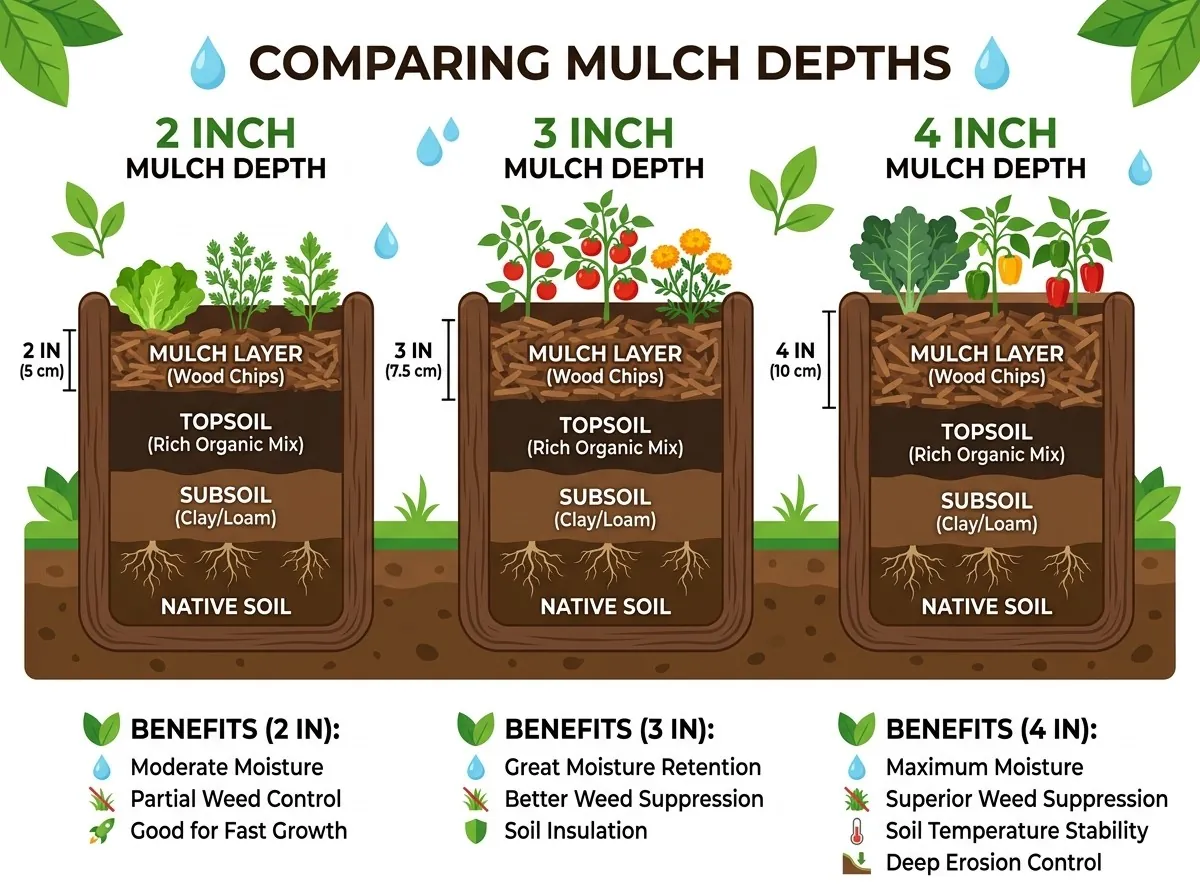
Choosing the right depth depends on your application. Too little won't suppress weeds; too much can suffocate roots and trap excess moisture.
Flower Beds
2–3 inches is ideal for established flower beds. It retains moisture, suppresses weeds, and won't smother existing plants. Keep mulch 2–3 inches away from plant stems.
Trees & Shrubs
3–4 inches around trees and shrubs provides insulation and moisture retention. Extend mulch to the drip line if possible. Never pile mulch against the trunk — this causes bark rot.
Vegetable Gardens
2–3 inches of organic mulch (straw, compost, or hardwood) between rows. Avoid thick layers over growing vegetables. Mulch helps retain moisture and keeps soil temperature stable.
Playgrounds
4–6 inches of rubber mulch or wood chips for safety cushioning. This depth absorbs impact from falls and meets playground safety standards. Rubber mulch is preferred for its durability.
| Area | Recommended Depth | Cubic Yards per 100 sq ft |
|---|---|---|
| Flower Beds | 2–3 inches | 0.62 – 0.93 |
| Trees & Shrubs | 3–4 inches | 0.93 – 1.23 |
| Vegetable Gardens | 2–3 inches | 0.62 – 0.93 |
| Playgrounds | 4–6 inches | 1.23 – 1.85 |
| New Beds (heavy weeds) | 4 inches | 1.23 |
Types of Mulch
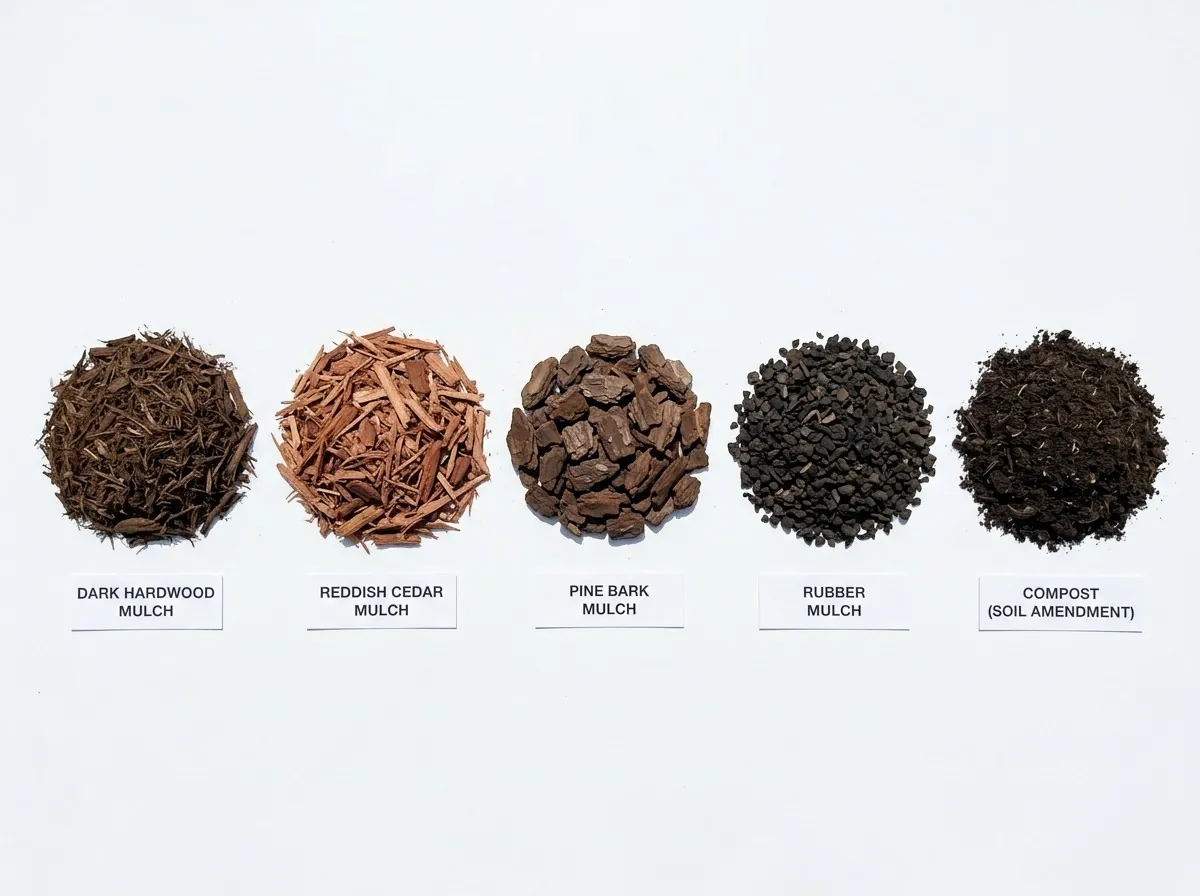
Not all mulch is the same. The type you choose affects cost, lifespan, appearance, and how well it serves your specific needs.
Cedar Mulch
Naturally resistant to insects and decay. Repels moths, ants, and termites. Lightweight, attractive reddish-brown color that fades to gray over time. Lasts 2–3 years. Costs more than hardwood but provides insect-repelling benefits.
Pine Bark
Chunky texture that stays in place well on slopes. Slightly acidic — ideal for acid-loving plants like azaleas, rhododendrons, and blueberries. Lasts 2–3 years. Available in fine, medium, and nugget sizes.
Hardwood
The most affordable and widely available option. Made from recycled forest products. Breaks down over 1–2 years, enriching the soil as it decomposes. Best for general landscaping and garden beds.
Rubber Mulch
Made from recycled tires. Extremely durable — lasts 10+ years without decomposition. Doesn't improve soil but provides excellent cushioning for playgrounds. Doesn't attract insects. Can retain heat in direct sun.
Compost
Decomposed organic matter that adds nutrients to soil. Best used as a soil amendment under mulch rather than as a standalone mulch. Excellent for vegetable gardens and new planting beds.
Stone Mulch
Permanent — never decomposes. Available in gravel, river rock, and decorative varieties. Good for pathways, dry creek beds, and areas where organic mulch blows away. Doesn't retain moisture like organic options.
| Type | Cost per yd³ | Lifespan | Best For |
|---|---|---|---|
| Cedar | $50 – $80 | 2–3 years | Insect repellent, aesthetics |
| Pine Bark | $40 – $70 | 2–3 years | Acid-loving plants, slopes |
| Hardwood | $30 – $50 | 1–2 years | General landscaping |
| Rubber | $80 – $120 | 10+ years | Playgrounds, high-traffic |
| Compost | $25 – $45 | 1 year | Vegetable gardens, soil amendment |
| Stone | $40 – $100 | Permanent | Pathways, dry areas, decorative |
Bulk vs Bagged Mulch
Buying mulch in bulk is almost always cheaper per cubic yard, but bags have their place. Here's how to decide:
| Feature | Bulk | Bagged |
|---|---|---|
| Cost per yd³ | $30 – $80 | $80 – $150 |
| Convenience | Requires delivery scheduling | Buy and carry from store |
| Coverage | Large areas (1+ yd³) | Small beds, touch-ups |
| Delivery | $50–$150 fee (often free at 2+ yd³) | None — you transport |
| Storage | Needs space for pile | Stack bags as needed |
| Best Use | Large projects, full yard mulching | Small beds, partial replenishing |
Bag Coverage Reference
Standard mulch bags come in 2 ft³ and 3 ft³ sizes. Here's how much each covers at common depths:
| Bag Size | 2-inch Depth | 3-inch Depth | 4-inch Depth |
|---|---|---|---|
| 2 ft³ bag | 12 sq ft | 8 sq ft | 6 sq ft |
| 3 ft³ bag | 18 sq ft | 12 sq ft | 9 sq ft |
Bulk Cost Guide
Here's what bulk mulch typically costs by volume, including delivery:
| Cubic Yards | Cost ($40/yd³) | Delivery | Total | Covers (at 3") |
|---|---|---|---|---|
| 1 yd³ | $40 | $50–$100 | $90 – $140 | 100 sq ft |
| 2 yd³ | $80 | $0 – $50 | $80 – $130 | 200 sq ft |
| 3 yd³ | $120 | Often free | $120 – $150 | 300 sq ft |
| 5 yd³ | $200 | Free | $200 | 500 sq ft |
How Often Should You Replace Mulch?
Mulch breaks down over time and needs periodic replacement. The frequency depends on the type you choose:
Organic Mulch (Hardwood, Compost)
Breaks down within 1–2 years. Replenish with 1–2 inches each spring to maintain consistent depth. The decomposed mulch enriches your soil, so there's no need to remove old layers.
Wood Chips
Lasts 2–3 years before significant decomposition. Chips break down slower than fine mulch because of their larger size. Top off annually as needed.
Bark Mulch (Cedar, Pine)
Lasts 2–3 years. Bark is more resistant to decomposition than wood chips. Color fades after the first year, but the mulch continues to function for moisture retention and weed control.
Rubber Mulch
Lasts 10+ years without decomposition. Doesn't improve soil over time. May need raking to redistribute after heavy rain. Doesn't attract insects or harbor mold.
Stone Mulch
Permanent — never needs replacement. May need occasional weeding between stones. Can be washed away in heavy rain on slopes. Consider landscape fabric underneath to prevent weed growth.
Benefits of Mulching
Mulching is one of the most impactful things you can do for your garden. Here's why:
- Retains moisture — Mulch reduces evaporation by up to 70%, meaning less watering and lower water bills.
- Suppresses weeds — A 3-inch layer blocks sunlight from reaching weed seeds, reducing germination by up to 90%.
- Improves soil — Organic mulch decomposes and adds nutrients, improving soil structure and fertility over time.
- Protects roots — Insulates soil from extreme temperature swings, protecting shallow roots from heat and frost damage.
- Improves appearance — Fresh mulch gives garden beds a clean, professional look that boosts curb appeal.
- Reduces erosion — Mulch absorbs rain impact and prevents topsoil from washing away on slopes and bare areas.
Common Mulching Mistakes
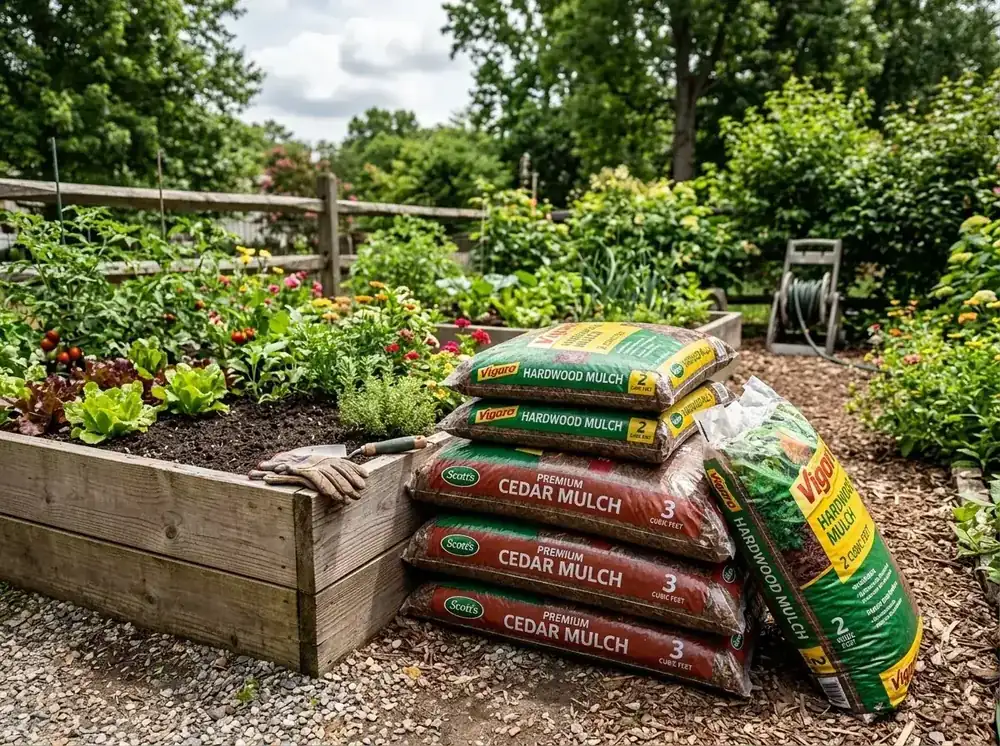
Avoid these errors to get the most from your mulch investment:
- Too much mulch — More than 4–6 inches traps moisture, suffocates roots, and creates habitat for pests. Stick to 3 inches for most applications.
- Too little mulch — Less than 2 inches won't effectively suppress weeds or retain moisture. Apply at least 2 inches for any mulching purpose.
- Volcano mulching — Piling mulch against tree trunks causes bark rot and invites insects. Keep mulch 3–4 inches away from trunks.
- Wrong mulch type — Rubber mulch near plants retains heat and can damage roots. Use organic mulch for garden beds; rubber only for playgrounds.
- Not refreshing mulch — Old, matted mulch blocks water and air. Rake or replace when mulch becomes compacted.
- Blocking drainage — Thick mulch on poorly drained clay soil traps water, drowning roots. Use thinner layers (1–2 inches) or improve drainage first.
Mulch vs Landscape Rock
Both mulch and landscape rock serve as ground cover, but they work very differently. Here's how to choose:
| Feature | Mulch | Landscape Rock |
|---|---|---|
| Cost per yd³ | $30 – $80 | $50 – $150 |
| Maintenance | Annual replenishment | Minimal — occasional weeding |
| Lifespan | 1–3 years (organic) | Permanent |
| Weed Control | Good with 3"+ depth | Excellent with landscape fabric |
| Moisture Retention | Excellent — reduces evaporation | Moderate — can increase soil temperature |
| Soil Improvement | Yes — decomposes and adds nutrients | No — inert material |
| Appearance | Natural, warm look | Modern, clean look |
| Heat | Stays cool | Retains heat in direct sun |
Choose mulch for garden beds, vegetable gardens, and areas where soil health matters. Choose landscape rock for pathways, dry areas, slopes prone to erosion, and low-maintenance landscaping. Use our Landscape Rock Calculator to estimate rock quantities.
Common Bed Sizes: Quick Reference
Here's a quick reference for common garden bed sizes at 3 inches depth:
| Bed Size | Cubic Yards | 2 ft³ Bags | 3 ft³ Bags | Bulk Cost ($40/yd³) |
|---|---|---|---|---|
| 4 × 8 ft | 0.30 | 4 | 3 | $12 |
| 10 × 10 ft | 0.93 | 14 | 9 | $37 |
| 10 × 20 ft | 1.85 | 28 | 19 | $74 |
| 15 × 20 ft | 2.78 | 42 | 28 | $111 |
| 20 × 30 ft | 5.56 | 84 | 56 | $222 |
Mulch Cost Breakdown
Mulch prices vary by type and region. Here's what to expect in 2026:
| Mulch Type | Bag Cost (2 cu ft) | Per Cubic Yard | Best For |
|---|---|---|---|
| Hardwood mulch | $3 – $5 | $30 – $50 | General landscaping |
| Cedar mulch | $5 – $8 | $50 – $80 | Insect repellent, aesthetics |
| Pine bark | $4 – $7 | $40 – $70 | Acid-loving plants |
| Rubber mulch | $8 – $12 | $80 – $120 | Playgrounds, high-traffic |
| Compost mulch | $3 – $6 | $25 – $45 | Vegetable gardens |
Bulk mulch costs $30–$80 per cubic yard depending on type, plus a $50–$150 delivery fee per order. For a 10×20 bed at 3 inches deep (1.85 cubic yards), expect to pay $55–$150 for bagged or $75–$130 for bulk delivered.
Frequently Asked Questions
How much mulch do I need?
To calculate mulch, multiply the length and width of the area, convert the mulch depth from inches to feet, calculate the total cubic feet, then divide by 27 to get cubic yards. Most garden beds need 2–3 inches of mulch for effective weed control and moisture retention.
How many bags of mulch equal a cubic yard?
About 13-14 bags of 2 cubic foot mulch, or 9 bags of 3 cubic foot mulch.
How much does a cubic yard of mulch cost?
Between $30 and $80 for standard hardwood mulch. Cedar and specialty mulches run $50–$120 per cubic yard.
How deep should I spread mulch?
3 inches is ideal for most garden beds. Use 2 inches for flower beds around established plants, and 4 inches for new beds or heavy weed areas.
Should I put mulch on wet or dry soil?
Apply mulch to moist soil. Water the area first, then apply mulch to lock in the moisture.
How often should I replace mulch?
Organic mulch breaks down in 1-2 years and should be replenished. Rubber mulch lasts 10+ years but doesn't improve soil.
Can I put mulch too thick?
Yes. More than 4-6 inches can trap too much moisture, rot plant roots, and create habitat for pests. Stick to 3 inches for most applications.
Bulk vs bagged mulch — which is cheaper?
Bulk is almost always cheaper for large projects (1+ cubic yard). Bagged is more practical for small areas under 0.5 yd³ since there's no delivery fee or minimum order.
What is the difference between mulch and landscape rock?
Mulch is organic material that breaks down and improves soil but needs annual replacement. Landscape rock is permanent, requires no replacement, but doesn't add nutrients to soil and can retain heat.
How much mulch do I need for a 10×10 area?
At 3 inches deep, a 10×10 ft area needs about 0.93 cubic yards or 14 bags of 2-cubic-foot mulch. At 2 inches deep, you need about 0.62 cubic yards or 9 bags.
Related Calculators & Tools
- Mulch & Soil Calculator — Get exact cubic yards, bags, and cost for your project
- Landscape Rock Calculator — Compare rock vs mulch for your project
- Concrete Slab Calculator — Estimate concrete for patios and walkways
- Firewood Cord Calculator — Estimate firewood volume and cost
Data Sources
- The Home Depot – How Much Mulch Do I Need (2026)
- Lowe's – How to Calculate How Much Mulch You Need (2026)
- Family Handyman – How Much Mulch Do I Need
- The Spruce – How to Calculate How Much Mulch You Need (2026)
- University of Missouri Extension – Mulching Landscape Trees (2026)