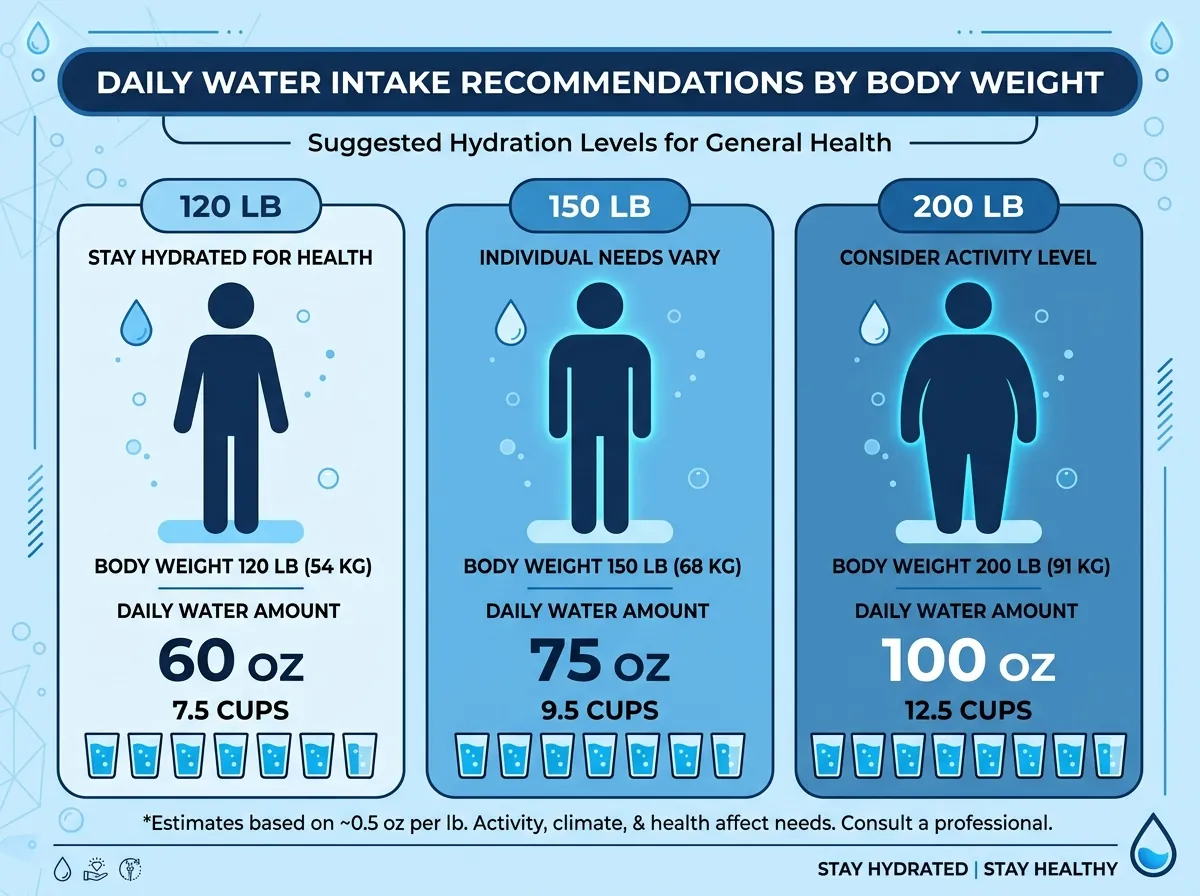
How much water should you drink a day? Daily water needs vary based on body weight, activity level, climate and overall health. Many hydration calculators start with approximately half your body weight (lb) in ounces as a baseline and then adjust for activity and environmental conditions. Individual needs can vary.
This guide explains what major health organizations actually recommend, how to calculate your personal water needs step by step, and the signs you are drinking too little — or too much.
How Much Water Do You Need Per Day?
Your body is roughly 60% water. Every cell, tissue, and organ depends on adequate hydration to function properly. Water regulates body temperature, transports nutrients, cushions joints, and flushes waste. The exact amount you need depends on four factors: your body weight, how active you are, the climate you live in, and your overall health.
Major health organizations provide general ranges rather than a single universal number. The National Academies of Sciences, Engineering, and Medicine recommends about 11.5 cups (2.7 liters) for women and 15.5 cups (3.7 liters) for men daily — and that includes water from food. The CDC suggests about 9 cups for women and 13 cups for men based on U.S. Dietary Guidelines.
| Organization | Women | Men | Notes |
|---|---|---|---|
| National Academies (NASEM) | 11.5 cups (2.7 L) | 15.5 cups (3.7 L) | Total water from all sources |
| Mayo Clinic | 11.5 cups (2.7 L) | 15.5 cups (3.7 L) | Includes ~20% from food |
| CDC | ~9 cups | ~13 cups | Based on U.S. Dietary Guidelines |
| U.S. Army | — | ~13 cups | Minimum for active soldiers |
Use Our Free Daily Water Intake Calculator
Enter your weight, activity level, and climate — get your personalized daily water needs in seconds.
Hydration CalculatorHow to Use the Water Intake Calculator
Our calculator estimates hydration needs based on weight, activity and climate. Follow these steps to get your personalized recommendation:
Type your weight in pounds or kilograms. The calculator uses your weight to establish a baseline hydration need of approximately half your body weight in ounces.
Choose your age bracket — teens, adults, or older adults. Teenagers generally need more water relative to body weight due to growth and higher metabolic rates, while older adults may need slightly less due to lower total body water.
Select sedentary, light, moderate, or intense based on your typical daily movement and exercise routine. This applies an activity multiplier to your baseline.
Pick temperate, hot, or humid to adjust for environmental water loss. Hot and humid climates increase sweating, which raises your fluid requirements.
The calculator returns your personalized daily water intake in ounces, cups, and liters. Use this as a target — not a strict limit. Your body will tell you if it needs more or less.
Daily Water Intake Formula
The calculator uses a three-step formula that starts with your body weight and adjusts for age, activity, and climate:
Adjusted Intake = Base × Age Factor × Activity Factor × Climate Factor
Base Intake: Start with half your body weight in ounces. A 160 lb person begins with 80 oz. This accounts for basic physiological needs — breathing, circulation, digestion, and temperature regulation.
Age Factor: Teenagers (13–17) multiply by 1.1 because growth increases metabolic water loss. Adults (18–64) use 1.0 as the baseline. Older adults (65+) multiply by 0.9 because total body water decreases with age.
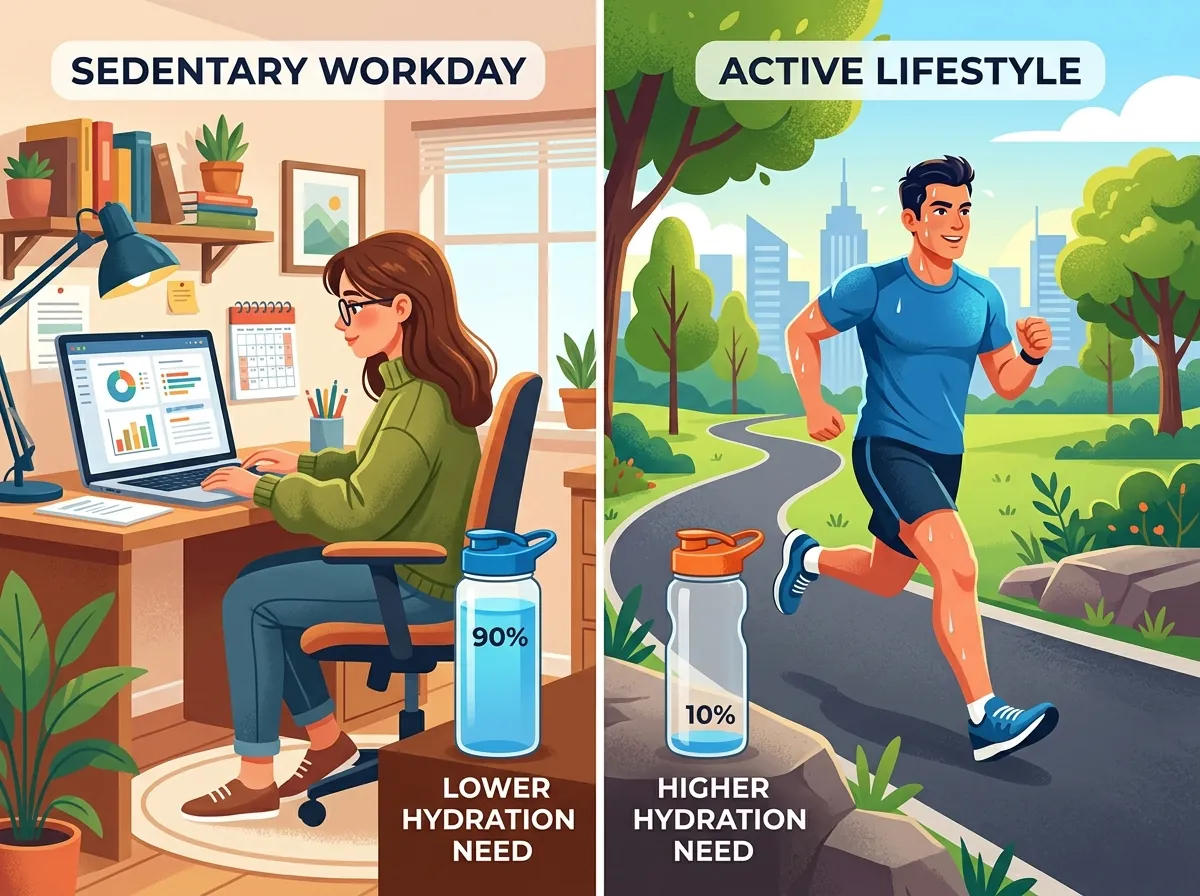
Activity Factor: Sedentary lifestyles use 1.0. Light activity (walking, yoga) multiplies by 1.2. Moderate exercise (jogging, cycling) uses 1.35. Intense workouts (running, HIIT, sports) multiply by 1.5.
Climate Factor: Temperate climates use 1.0. Hot and dry climates multiply by 1.15. Hot and humid climates use 1.25 because sweat evaporates less efficiently, forcing your body to produce more sweat to cool down.
| Multiplier | Category | Factor |
|---|---|---|
| Age | Teenagers (13–17) | 1.1 |
| Adults (18–64) | 1.0 | |
| Older Adults (65+) | 0.9 | |
| Activity | Sedentary | 1.0 |
| Light | 1.2 | |
| Moderate | 1.35 | |
| Intense | 1.5 | |
| Climate | Temperate | 1.0 |
| Hot & Dry | 1.15 | |
| Hot & Humid | 1.25 |
Worked Example
Let's calculate the daily water need for a 160 lb adult with light activity in a temperate climate:
160 ÷ 2 = 80 oz
80 × 1.0 (adult) = 80 oz
80 × 1.2 (light activity) = 96 oz
96 × 1.0 (temperate) = 96 oz
96 oz = 12 cups = 2.84 liters
A 160 lb adult doing light exercise in a temperate climate should aim for about 96 oz (12 cups or 2.84 liters) of total water per day. If that same person switches to intense workouts, the number jumps to 120 oz (15 cups or 3.55 liters).
Daily Water Recommendations
General guidelines vary by age, sex, and life stage. These are starting points — your individual needs may be higher or lower depending on weight, activity, and health conditions.
| Group | Approximate Daily Intake | Notes |
|---|---|---|
| Adult Men | 13–15.5 cups (3.1–3.7 L) | Higher muscle mass increases baseline needs |
| Adult Women | 9–11.5 cups (2.1–2.7 L) | Pregnancy adds ~3 cups; breastfeeding adds ~5 cups |
| Teenagers (13–17) | 8–11 cups (1.9–2.6 L) | Growth and higher metabolic rate increase needs |
| Older Adults (65+) | 7–10 cups (1.7–2.4 L) | Reduced thirst sensation; plan regular intake |
| Pregnant Women | ~10 cups (2.4 L) | Mayo Clinic recommendation for pregnancy |
| Breastfeeding Mothers | ~13 cups (3.1 L) | Additional fluid for milk production |
What Counts Toward Your Daily Water Intake?
You do not have to get all your hydration from plain water. About 20% of your daily water intake typically comes from food, and other beverages contribute as well. Here is what counts:
- Water: Plain water is the most efficient hydrator. It absorbs quickly and contains no calories or additives.
- Tea: Herbal and black teas are about 99% water. Even caffeinated tea provides meaningful hydration despite mild diuretic effects.
- Coffee: Despite the caffeine myth, coffee is about 96% water. A cup of coffee contributes almost as much hydration as a cup of water, according to the Mayo Clinic.
- Milk: Milk is approximately 90% water and adds electrolytes like sodium and potassium that help your body retain fluid.
- Fruits: Watermelon (92% water), strawberries (91%), cantaloupe (90%), and oranges (87%) are excellent hydration sources.
- Vegetables: Cucumbers (96%), celery (95%), lettuce (96%), and zucchini (94%) are among the most hydrating foods.
- Soup and broth: Liquid-based meals count toward your intake and provide electrolytes that help absorption.
Foods with over 90% water content can contribute roughly 3 to 4 cups of water per day to your total intake. This is why the National Academies figure includes water from all sources — not just beverages.
Water Intake During Exercise
Physical activity increases water loss through sweat. The amount depends on exercise intensity, duration, humidity, and your individual sweat rate. Here is a general guide:
Light Exercise
Walking, stretching, or gentle yoga for 30 minutes requires about 12 oz (1.5 cups) of additional water. Sip before, during, and after.
Moderate Exercise
Jogging, cycling, or swimming for 30 minutes demands 16 to 20 oz (2 to 2.5 cups). Drink 4 to 8 oz every 15 to 20 minutes during activity.
Intense Exercise
Running, HIIT, or competitive sports for 30 minutes may require 24 to 32 oz (3 to 4 cups). Weigh yourself before and after exercise — for every pound lost, drink 16 oz of water to rehydrate.
Recovery
After exercise, continue drinking water for several hours. A good rule: drink 16 to 24 oz within 30 minutes of finishing, then continue sipping until your urine returns to pale yellow.
| Exercise Level | Additional Water (per 30 min) | Drinking Frequency |
|---|---|---|
| Light | ~12 oz (1.5 cups) | Every 20 minutes |
| Moderate | 16–20 oz (2–2.5 cups) | Every 15–20 minutes |
| Intense | 24–32 oz (3–4 cups) | Every 10–15 minutes |
Hydration in Hot Weather
Heat and humidity are among the biggest factors affecting water needs. When temperatures rise, your body sweats more to cool down — and that fluid needs to be replaced.
- Hot climates: Dry heat (like desert environments) causes rapid sweat evaporation. You may not notice how much you are sweating, making it easy to become dehydrated without realizing it. Increase intake by 15–25%.
- Humid climates: High humidity prevents sweat from evaporating efficiently, so your body produces even more sweat to compensate. This can raise water needs by 25–50% compared to temperate conditions.
- Outdoor workers: Construction workers, landscapers, and farmers in summer may need 1 to 1.5 gallons (4 to 6 liters) per day. OSHA recommends 1 cup every 15–20 minutes for workers in hot environments.
- Summer sports: Athletes training in summer heat should pre-hydrate with 16–20 oz two hours before activity, drink during exercise, and rehydrate afterward with electrolyte-containing fluids.
Signs of Dehydration
Thirst is actually a late signal — your body is already running low on fluids by the time you notice it. The earlier you catch dehydration, the easier it is to reverse.
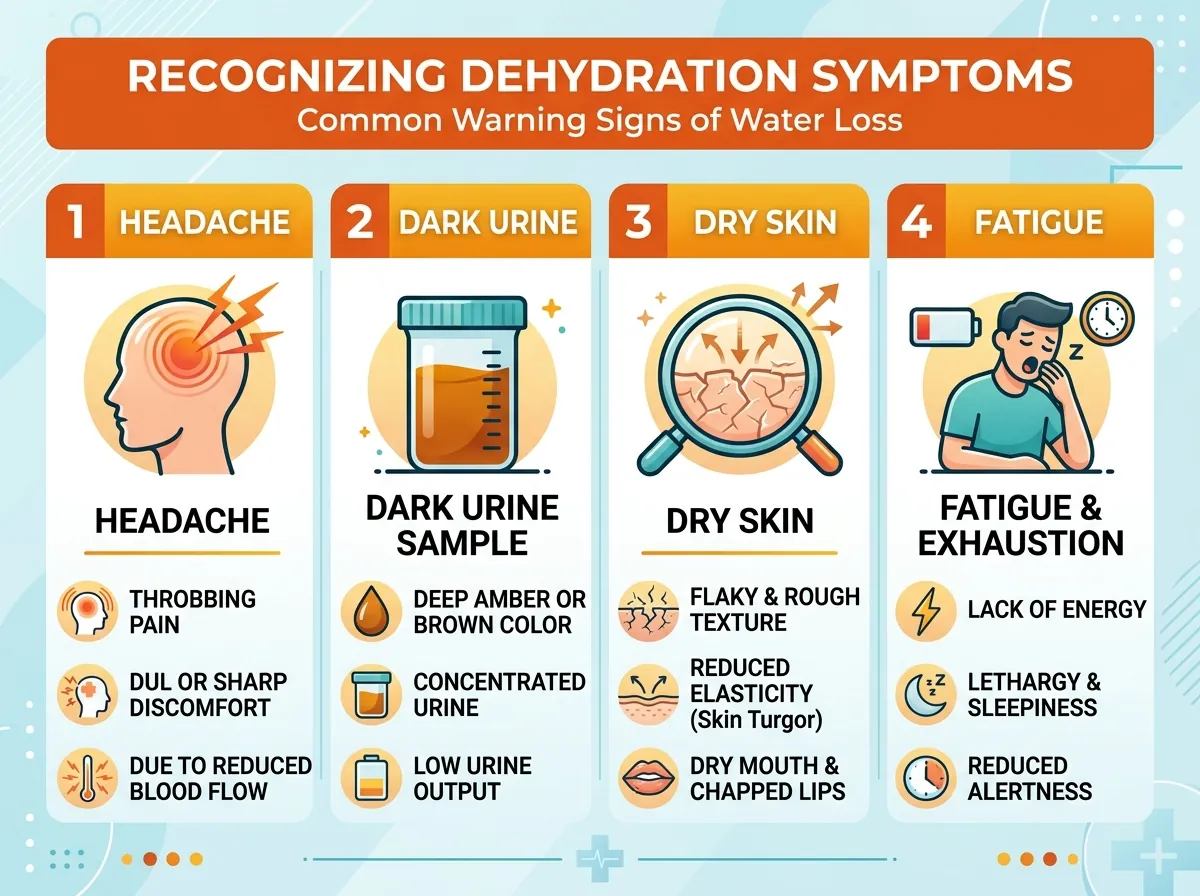
| Severity | Body Weight Loss | Symptoms |
|---|---|---|
| Mild | 1–2% | Thirst, dry mouth, slightly darker urine, mild headache, reduced focus |
| Moderate | 3–5% | Intense thirst, dry skin, dizziness, fatigue, decreased urine output, muscle cramps |
| Severe | 5%+ | Very dark urine, rapid heartbeat, confusion, fainting — medical emergency |
Tips to Stay Hydrated
Building a hydration habit does not require drastic changes. These practical tips make it easier to hit your daily target:
- Carry a reusable bottle: Keep water within arm's reach at all times. A visible bottle serves as a constant reminder to drink.
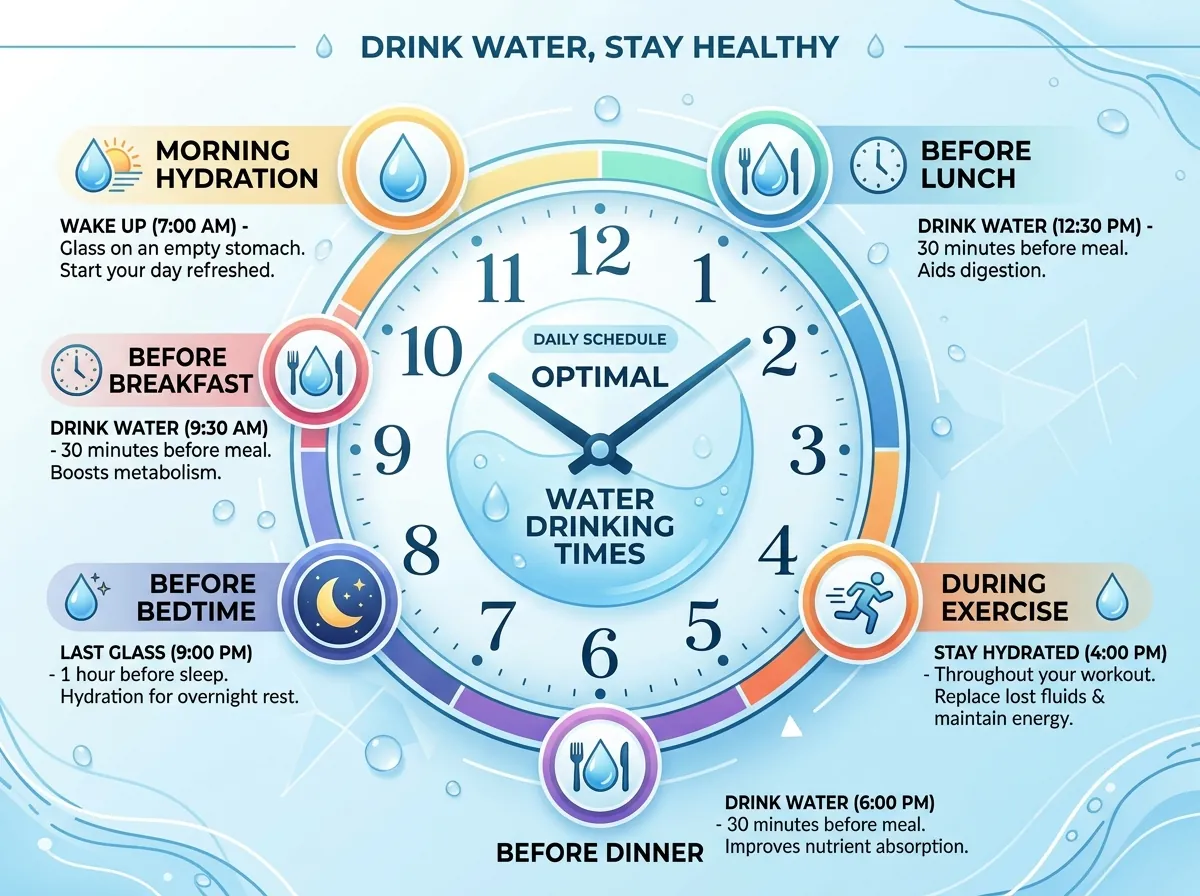
- Drink before you feel thirsty: Thirst means you are already mildly dehydrated. Set a schedule — drink a glass when you wake up, with each meal, and before bed.
- Eat water-rich foods: Watermelon, cucumbers, oranges, soups, and salads contribute meaningfully to your hydration. Aim for at least one hydrating snack per day.
- Limit sugary drinks: Soda, sweetened juice, and energy drinks add calories without efficiently hydrating you. Replace one sugary drink per day with water.
- Monitor urine color: Pale yellow (like lemonade) means you are well hydrated. Dark yellow or amber means you need more fluids.
- Increase intake during illness: Fever, vomiting, and diarrhea cause rapid fluid loss. The CDC recommends sipping water or electrolyte drinks every hour when sick.
Common Hydration Myths
Many widely repeated claims about water intake are oversimplified or inaccurate. Here are the most common myths — and what the evidence actually says:
- "Everyone needs exactly 8 glasses a day." This is a rough guideline, not a universal rule. Actual needs vary from 7 to 16+ cups depending on body size, activity, and climate. The 8-cup number came from a 1945 recommendation that included water from food.
- "Coffee always dehydrates you." The diuretic effect of caffeine is mild and temporary. A cup of coffee still delivers about 96% of its volume as usable water. Regular coffee drinkers develop tolerance to the mild diuretic effect.
- "Clear urine is always ideal." Completely clear urine may indicate overhydration, which can flush out essential electrolytes. A pale yellow color is the true sign of adequate hydration.
- "Only water counts." Tea, coffee, milk, juice, and water-rich foods all contribute to your daily intake. The National Academies counts water from all sources — not just plain water.
- "You only need water during exercise." Hydration matters throughout the day. Your body continuously loses water through breathing, sweating, and digestion — not just during workouts.
Frequently Asked Questions
How much water should you drink a day?
Daily water needs vary based on body weight, activity level, climate and overall health. Many hydration calculators start with approximately half your body weight (lb) in ounces as a baseline and then adjust for activity and environmental conditions. The National Academies recommends about 11.5 cups (2.7 L) for women and 15.5 cups (3.7 L) for men from all sources.
How much water should I drink based on my weight?
A common formula is half your body weight in ounces. For a 150 lb person, that is about 75 oz or roughly 9 cups as a baseline. Active people need 20 to 50% more depending on exercise intensity. A 200 lb person starts with 100 oz (12.5 cups) and adjusts from there.
Is 8 cups of water a day enough?
That number is a starting point, not a one-size-fits-all target. It does not factor in your body mass, how much you move, or the climate you live in. Most adults land somewhere between 11 and 15 cups when all variables are considered.
Can you drink too much water?
Yes. Overloading on water can dilute sodium in your blood to dangerous levels — a condition called hyponatremia. It is uncommon in everyday life, but endurance athletes who drink a liter or more per hour during intense exercise face higher risk.
Does coffee count toward daily water intake?
It does. Despite the caffeine, a cup of coffee still delivers about 96% of its volume as usable water. The Mayo Clinic has confirmed that caffeinated drinks contribute meaningfully to your daily hydration.
What foods help you stay hydrated?
Watermelon, cucumbers, oranges, strawberries, celery, lettuce, and soups are all high in water content. Fruits and vegetables with over 90% water can contribute roughly 3 to 4 cups of water per day to your total intake.
How much water should I drink during exercise?
For light exercise, add about 12 oz (1.5 cups) per 30 minutes. Moderate activity calls for 16 to 20 oz (2 to 2.5 cups) per 30 minutes. Intense workouts may require 24 to 32 oz (3 to 4 cups) per 30 minutes. Always drink 16 oz for every pound of sweat lost during exercise.
What are the early signs of dehydration?
Early signs include dark urine, dry mouth, fatigue, headache, dizziness, and muscle cramps. By the time you feel thirsty, your body is already mildly dehydrated. Severe dehydration with rapid heartbeat or confusion requires immediate medical attention.
How do I know if I am drinking enough water?
Pale yellow urine (like lemonade) is the simplest indicator. You should also rarely feel thirsty, have energy throughout the day, and experience normal bowel movements. Your urine output should be about 6 to 8 times per day.
Does humid weather affect how much water I need?
Yes. In humid climates, sweat evaporates less efficiently so your body produces more sweat to cool down, increasing fluid loss. Hot and humid conditions can raise water needs by 30 to 50% compared to temperate climates.
Data Sources
- National Academies of Sciences, Engineering, and Medicine (2004)
- Mayo Clinic: How Much Water Do You Need to Drink Daily?
- CDC: Plain Water — The Healthier Choice
- Harvard T.H. Chan School of Public Health: Water
- American Council on Exercise: Hydration in Hot Weather