Most homeowners use 0.5 to 2 cords of firewood per season for occasional burning, and 3 to 6 cords when wood is the primary heat source. The exact amount depends on your climate, home size, insulation, and stove efficiency. Use our Firewood Cord Calculator to estimate your needs based on stack dimensions.
Order firewood too little and you're freezing in February with an empty wood rack. Order too much and you're paying for wood that sits outside rotting.
The answer depends on three things: your climate zone, the size of your home, and how often you burn. Here's a data-driven guide to help you order the right amount – and a free calculator to do the math for you.
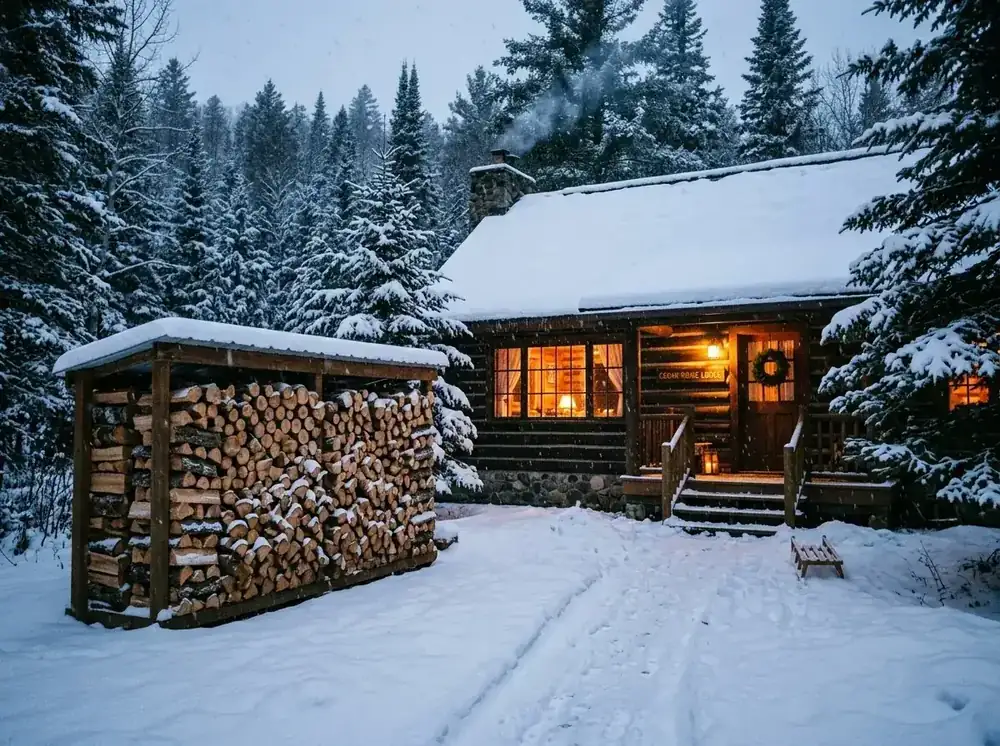
Quick Answer: How Many Cords?
| Home Size | Mild Climate | Moderate Climate | Cold Climate |
|---|---|---|---|
| Under 1,000 sq ft | 1 – 2 cords | 2 – 3 cords | 3 – 4 cords |
| 1,000 – 2,000 sq ft | 2 – 3 cords | 3 – 4 cords | 4 – 6 cords |
| 2,000 – 3,000 sq ft | 3 – 4 cords | 4 – 5 cords | 6 – 8 cords |
| 3,000+ sq ft | 4 – 5 cords | 5 – 7 cords | 8 – 10+ cords |
Understanding Cord Measurements
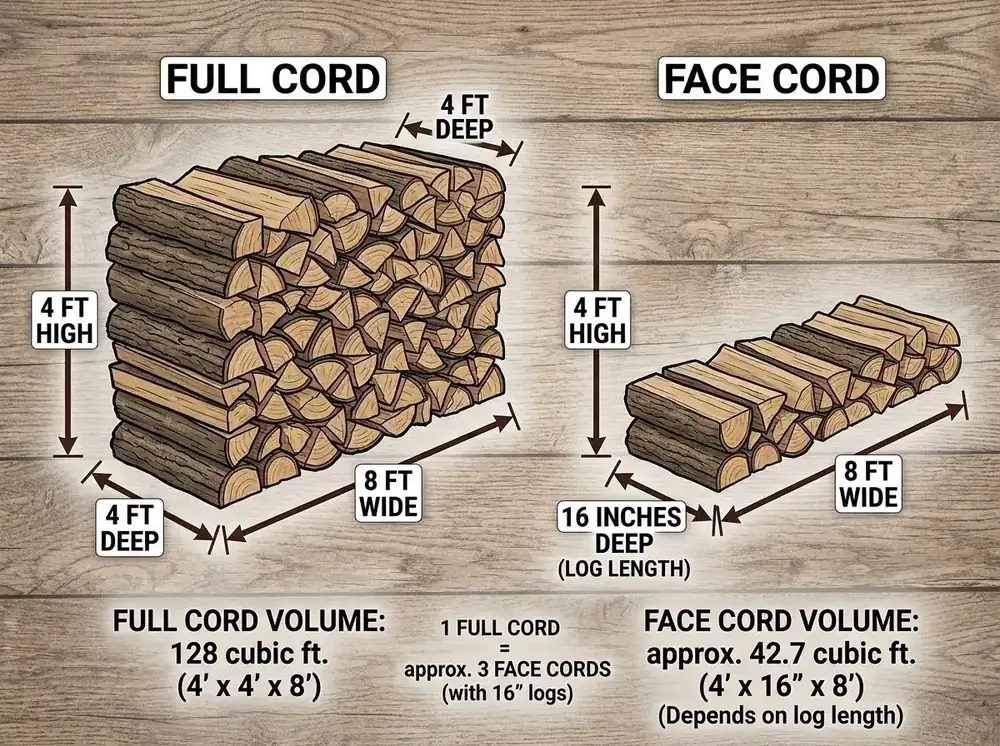
Firewood is sold by the cord. Here's what the terms mean:
| Measurement | Dimensions | Cubic Feet | Equivalent |
|---|---|---|---|
| Full cord | 4 ft – 4 ft – 8 ft | 128 cubic feet | Standard unit |
| Face cord | 4 ft – 8 ft – (length of logs) | Varies | Usually 1/3 of a cord |
| Half cord | 4 ft – 4 ft – 4 ft | 64 cubic feet | 1/2 of a cord |
| Rick | Varies by region | Varies | Ask your supplier |
A face cord is the most common consumer purchase. If logs are cut to 16 inches, a face cord = 4 ft – 8 ft – 16 inches = ~42.7 cubic feet, or about 1/3 of a full cord.
What Affects How Much You Burn?
| Factor | Impact |
|---|---|
| Climate zone | Cold climates (Zone 3-4) use 2– more than mild (Zone 6-7) |
| Home insulation | Well-insulated homes use 30–50% less wood |
| Home size | Larger homes = more volume to heat = more wood |
| Burn frequency | Every day vs weekends only = 2–3– difference |
| Wood species | Oak burns longer than pine (nearly twice the heat per cord) |
| Moisture content | Wet wood produces 30% less heat and more creosote |
| Stove efficiency | New EPA stoves: 70-80% efficient. Old: 30-40% |
By Climate Zone
The US has 8 climate zones. Here's what to expect:
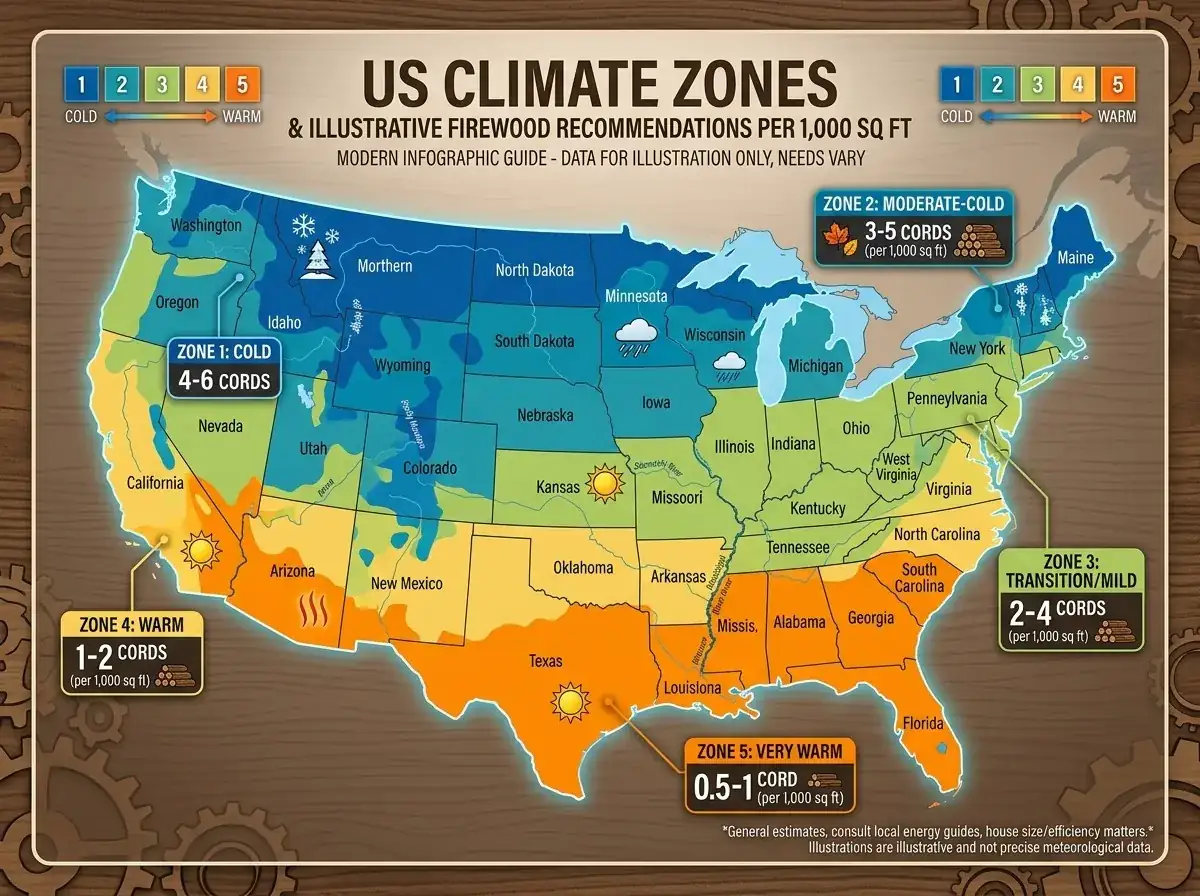
| Zone | States | Heating Degree Days | Cords per 1,000 sq ft |
|---|---|---|---|
| Zone 3 (Cold) | MN, WI, MT, ND | 8,000 – 10,000 | 3 – 4 cords |
| Zone 4 (Cool) | NY, PA, MI, OR | 6,000 – 8,000 | 2 – 3 cords |
| Zone 5 (Mixed) | OH, IN, IL, CO | 5,000 – 6,000 | 2 – 2.5 cords |
| Zone 6 (Moderate) | NJ, VA, TN, MO | 3,500 – 5,000 | 1.5 – 2 cords |
| Zone 7 (Mild) | NC, GA, TX, CA | 2,000 – 3,500 | 1 – 1.5 cords |
These estimates assume firewood is your primary heat source for a 6-month heating season.
Use Our Free Firewood Cord Calculator
Enter your stack dimensions and get an instant conversion to cords and face cords.
Firewood Cord CalculatorHow to Stack Firewood Properly
Proper stacking saves space and helps wood dry faster.
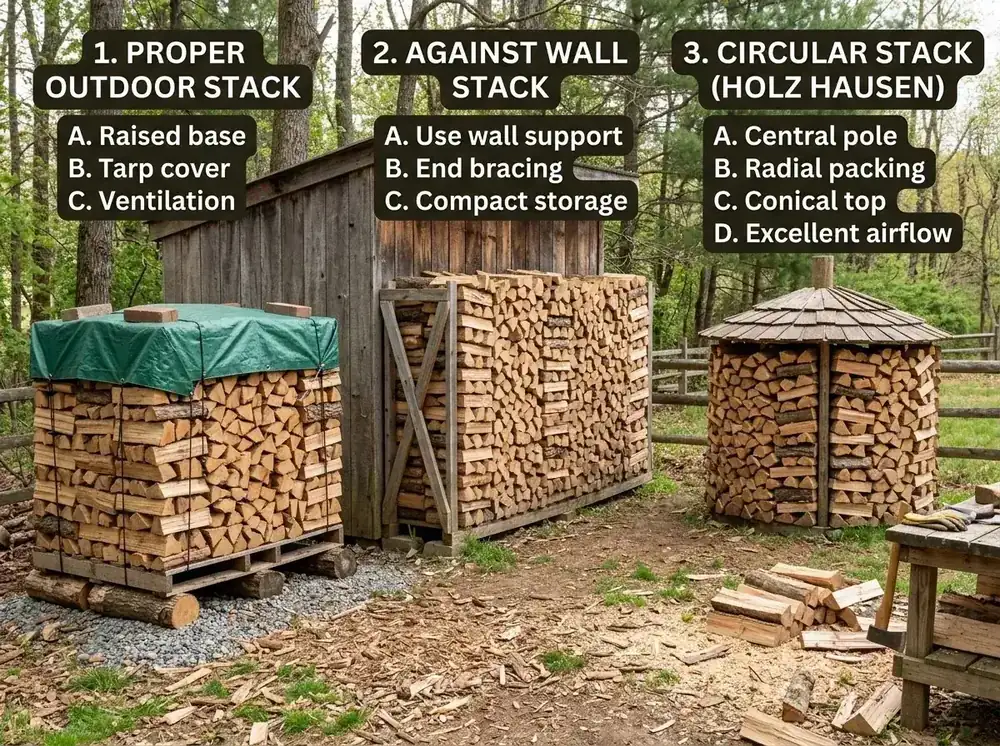
Place your woodpile where it gets sun and airflow. Avoid stacking against your house (pests and moisture).
Keep wood off the ground to prevent rot. A pallet or 2 inches of gravel works well.
Build solid end columns, then fill in the middle. Criss-cross the ends for stability.
Use a tarp or metal roofing on top, but leave the sides open for airflow. Full wrapping traps moisture.
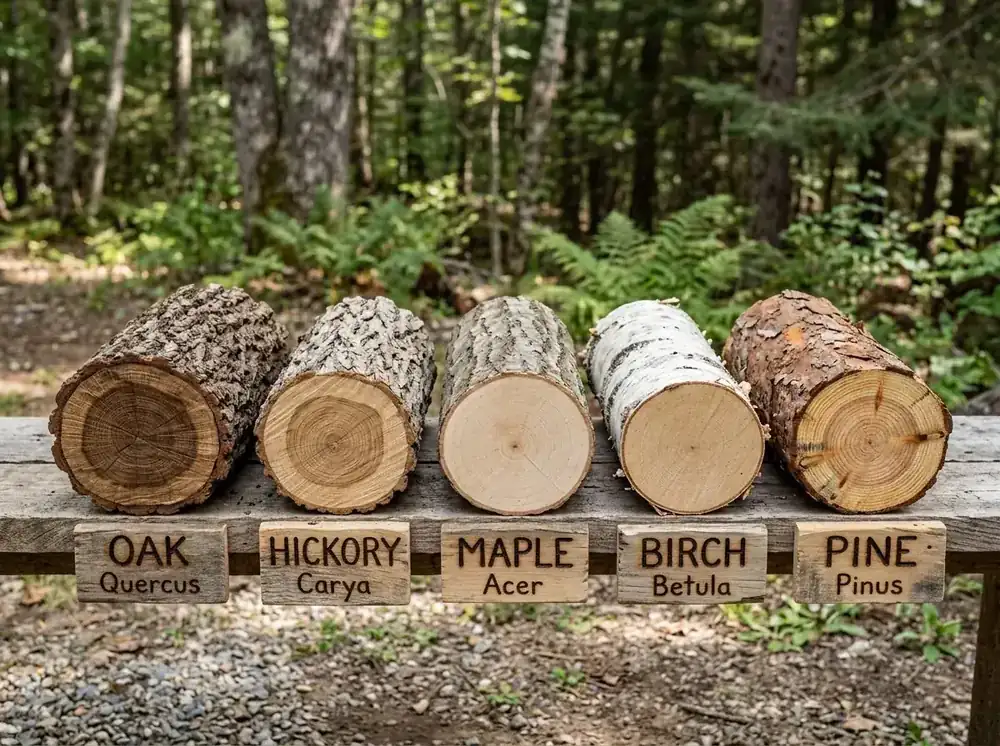
Best Firewood Types: What Burns Best?
| Species | BTU per Cord | Seasoning Time | Smoke Level | Burn Time |
|---|---|---|---|---|
| Oak (red/white) | 24 – 30 million | 12 – 24 months | Low | 8 – 12 hours |
| Hickory | 25 – 28 million | 12 – 18 months | Low | 8 – 10 hours |
| Maple (sugar) | 22 – 25 million | 6 – 12 months | Low | 6 – 8 hours |
| Ash | 20 – 24 million | 6 – 12 months | Low | 6 – 8 hours |
| Birch | 20 – 22 million | 6 – 12 months | Moderate | 4 – 6 hours |
| Pine | 12 – 16 million | 3 – 6 months | High | 2 – 4 hours |
| Poplar | 10 – 14 million | 3 – 6 months | High | 2 – 3 hours |
A cord of oak produces twice the heat of a cord of pine. If your supplier offers mixed hardwood, that's usually the best value.
Firewood Cost
| Type | Price per Cord | Notes |
|---|---|---|
| Seasoned hardwood | $200 – $350 | Best value. Dry, ready to burn. |
| Green hardwood | $150 – $250 | Cheaper but needs 6-12 months drying |
| Softwood (pine) | $150 – $250 | Good for kindling and campfires |
| Kiln-dried | $300 – $450 | Ready to burn immediately, very dry |
| Delivered (per cord) | $50 – $150 extra | Depends on distance |
For a moderate climate with a 1,500 sq ft home, budget $400–$700 per season for 2 cords of seasoned hardwood delivered.
Firewood Cost by Amount (2026)
Firewood pricing varies by amount, species, and whether it's seasoned or green. Here's what to expect in 2026:
| Amount | Typical Cost | Cubic Feet | What You Get |
|---|---|---|---|
| Quarter Cord | $50 – $100 | 32 cu ft | Good for a weekend trip or first-time buyers |
| Half Cord | $100 – $175 | 64 cu ft | Enough for occasional evening fires in fall |
| Face Cord | $75 – $150 | ~42.7 cu ft | Most common consumer purchase |
| Full Cord | $200 – $350 | 128 cu ft | Best value per unit, ideal for regular burners |
| 2 Cords | $350 – $600 | 256 cu ft | Season supply for primary heat users |
| 3+ Cords | $500 – $900+ | 384+ cu ft | Volume discount, best for cold climates |
Green vs Seasoned Firewood
The difference between green and seasoned wood affects heat output, smoke, and your chimney. Here's a direct comparison:
| Factor | Green (Unseasoned) | Seasoned (Dried) |
|---|---|---|
| Moisture content | 30 – 60% | Below 20% |
| Heat output | 30% less | Full rated BTU |
| Smoke | Heavy, acrid | Minimal, clean |
| Creosote buildup | High – chimney fire risk | Low – safe to burn |
| Storage | Must dry 6–12 months | Ready to burn now |
| Price per cord | $150 – $250 | $200 – $350 |
| Best for | Budget buyers with patience | Anyone who burns regularly |
Bottom line: Always buy seasoned wood unless you have 6–12 months to dry it yourself. The upfront savings on green wood are offset by lower heat and higher chimney maintenance costs.
Firewood Storage Tips
How you store firewood directly affects how fast it dries and how long it lasts. Poor storage leads to rot, mold, and insects.
- Raise wood off the ground. Use pallets, cinder blocks, or a gravel base. Ground contact causes moisture absorption and rot.
- Cover the top only. Use a tarp or metal roofing on top, but leave sides open. Full wrapping traps moisture and prevents drying.
- Ensure airflow. Leave 2–3 inches between rows and the wall. Air circulation is the #1 factor in drying speed.
- Choose a sunny, dry location. Avoid shaded areas or spots that collect standing water after rain.
- Keep away from the house. Storing against your home invites pests (termites, carpenter ants) and traps moisture against siding.
- Don't stack too high. Maximum 4 feet for stability. Taller stacks can topple and are harder to cover properly.
Common Firewood Buying Mistakes
Avoid these costly mistakes that trip up first-time buyers:
- Buying green wood thinking it's seasoned. Ask the seller when it was cut. Seasoned wood should have been split and dried for at least 6 months. Bring a moisture meter ($20) to verify – aim for below 20%.
- Not checking measurements. Some suppliers stack loosely to make a cord look bigger. Always measure the stack yourself: it should be 4 ft – 4 ft – 8 ft (128 cubic feet).
- Ignoring delivery costs. Delivery can add $50–$150 per cord. Factor this into your budget. Some suppliers offer free delivery on 2+ cords – ask.
- Buying without storage plans. If you don't have proper storage, seasoned wood will reabsorb moisture and rot. Plan your storage before you buy.
- Choosing the wrong species for your needs. Pine is cheap but burns fast with high smoke – fine for kindling, bad for primary heat. Match the species to your burn schedule.
- Not asking about wood origin. Invasive species like emerald ash borer can spread through firewood. Buy local and don't transport firewood across state lines.
Frequently Asked Questions
How many face cords equal a full cord?
Three face cords (assuming 16-inch logs) equal one full cord. If logs are cut to 18 inches, it's about 2.7 face cords per cord.
How much firewood do I need for a wood stove?
For a wood stove as your primary heat in a moderate climate, expect 2–4 cords per 1,000 sq ft per season. Newer EPA stoves are more efficient and use less.
Can I burn wet or green wood?
You can, but shouldn't. Wet wood produces less heat, more smoke, and creosote buildup in your chimney. Season wood for at least 6 months before burning.
How long should firewood dry before burning?
6–12 months for hardwood, 3–6 months for softwood. Split wood dries faster than rounds. Moisture content below 20% is ideal.
What's the cheapest way to get firewood?
Buy green (unseasoned) wood in spring when prices are lowest. Split it yourself and let it dry over summer. You'll save 30–40% vs buying seasoned wood.
How do I measure firewood before buying?
Ask the supplier for a cord measurement. A full cord should fill a space 4 ft wide – 4 ft high – 8 ft long. Measure the stack yourself if possible.
What's the difference between a cord and a face cord?
A full cord is 4 ft – 4 ft – 8 ft = 128 cubic feet. A face cord is 4 ft – 8 ft – log length (usually 16 inches) = ~42.7 cubic feet. Three face cords equal one full cord.
How do I know if firewood is seasoned?
Seasoned wood has cracks in the ends, sounds hollow when knocked together, feels light, and has a moisture content below 20%. Green wood is heavy, sounds dull, and may have bark still attached.
Data Sources
- U.S. Department of Energy – Fireplaces and Wood Burning Stoves
- Purdue Extension – How Much Firewood Do I Need
- The Spruce – Firewood Cord Size and Buying Guide
- EPA BurnWise – Wood Heating Safety
- University of Minnesota Extension – How Much Firewood Do I Need
Related Posts
- Concrete Slab Cost in 2026: What the Data Actually Says
- How Much Mulch Do I Need? Calculator & Guide
- Landscape Rock Calculator: How Much Do You Need?
- Drywall Mud Coverage per Gallon: Complete Guide
Related Calculators
- Mulch & Soil Calculator – Estimate mulch and soil for landscaping projects
- Landscape Rock Calculator – Calculate rock, gravel, and sand needed
- Concrete Slab Calculator – Estimate concrete cost for outdoor projects