Most artists calculate a painting's price by adding labor costs (hourly rate – hours worked) and material costs. Many also consider canvas size, experience, framing, and gallery commissions before setting a final selling price. A common formula is: (Materials + (Hours – Hourly Rate)) – Markup = Selling Price.
One of the hardest questions every artist faces: "How much should I charge for this painting?"
Price too low and you're undervaluing your work, burning out, and can't sustain your art practice. Price too high and you struggle to make sales. The answer isn't guesswork – it's math. Here's how to calculate a fair, profitable price for your paintings.
The Three Pricing Methods
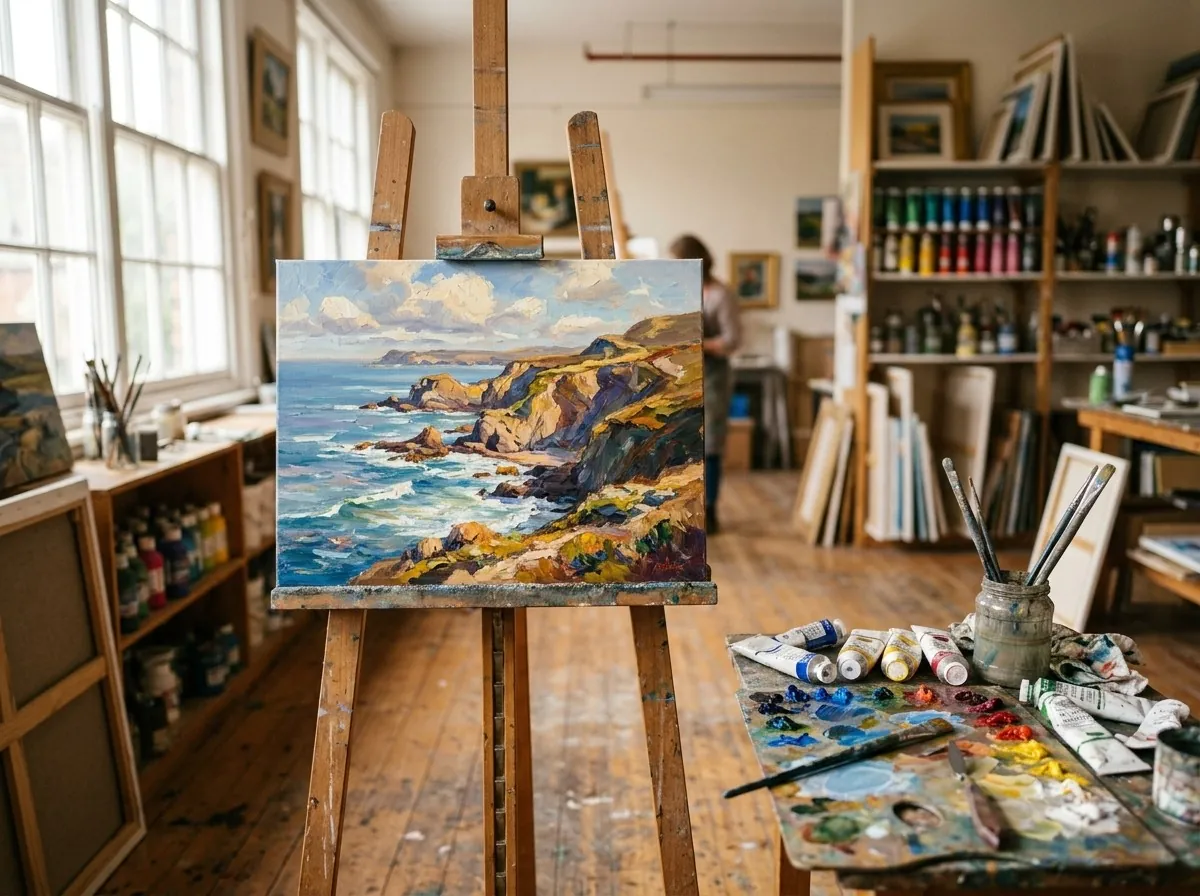
There are three main approaches to pricing artwork. Most successful artists use a combination of all three.
1. Cost-Plus Pricing
Start with your costs, then add a markup. This is the most straightforward method.
| Cost Component | Example (16–20 canvas) |
|---|---|
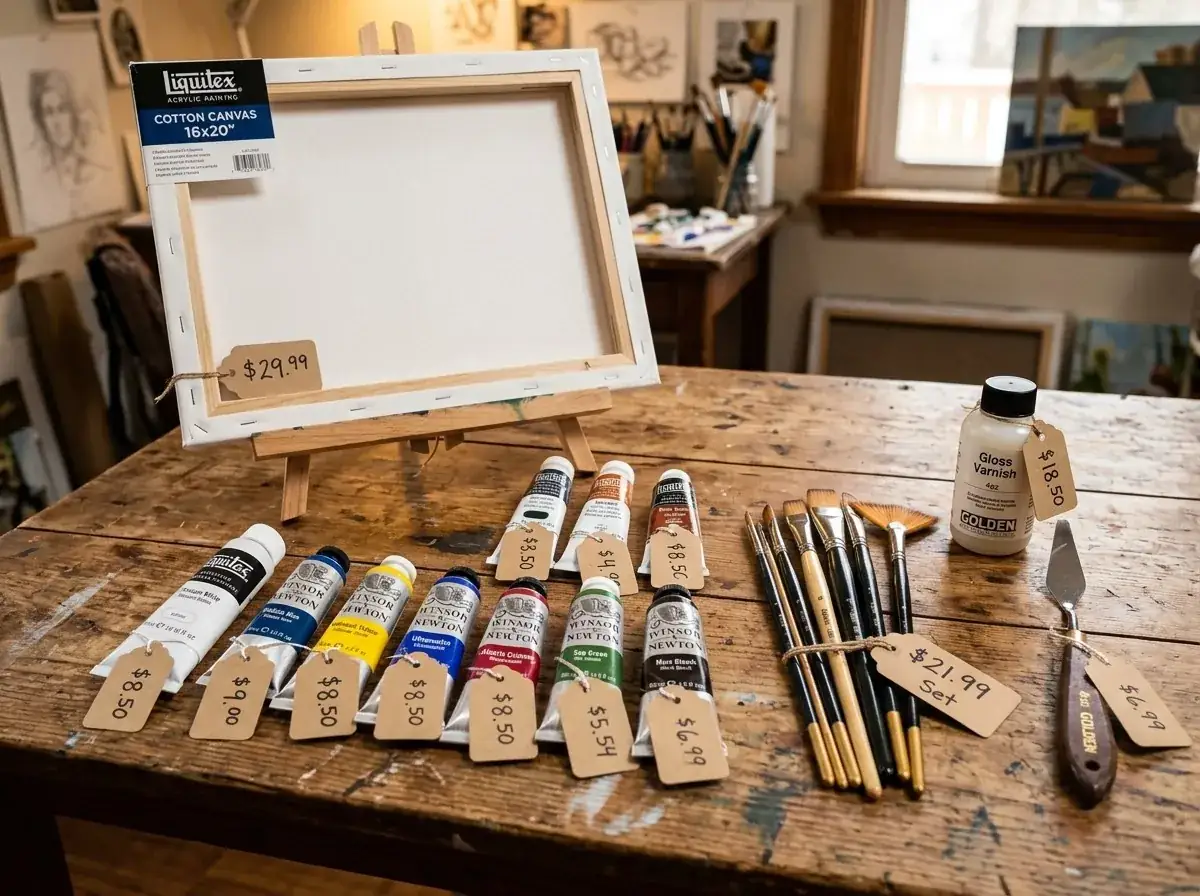
| Canvas | $8 – $25 |
| Paint (acrylic/oil) | $5 – $15 |
| Varnish/medium | $2 – $5 |
| Frame (if framed) | $15 – $80 |
| Time (hours – hourly rate) | $50 – $200 |
| Total cost | $80 – $325 |
Apply a 2– to 4– markup on total cost. A $100 cost painting priced at 3– = $300 retail price. For large canvases, use our Acrylic Paint Coverage Calculator to estimate how much paint you'll need.
2. Square Inch Pricing
Charge per square inch of canvas. This method scales consistently across sizes.
| Artist Level | Price per Sq Inch | 16–20 Price | 24–36 Price |
|---|---|---|---|
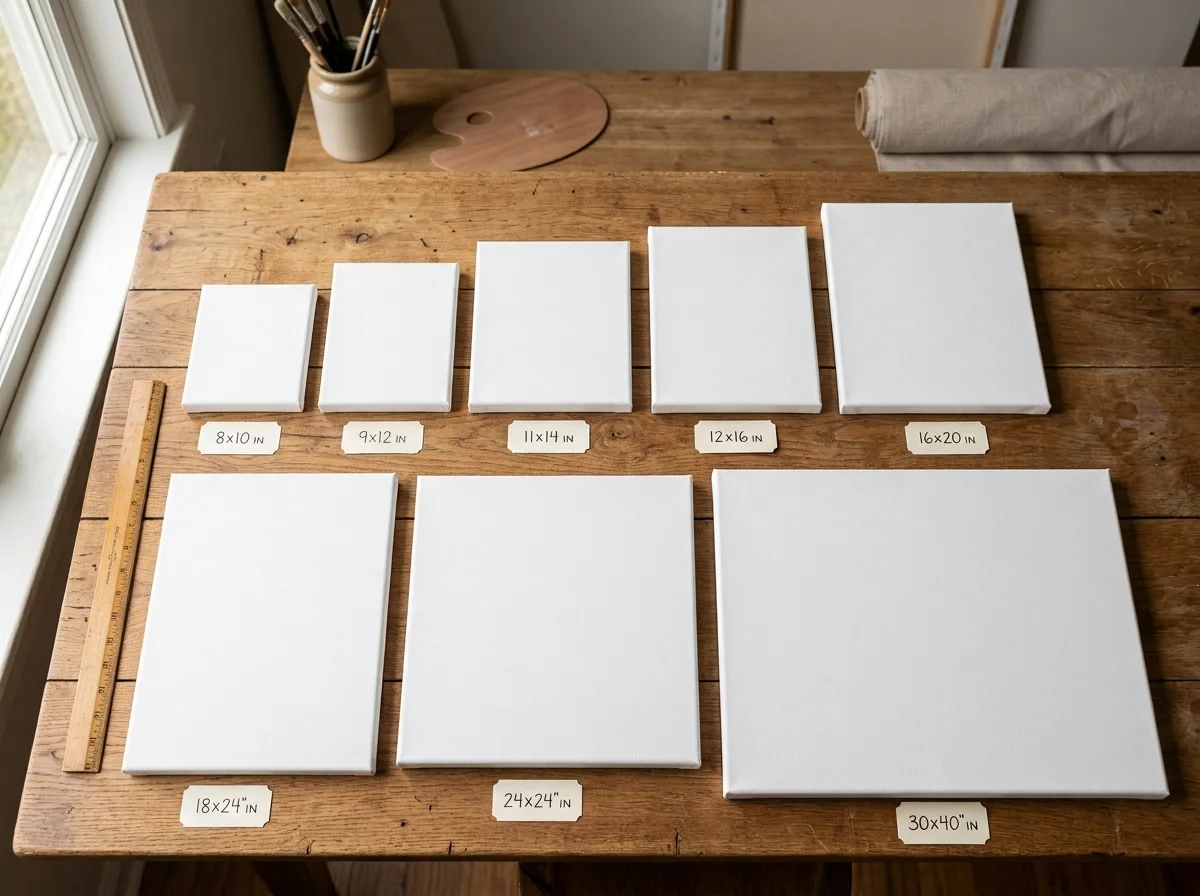
| Emerging/beginner | $0.50 – $1.00 | $160 – $320 | $432 – $864 |
| Intermediate | $1.00 – $2.00 | $320 – $640 | $864 – $1,728 |
| Established | $2.00 – $5.00 | $640 – $1,600 | $1,728 – $4,320 |
| Professional/gallery | $5.00 – $15.00 | $1,600 – $4,800 | $4,320 – $12,960 |
The formula: Width – Inches – Height – Inches – Price per Sq Inch = Retail Price
Use our Canvas Painting Price Calculator to apply this formula automatically — enter canvas dimensions, hours worked, and your hourly rate for an instant retail price.
3. Hourly Rate Method
Calculate how many hours the painting took, multiply by your desired hourly rate.
| Hourly Rate | 5 Hours | 10 Hours | 20 Hours |
|---|---|---|---|
| $20/hr | $100 | $200 | $400 |
| $35/hr | $175 | $350 | $700 |
| $50/hr | $250 | $500 | $1,000 |
| $75/hr | $375 | $750 | $1,500 |
Most artists should charge at least $25–$50 per hour once materials are covered. Don't forget to factor in time for social media, packaging, and shipping.
Use Our Free Canvas Painting Price Calculator
Enter your canvas size, hours worked, and hourly rate. Get an instant price estimate.
Canvas Painting Price CalculatorThe Formula That Works for Most Artists
Combine all three methods for the most accurate pricing:
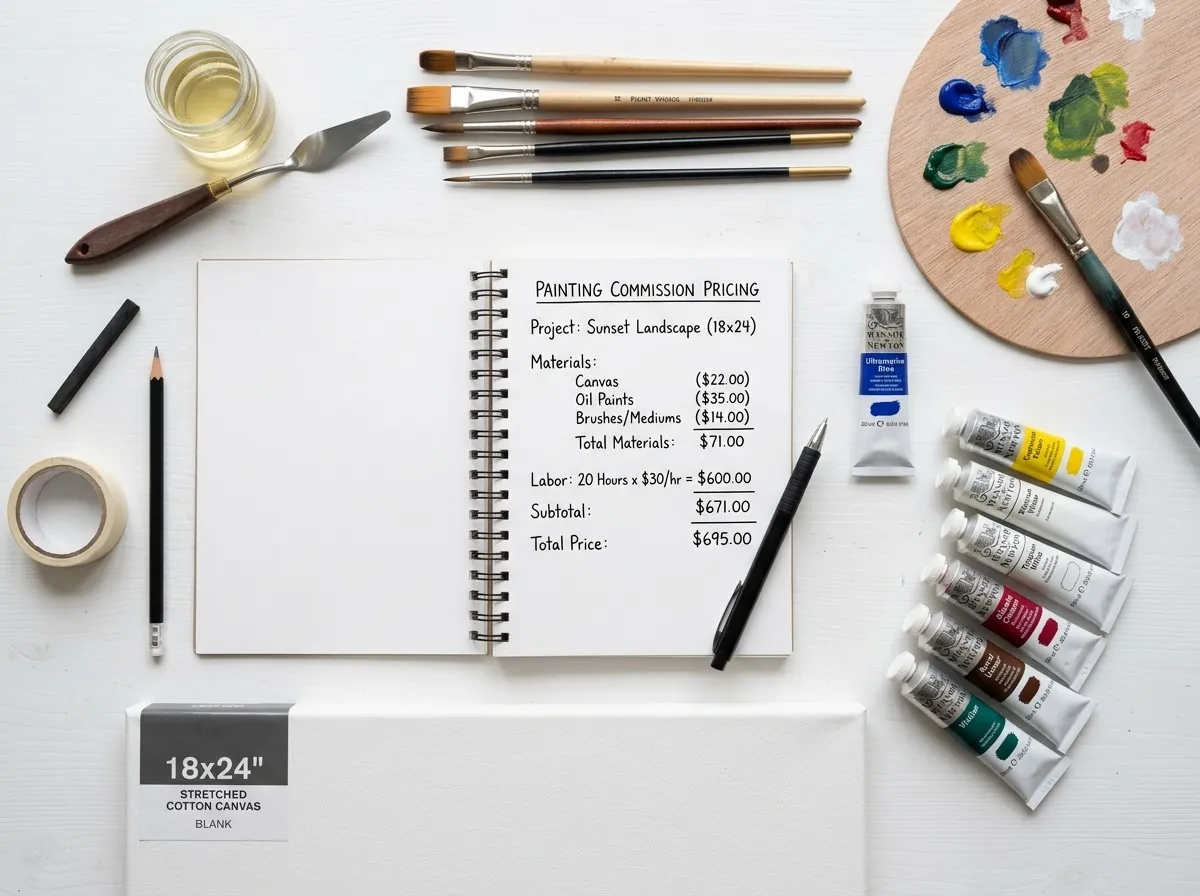
Canvas, paint, medium, varnish, frame. Be honest about what you spent.
Hours worked – $30–$50/hr minimum. Track your hours – most artists underestimate by 30%.
Studio space, website, packaging, travel, fees. Add 15–20% of costs.
Multiply total by 2– for wholesale, 2.5–3– for retail. This covers unsold work and future investment.
Pricing by Canvas Size
Here's what artists at different levels typically charge for common sizes:
| Canvas Size | Emerging | Intermediate | Established |
|---|---|---|---|
| 8–10 | $40 – $80 | $80 – $160 | $160 – $400 |
| 11–14 | $60 – $120 | $120 – $280 | $280 – $700 |
| 16–20 | $100 – $200 | $200 – $480 | $480 – $1,200 |
| 18–24 | $130 – $260 | $260 – $640 | $640 – $1,600 |
| 24–36 | $200 – $400 | $400 – $1,000 | $1,000 – $3,000 |
| 30–40 | $300 – $600 | $600 – $1,500 | $1,500 – $4,500 |
Common Art Pricing Methods
Beyond the three core methods above, artists use several approaches depending on their market and goals:
| Method | How It Works | Best For |
|---|---|---|
| Cost-Plus | Materials + Labor – Markup | Beginners, commission work |
| Hourly Rate | Hours – Hourly Rate + Materials | Custom work, commissions |
| Square Inch | Width – Height – Rate per sq inch | Consistent pricing across sizes |
| Square Foot | Total area – Rate per sq ft | Large canvases, murals |
| Value-Based | Price based on perceived value, not costs | Established artists, unique pieces |
| Gallery Pricing | Set by gallery, artist receives 50% | Gallery-represented artists |
Most successful artists combine methods: they calculate a cost-plus floor, then adjust based on square inch consistency and market positioning.
How Much Should Artists Charge Per Hour?
Your hourly rate should reflect your skill level, experience, and market. Here's what artists typically charge in 2026:
| Experience Level | Typical Hourly Rate | Notes |
|---|---|---|
| Beginner | $15 – $25 | Learning, building portfolio |
| Emerging | $25 – $40 | Selling regularly, growing audience |
| Professional | $40 – $75 | Full-time artist, established reputation |
| Established | $75 – $150+ | Gallery representation, collectors |
Gallery vs Direct Sales vs Art Fairs
Where you sell dramatically affects your pricing. Here's how the numbers compare:
| Channel | Commission | Artist Receives | Pricing Control | Best For |
|---|---|---|---|---|
| Gallery | 40% – 60% | 40% – 60% | Low – gallery sets price | Credibility, collectors, high-end sales |
| Direct (website/social) | 0% – 10% (payment fees) | 90% – 100% | Full control | Building brand, higher margins |
| Art fair/Market | 10% – 30% (booth fee) | 70% – 90% | Full control | Direct customer feedback, cash sales |
| Online marketplace | 15% – 40% | 60% – 85% | Moderate | Reach, convenience |
Key insight: If a gallery sells your $600 painting, you receive $300 (at 50% commission). To make the same $300 selling direct, you only need to price at $300 – or keep the $600 and pocket the full amount. Direct sales give you more flexibility.
Should You Charge by Hour or Canvas Size?
This is one of the most debated topics in art pricing. Here's an honest comparison:
| Method | Pros | Cons | Best For |
|---|---|---|---|
| Hourly Rate | Fair compensation for time, scales with complexity | Hard to estimate upfront, penalizes fast workers | Commissions, custom work |
| Square Inch | Consistent, easy to compare across sizes | Doesn't account for detail or time | Series of similar works |
| Flat Rate | Simple to communicate, predictable | May over/undervalue different pieces | Established artists with consistent output |
| Value-Based | Captures maximum value, scales with reputation | Hard to justify, requires strong brand | Established artists, unique pieces |
Recommendation: Start with hourly rate to ensure you're covering costs, then cross-check with square inch pricing for consistency. As you build reputation, shift toward value-based pricing.
Common Pricing Mistakes
| Mistake | Why It Hurts | What to Do Instead |
|---|---|---|
| Charging only for materials | You work for free. Your time has value. | Always include labor at $25–$50/hr minimum |
| Ignoring labor costs | Burnout follows. You can't sustain free work. | Track every hour. Multiply by your hourly rate. |
| Copying other artists' prices | Their costs, experience, and market are different. | Calculate your own costs and margins |
| Changing prices too often | Erodes trust. Collectors feel cheated. | Review prices every 6–12 months, not monthly |
| No profit margin | You cover costs but never grow. | Add 20–30% profit on top of costs + labor |
| Ignoring commission fees | Gallery takes 50% – you lose money if not priced for it. | Price for the full amount, not just your cut |
| Underpricing to "get sales" | Attracts bargain hunters, not art collectors. Devalues your brand. | Price for your target market, not the lowest buyer |
Tips to Sell More Paintings
- Use consistent pricing. A 16–20 should always be in the same range. Inconsistent pricing confuses buyers and erodes trust.
- Invest in professional photos. A $500 painting sells based on a $5 photo. Poor photography kills sales. Shoot in natural light, show scale, include detail shots.
- Offer certificates of authenticity. Include title, dimensions, medium, year, and your signature. This adds perceived value and professionalism.
- Frame correctly. A well-chosen frame can double the perceived value. Match the frame to the artwork's style and your target market.
- Maintain a portfolio. Keep 20–30 of your best works documented. Rotate displayed pieces. Remove weaker work – quality over quantity.
- Build an email list. Social media algorithms change. Your email list is the only audience you truly own. Offer a free print or studio update to grow it.
- Tell your story. People buy art because of the artist behind it. Share your process, inspiration, and journey on social media and your website.
When to Raise Your Prices
Here are clear signals it's time to increase your rates:
| Signal | Action |
|---|---|
| You're selling 80%+ of your work | Raise prices 15–25% |
| You have a waitlist | Raise prices 20–30% |
| Your costs increased | Adjust prices to match |
| You've been painting 2+ years | Increase hourly rate by $10–$15 |
| You got featured or won an award | Raise prices 25–50% |
Frequently Asked Questions
How do I price my first paintings as a beginner?
Start with the cost-plus method. Add up your materials, track your hours, multiply total cost by 2–. As you sell more and build a portfolio, gradually increase to 2.5– and 3–.
How much should I charge per square inch?
Emerging artists typically charge $0.50–$1.00 per square inch. Intermediate artists charge $1–$2. Established or gallery-represented artists charge $2–$15 per square inch.
Should I include the frame in the price?
Yes, if the painting is sold framed. If you sell unframed, mention it clearly and price the canvas only. Some artists list a separate "framed" price.
How do I handle commissions?
Charge 20–50% more than your standard price for commissions. You're giving up creative freedom and often working under specific constraints.
Should I offer discounts?
Avoid regular discounting – it trains customers to wait for sales. If you want to offer accessible work, create a separate "small works" line at lower price points.
How do galleries take their cut?
Standard gallery commission is 50%. Price your work so your half covers your costs + profit. If a gallery sells your $600 painting, you receive $300.
How do I price a commission for a repeat customer?
Offer a 10–15% loyalty discount for repeat customers, but don't go below your cost-plus floor. A good approach: charge full price for the first commission, then offer a small discount on subsequent orders.
Should I charge more for larger canvases?
Yes, but not linearly. A 24–36 canvas isn't 3– the work of an 8–10 – it might only take 2– the time. Use square inch pricing to scale naturally: larger canvases cost more, but the per-square-inch rate decreases slightly.
How do I price prints vs originals?
Originals should be 3–10– the price of prints. A $400 original might have prints at $40–$80. Limited edition prints (signed, numbered) can command higher prices than open editions.
What if my painting took 100+ hours?
Hourly rate pricing breaks down for very detailed work. At 100 hours – $40/hr = $4,000, plus materials. For hyper-detailed pieces, consider value-based pricing instead – what would a collector pay for this level of craftsmanship?
Data Sources
- Artists Network – How to Price Your Artwork
- Invaluable – The Ultimate Art Pricing Guide (2026)
- Art Business – How to Price Your Artwork
- The Art Story – Pricing Your Artwork
- Saatchi Art – Art Pricing Guide
- Artsy – How to Price Your Artwork
Related Posts
- Concrete Slab Cost in 2026: What the Data Actually Says
- How Much Mulch Do I Need? Calculator & Guide
- How Much Firewood Do I Need? Cord Calculator & Buying Guide
Related Calculators
- Canvas Painting Price Calculator – Calculate your painting's selling price instantly
- Acrylic Paint Coverage Calculator – Estimate paint needed for large canvases or murals