Understanding acrylic paint coverage per gallon is essential whether you're painting a single accent wall or an entire house, yet most people buy too much or too little. The difference between running out mid-wall and having leftover paint sitting in your garage for years comes down to one number: coverage per gallon.
This guide breaks down exactly how much area one gallon of acrylic paint covers, how surface type changes the math, and how to calculate your exact needs for any project.
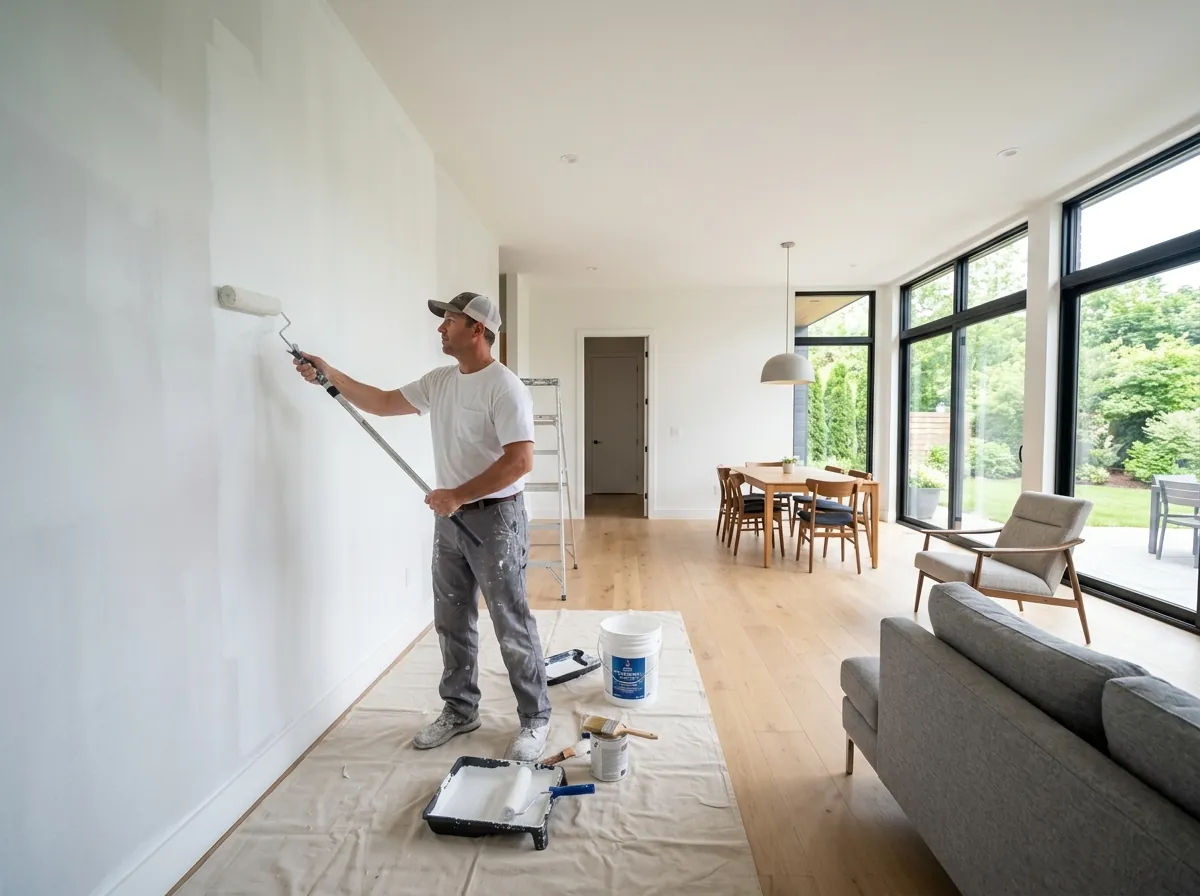
The Short Answer
| Surface Type | Coverage per Gallon | Source |
|---|---|---|
| Smooth, primed drywall | 350 – 400 sq ft | Sherwin-Williams, Behr |
| Textured drywall | 300 – 350 sq ft | Lowes, PPG |
| Bare/porous surface | 250 – 300 sq ft | Behr, USG |
| Metal (with primer) | 300 – 350 sq ft | PaintAnswers |
| Concrete | 250 – 350 sq ft | Lowes |
| Exterior siding | 250 – 400 sq ft | Behr |
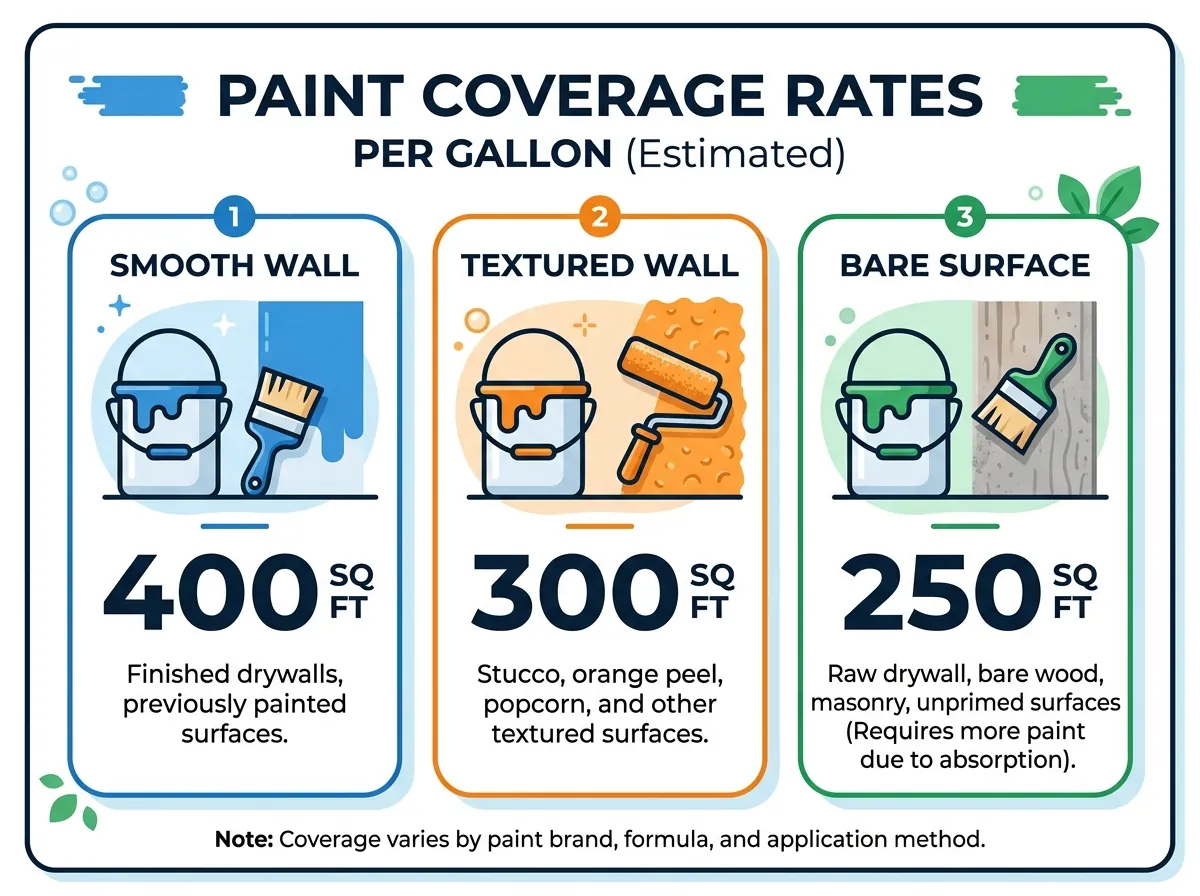
Paint Coverage by Surface Type
Different surfaces absorb paint at different rates. Here is what to expect across the most common interior and exterior surfaces:
| Surface | Typical Coverage per Gallon | Notes |
|---|---|---|
| Smooth drywall | 350 – 400 sq ft | Best-case scenario with proper primer |
| Previously painted wall | 350 – 400 sq ft | Similar to smooth drywall if surface is clean |
| Textured wall | 250 – 300 sq ft | Popcorn, knockdown, or orange peel texture |
| New drywall (bare) | 250 – 300 sq ft | Requires primer first; porous surface absorbs more |
| Concrete | 200 – 300 sq ft | Sealed concrete performs better than raw |
| Brick | 150 – 250 sq ft | Highly porous; consider masonry primer |
| Stucco | 150 – 250 sq ft | Rough texture uses significantly more paint |
These figures help you budget more accurately for specific surfaces. If you're painting brick, stucco, or raw concrete, always plan for higher paint usage than smooth walls.
Use Our Free Acrylic Paint Coverage Calculator
Enter your surface area and number of coats — get exact gallons, quarts, and cost.
Acrylic Paint Coverage CalculatorWhat Affects Paint Coverage?
Coverage rates aren't just about the paint itself. Five major factors change how far a gallon stretches:
1. Surface Texture
This is the biggest variable. A smooth, sealed wall absorbs less paint than rough concrete or popcorn texture. Textured surfaces can reduce coverage by 25-50%. Always budget 300 sq ft per gallon for textured walls instead of 400.
2. Surface Porosity
Bare drywall, unpainted wood, and masonry are porous and absorb more paint. Priming first seals the surface and improves coverage by 20-30%. The primer itself uses about 300-400 sq ft per gallon.
3. Number of Coats
One coat is rarely enough. Two coats provide full color depth and even coverage. Dramatic color changes (light to dark or vice versa) may need three coats or a tinted primer. Always multiply your base calculation by the number of coats.
4. Paint Quality
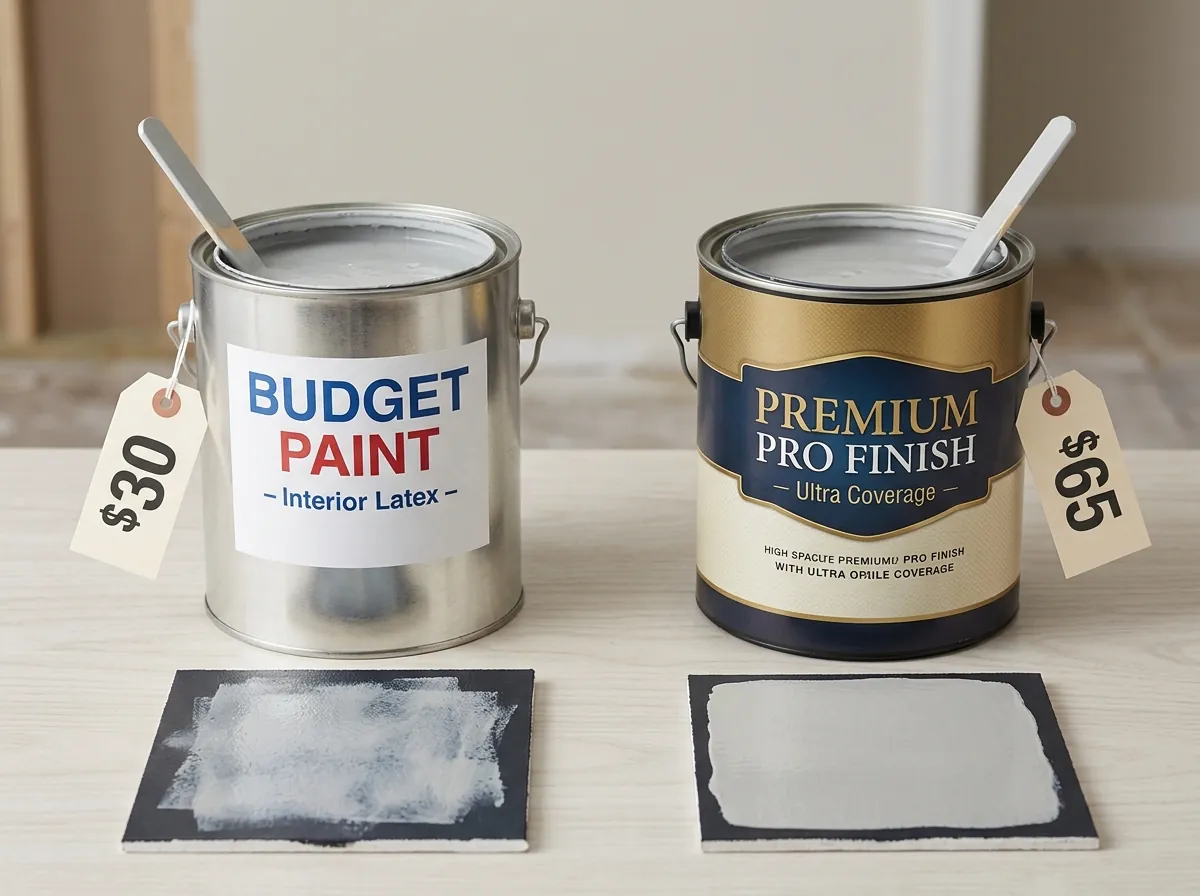
Premium paints ($55-$80/gallon) often cover 400-450 sq ft per gallon due to higher pigment concentration. Budget paints ($25-$35/gallon) may only cover 300-350 sq ft. You often save money with premium paint because you need fewer gallons.
5. Application Method
Brush and roller application wastes more paint than spraying. Spraying can reduce coverage by 10-20% due to overspray, but it's faster for large areas. Rolling is the most efficient method for interior walls.
Coverage by Paint Finish
The sheen of your paint affects both appearance and real-world coverage. Higher gloss finishes tend to cover slightly less per gallon because of their thinner film build, while flat paints hide imperfections and spread more generously.
| Finish | Coverage per Gallon | Best For |
|---|---|---|
| Flat | 350 – 400 sq ft | Ceilings, low-traffic rooms, hiding wall imperfections |
| Eggshell | 350 – 400 sq ft | Living rooms, bedrooms, moderate-traffic areas |
| Satin | 300 – 375 sq ft | Kitchens, bathrooms, hallways, kids’ rooms |
| Semi-Gloss | 300 – 350 sq ft | Trim, doors, cabinets, moisture-prone areas |
| Gloss | 250 – 325 sq ft | Front doors, furniture, high-impact accent pieces |
Flat and eggshell finishes typically offer the best coverage per gallon. If you’re choosing satin or semi-gloss, budget for slightly more paint. The trade-off is worth it: higher sheens are more durable and easier to clean.
Acrylic Paint Coverage by Major Brand
Different paint brands quote different coverage rates for their acrylic paints, even within the same category. Here is how the major manufacturers’ interior acrylic paints compare on smooth, primed surfaces:
| Brand | Product Line | Stated Coverage |
|---|---|---|
| Benjamin Moore | Regal Select | 350 – 400 sq ft/gal |
| Sherwin-Williams | Duration / SuperPaint | 350 – 400 sq ft/gal |
| Behr | Premium Plus / Marquee | Up to 400 sq ft/gal |
| PPG | Diamond / Timeless | 350 – 400 sq ft/gal |
| Valspar | Reserve / Signature | 350 – 400 sq ft/gal |
These numbers reflect the manufacturers’ stated coverage for smooth, primed surfaces with a single coat. In practice, most painters find real-world coverage closer to the lower end of these ranges due to surface conditions, application technique, and environmental factors. Always check the specific product label for the most accurate spread rate.
What the Numbers on a Paint Can Actually Mean
Paint can labels include several technical specifications that affect coverage. The most important is the spread rate, typically listed in square feet per gallon. This number is calculated under laboratory conditions on smooth, non-porous surfaces, which explains why your real-world results may differ.
Solids by volume is another key metric. Paints with higher solids content (typically 35-50% for premium acrylics) leave a thicker dry film, which means better hiding power and closer to the stated coverage rate. Budget paints with lower solids (25-35%) apply a thinner film and often fall short of their coverage claims.
VOC content (volatile organic compounds) doesn’t directly affect coverage, but low-VOC and zero-VOC paints sometimes have slightly different flow characteristics. Most major brands now offer paints with under 50 g/L VOC while maintaining the same coverage rates as conventional formulas.
How Primer Changes Paint Coverage
Primer is not just an optional step — it directly affects how much finish paint you need. Without primer, porous surfaces soak up extra coats, increasing your total paint consumption by 20-40%.
| Surface Condition | Without Primer | With Primer | Savings |
|---|---|---|---|
| Bare drywall | 250 sq ft/gal | 350 sq ft/gal | ~29% more coverage |
| Patched walls | 275 sq ft/gal | 375 sq ft/gal | ~27% more coverage |
| Dark to light color change | 250 sq ft/gal | 350 sq ft/gal | ~29% more coverage |
| Stained or water-damaged walls | 200 sq ft/gal | 325 sq ft/gal | ~38% more coverage |
| Previously painted (clean) | 350 sq ft/gal | 400 sq ft/gal | ~13% more coverage |
A $20-$40 gallon of primer can save you from buying an extra $40-$60 gallon of finish paint. For bare drywall, new construction, or any surface that has been patched or stained, always prime first.
Primer Coverage per Gallon
Primer coverage depends on the type of primer and the surface you are applying it to. Here is exactly how much area different primers cover per gallon:
| Primer Type | Coverage per Gallon | Best For |
|---|---|---|
| All-purpose primer (PVA) | 300 – 400 sq ft | Bare drywall, new construction |
| Stain-blocking primer | 250 – 350 sq ft | Water damage, smoke stains, tannin bleed |
| Oil-based primer | 250 – 300 sq ft | Wood, metal, glossy surfaces |
| Shellac-based primer | 200 – 300 sq ft | Heavy stains, odor blocking, severe bleed-through |
| Concrete & masonry primer | 200 – 300 sq ft | Concrete, brick, stucco, unglazed tile |
| Metal primer (rust-inhibiting) | 250 – 350 sq ft | Steel, iron, aluminum, galvanized metal |
1 gallon of primer covers approximately 300-400 sq ft on smooth, previously painted surfaces. On bare or porous surfaces like new drywall or concrete, expect 200-300 sq ft per gallon. Always check the product label for the manufacturer's stated coverage rate, as formulations vary.
How Much Primer for Common Projects?
| Project | Surface Area | 1 Coat (Gallons) | 2 Coats (Gallons) |
|---|---|---|---|
| 12x12 room (walls) | 384 sq ft | 1 gallon | 2 gallons |
| 10x10 room (walls) | 320 sq ft | 1 gallon | 2 gallons |
| Small bathroom (walls + ceiling) | 250 sq ft | 1 gallon | 2 gallons |
| Accent wall | 50 sq ft | 1 quart | 1 quart |
| Exterior siding (1,000 sq ft) | 1,000 sq ft | 3 gallons | 5 – 6 gallons |
| Garage floor (400 sq ft) | 400 sq ft | 1.5 gallons | 2 – 3 gallons |
5 gallons of primer covers approximately 1,500-2,000 sq ft on smooth surfaces, or 1,000-1,500 sq ft on bare/porous surfaces. A 5-gallon bucket is the most cost-effective option for rooms larger than 12x12 ft and for whole-house exterior projects. Most major brands (Sherwin-Williams, Behr, Benjamin Moore) sell primer in both 1-gallon and 5-gallon containers.
Acrylic Paint vs Latex Paint Coverage
Acrylic and latex are often confused. Latex is a water-based paint that may use acrylic binders, while “acrylic” typically means 100% acrylic resin. Here is how they compare:
| Feature | Acrylic (100%) | Latex |
|---|---|---|
| Coverage | 350 – 400 sq ft/gal | 300 – 400 sq ft/gal |
| Durability | Excellent — resists fading, cracking, mildew | Good — less resistant to weather and UV |
| Price | $45 – $80/gal | $25 – $50/gal |
| Best Use | Exterior, high-moisture areas, high-traffic rooms | Interior walls, ceilings, budget projects |
| Dry Time | 1 – 2 hours | 1 – 4 hours |
| Cleanup | Soap and water | Soap and water |
For most interior walls, either works well. Choose 100% acrylic for exteriors, bathrooms, kitchens, or anywhere durability and moisture resistance matter. The slightly higher price is offset by longer lifespan and fewer repainting cycles.
How to Calculate Exactly How Much Paint You Need
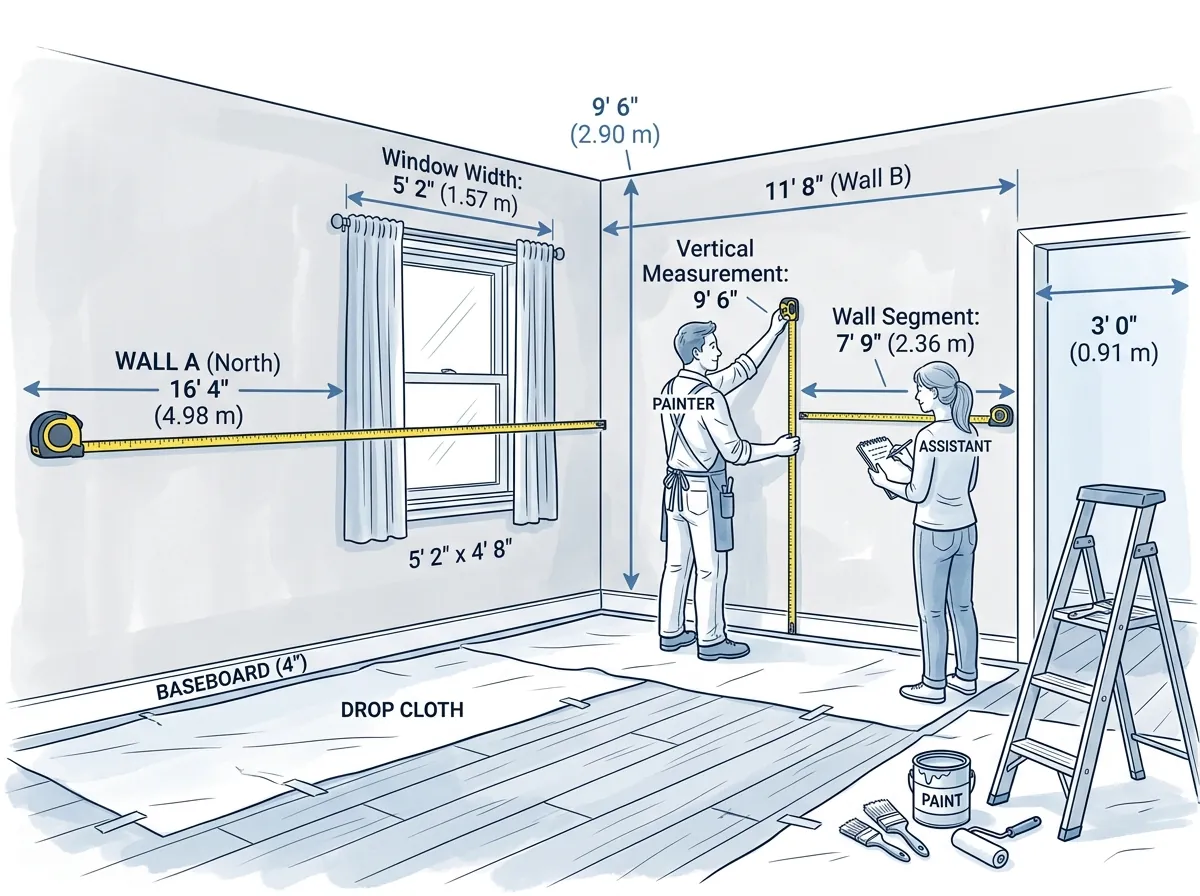
Add up the width of all walls and multiply by ceiling height. A 12x12 ft room with 8 ft ceilings: (12+12+12+12) x 8 = 384 sq ft.
Subtract 20 sq ft per door and 15 sq ft per window. Example: 384 - 20 (1 door) - 30 (2 windows) = 334 sq ft paintable area.
Divide paintable area by coverage per gallon. 334 sq ft / 350 sq ft/gal = 0.95 gallons for one coat.
0.95 x 2 coats = 1.9 gallons. Round up to 2 gallons.
Room Size Reference Chart
| Room Size | Ceiling | Wall Area | 2 Coats Needed |
|---|---|---|---|
| 8x8 ft | 8 ft | 256 sq ft | 1.5 gallons |
| 10x10 ft | 8 ft | 320 sq ft | 2 gallons |
| 12x12 ft | 8 ft | 384 sq ft | 2 gallons |
| 12x14 ft | 8 ft | 416 sq ft | 2.5 gallons |
| 14x16 ft | 9 ft | 540 sq ft | 3 gallons |
| 16x20 ft | 9 ft | 648 sq ft | 4 gallons |
These estimates assume 2 doors and 2 windows per room, 350 sq ft/gal coverage, and 2 coats. Adjust for your specific situation.
Coverage by Number of Coats
Most interior painting projects require at least two coats. Here is how your total paint needs change depending on how many coats you apply:
| Wall Area | 1 Coat | 2 Coats | 3 Coats |
|---|---|---|---|
| 200 sq ft | 0.6 gallons | 1.2 gallons | 1.8 gallons |
| 300 sq ft | 0.9 gallons | 1.8 gallons | 2.6 gallons |
| 400 sq ft | 1.2 gallons | 2.3 gallons | 3.5 gallons |
| 500 sq ft | 1.5 gallons | 2.9 gallons | 4.3 gallons |
| 600 sq ft | 1.8 gallons | 3.5 gallons | 5.2 gallons |
| 800 sq ft | 2.4 gallons | 4.7 gallons | 7 gallons |
Based on 350 sq ft/gal coverage. Round up to the nearest gallon when purchasing. Most paint stores sell in gallon or quart increments.
Cost Breakdown by Paint Tier
| Tier | Price/Gallon | Coverage | Cost per Sq Ft |
|---|---|---|---|
| Budget | $25 – $35 | 300 – 350 sq ft | $0.07 – $0.12 |
| Mid-Range | $35 – $55 | 350 – 400 sq ft | $0.09 – $0.16 |
| Premium | $55 – $80 | 400 – 450 sq ft | $0.12 – $0.20 |
What the data says: Premium paint costs more per gallon but often costs less per square foot because it covers more area and may require fewer coats. For a 400 sq ft room, budget paint at $30/gal needs 2 gallons ($60), while premium at $65/gal might only need 1.5 gallons ($97) but with better coverage and durability.
Should You Buy Extra Paint?
Yes. Always buy 5-10% more paint than your calculation suggests. Here is why:
- Touch-ups: Nicks, scratches, and scuffs happen. Having matching paint on hand means quick fixes without color-matching headaches.
- Edge work: Cutting in around trim, outlets, and corners uses more paint than rolling flat surfaces.
- Uneven absorption: Some areas of your wall may be more porous and soak up extra paint.
- Future repairs: Drywall patches, nail holes, and furniture dings will need repainting. Leftover paint from the same batch ensures an exact color match.
- Batch variation: Different production runs can have slight color differences. Mixing two batches on the same wall can create visible lines.
Store leftover paint properly: seal the can tightly, store upside down to create an air seal, and keep it in a cool, dry place. Most latex and acrylic paints last 5-10 years when stored correctly.
Common Mistakes
1. Ignoring the second coat. One coat almost never provides full, even coverage. Two coats are the standard for interior walls. Skipping the second coat leads to streaks, color inconsistency, and poor durability.
2. Forgetting primer. Bare surfaces absorb more paint. Primer costs $20-$40/gallon and covers 300-400 sq ft. It seals the surface, improves adhesion, and saves you from buying an extra gallon of finish paint.
3. Measuring the wrong area. Measuring floor area instead of wall area is a common error. A 12x12 room has 144 sq ft of floor but 384 sq ft of wall space (before deductions). Always measure walls, not floors.
4. Buying exactly what the calculator says. Always round up. Touch-ups, edge work, and uneven surfaces use more paint than pure math suggests. Buying exactly the calculated amount means you will likely run short.
5. Not accounting for waste. Paint is left on rollers, brushes get washed, and spills happen. For large projects, a 5-10% waste rate is normal. Skipping this adjustment means you will run short at the end.
Frequently Asked Questions
How much does one gallon of acrylic paint cover?
One gallon of acrylic paint covers 300-400 square feet for a single coat on smooth, primed surfaces. On textured or bare surfaces, coverage drops to 250-350 sq ft per gallon.
How many coats of acrylic paint do I need?
Most projects require 2 coats for full coverage and color depth. Primer counts as a separate coat. Dramatic color changes may need 3 coats or a tinted primer.
How much paint do I need for a 12x12 room?
A 12x12 ft room with 8 ft ceilings has about 384 sq ft of wall area. After deducting doors and windows, you need about 340 sq ft of paint. That requires approximately 1.7 gallons for 2 coats.
Does acrylic paint cover better than latex?
Acrylic and latex are often used interchangeably. True acrylic (100% acrylic) tends to have better adhesion and durability, but coverage rates are similar at 300-400 sq ft per gallon.
How much paint do I need for a ceiling?
Ceiling paint typically covers 350-400 sq ft per gallon. A 12x12 ft ceiling is 144 sq ft, requiring about 0.75 gallons for one coat. Most ceilings get one coat of flat white paint.
Does paint finish affect coverage?
Yes. Flat and eggshell finishes typically cover 350-400 sq ft per gallon. Satin covers 300-375 sq ft, semi-gloss covers 300-350 sq ft, and gloss covers 250-325 sq ft. Higher sheens have thinner film build and slightly lower coverage.
Do I need primer before painting?
Primer is recommended for bare drywall, patched areas, dark-to-light color changes, and stained surfaces. It improves coverage by 20-40% and saves you from buying extra finish paint. Previously painted walls in good condition may not need primer.
How can I save money on paint?
Buy premium paint that covers more per gallon, always prime first, use the right roller nap for your surface, and buy 5-10% extra to avoid waste from running out mid-project. Premium paint at $65/gal covering 400 sq ft is often cheaper per square foot than budget paint at $30/gal covering 300 sq ft.
How do I read a paint can label for coverage information?
Look for the spread rate, usually listed on the back or side label as sq ft per gallon. Check the solids by volume percentage: higher solids mean a thicker film and better coverage. Premium acrylic paints typically have 35-50% solids; budget paints have 25-35%. The application instructions also specify recommended dry film thickness, which directly affects how far the paint will stretch.
Which paint brand has the best coverage?
Most major brands—Benjamin Moore, Sherwin-Williams, Behr, PPG, and Valspar—quote similar coverage rates of 350-400 sq ft per gallon for their premium interior acrylic lines. The key difference is in film build and hiding power. Benjamin Moore Regal Select and Sherwin-Williams Duration are known for thicker film build, while Behr Marquee emphasizes one-coat coverage. For the best value, choose the premium line from any major brand rather than the budget option.
Data Sources
- Sherwin-Williams Paint Calculator
- Behr Paint Coverage Guide
- Lowes Paint Calculator
- PaintAnswers Coverage Guide (2025)
- Constructly Paint Calculator (2026)
- Benjamin Moore Paint Calculator
- PPG Paint Calculator
Related Posts
- How to Price Your Paintings
- Drywall Mud Coverage per Gallon
- Bathroom Remodel Cost in 2026
- Kitchen Remodel Cost in 2026