Planning a concrete slab? The first question is always: how much will it cost? The answer depends almost entirely on size. A small 4x8 walkway pad costs a few hundred dollars. A 30x30 garage floor runs into five figures. Same material, same process — different price tag.
What makes concrete tricky to budget for is the number of variables. Thickness alone changes the price by 50% or more. Region swings it another 40%. And then there are finishes, reinforcement, site access, and whether you hire a crew or do it yourself. Most cost guides give you a single number and call it a day. That is not how real projects work.
This guide breaks down concrete slab cost by every common residential size, from a 4x8 garden path to a 30x30 garage. You will see exactly what each size costs at 4, 6, and 8 inches thick, how much concrete you need, and where your money goes. We sourced pricing from HomeGuide, Angi, NRMCA, and FRED PPI data through August 2026, then cross-checked against contractor quotes across all four U.S. regions. Use the numbers in the tables, or run your own dimensions through our free Concrete Slab Cost Calculator for an instant estimate.
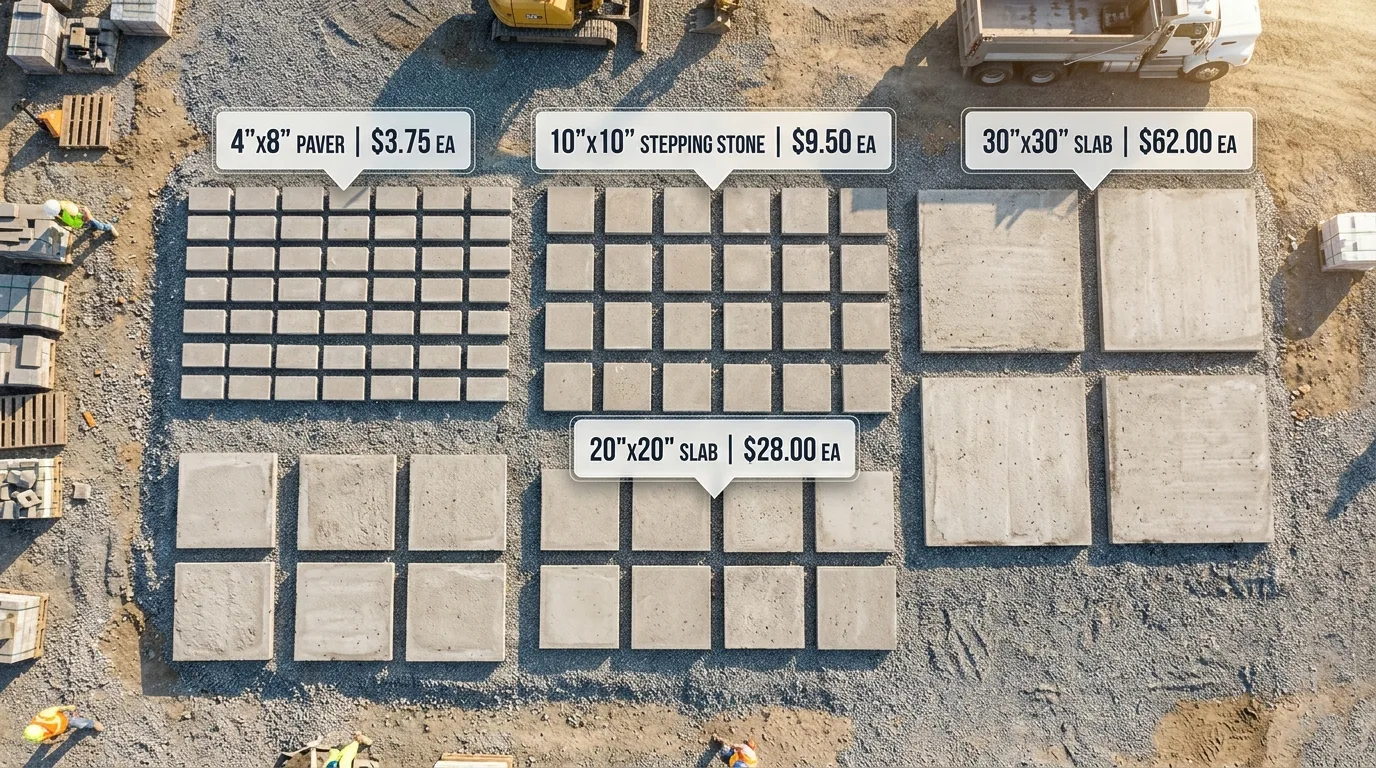
How Much Does a Concrete Slab Cost Per Square Foot?
For 2026, a plain broom-finish concrete slab costs $6 to $12 per square foot installed for most residential work, with a national average near $8/sq ft. This includes materials, labor, basic site prep, and finishing.
The per-square-foot cost stays relatively flat across sizes — going from a 10x10 to a 20x20 does not significantly change the price per square foot. What changes is the total, because total cost scales linearly with area.
| Slab Type | Installed $/sq ft | Notes |
|---|---|---|
| Basic flatwork (sidewalks, shed pads) | $4 - $6 | Thin, broom finish, minimal prep |
| Standard residential (patios, walkways) | $6 - $8 | 4-inch, broom finish, wire mesh |
| Driveway / garage | $8 - $12 | 6-inch, reinforced, heavier load |
| Decorative / stamped | $12 - $20 | Patterns, colors, sealed finish |
| Commercial / structural | $10 - $20 | 8-inch+, rebar, engineered specs |
Concrete Slab Cost by Size Table
This is the complete cost breakdown for 13 common residential slab sizes. All prices assume a standard broom finish with wire mesh reinforcement, national average pricing, and professional installation.
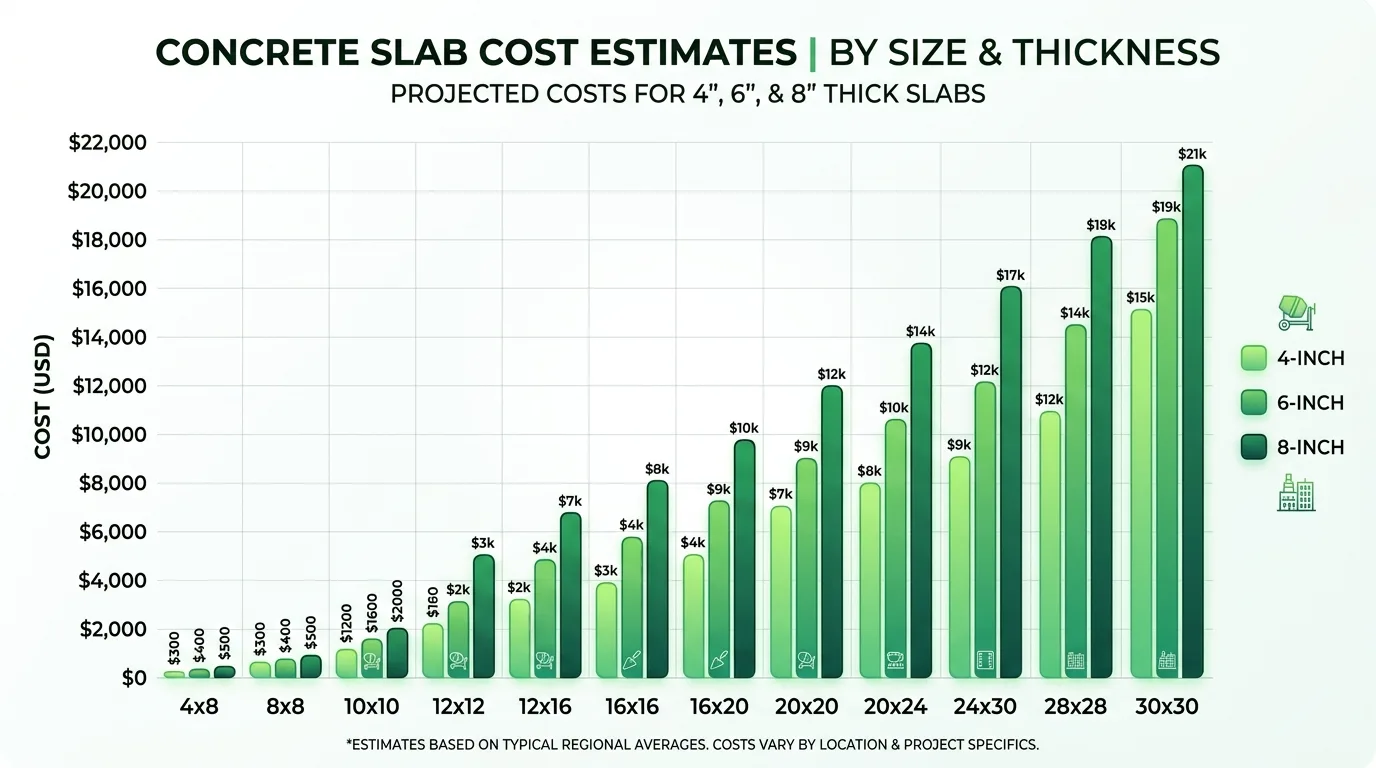
| Size (ft) | Sq Ft | 4" Thick | 6" Thick | 8" Thick | Concrete Needed |
|---|---|---|---|---|---|
| 4 x 8 | 32 | $190 - $380 | $290 - $570 | $380 - $770 | 0.40 yd³ |
| 6 x 6 | 36 | $220 - $430 | $320 - $650 | $430 - $860 | 0.44 yd³ |
| 8 x 10 | 80 | $480 - $960 | $720 - $1,440 | $960 - $1,920 | 0.99 yd³ |
| 10 x 10 | 100 | $600 - $1,200 | $900 - $1,800 | $1,200 - $2,400 | 1.23 yd³ |
| 10 x 12 | 120 | $720 - $1,440 | $1,080 - $2,160 | $1,440 - $2,880 | 1.48 yd³ |
| 12 x 12 | 144 | $860 - $1,730 | $1,300 - $2,590 | $1,730 - $3,460 | 1.78 yd³ |
| 12 x 16 | 192 | $1,150 - $2,300 | $1,730 - $3,460 | $2,300 - $4,610 | 2.37 yd³ |
| 15 x 15 | 225 | $1,350 - $2,700 | $2,030 - $4,050 | $2,700 - $5,400 | 2.78 yd³ |
| 16 x 20 | 320 | $1,920 - $3,840 | $2,880 - $5,760 | $3,840 - $7,680 | 3.95 yd³ |
| 20 x 20 | 400 | $2,400 - $4,800 | $3,600 - $7,200 | $4,800 - $9,600 | 4.94 yd³ |
| 20 x 30 | 600 | $3,600 - $7,200 | $5,400 - $10,800 | $7,200 - $14,400 | 7.41 yd³ |
| 24 x 24 | 576 | $3,460 - $6,910 | $5,180 - $10,370 | $6,910 - $13,820 | 7.11 yd³ |
| 30 x 30 | 900 | $5,400 - $10,800 | $8,100 - $16,200 | $10,800 - $21,600 | 11.11 yd³ |
How Thick Should Your Slab Be?
Thickness is the single biggest cost driver after size. A slab is priced by volume, and volume scales straight with thickness. Going from 4 inches to 6 inches is not a minor upgrade — it is 50% more concrete, 50% more material cost, and often a different reinforcement spec entirely.
The International Residential Code (IRC R506.1) specifies a minimum of 3.5 inches for residential slabs on grade, but 4 inches is the practical standard. Here is how each thickness performs in the real world:
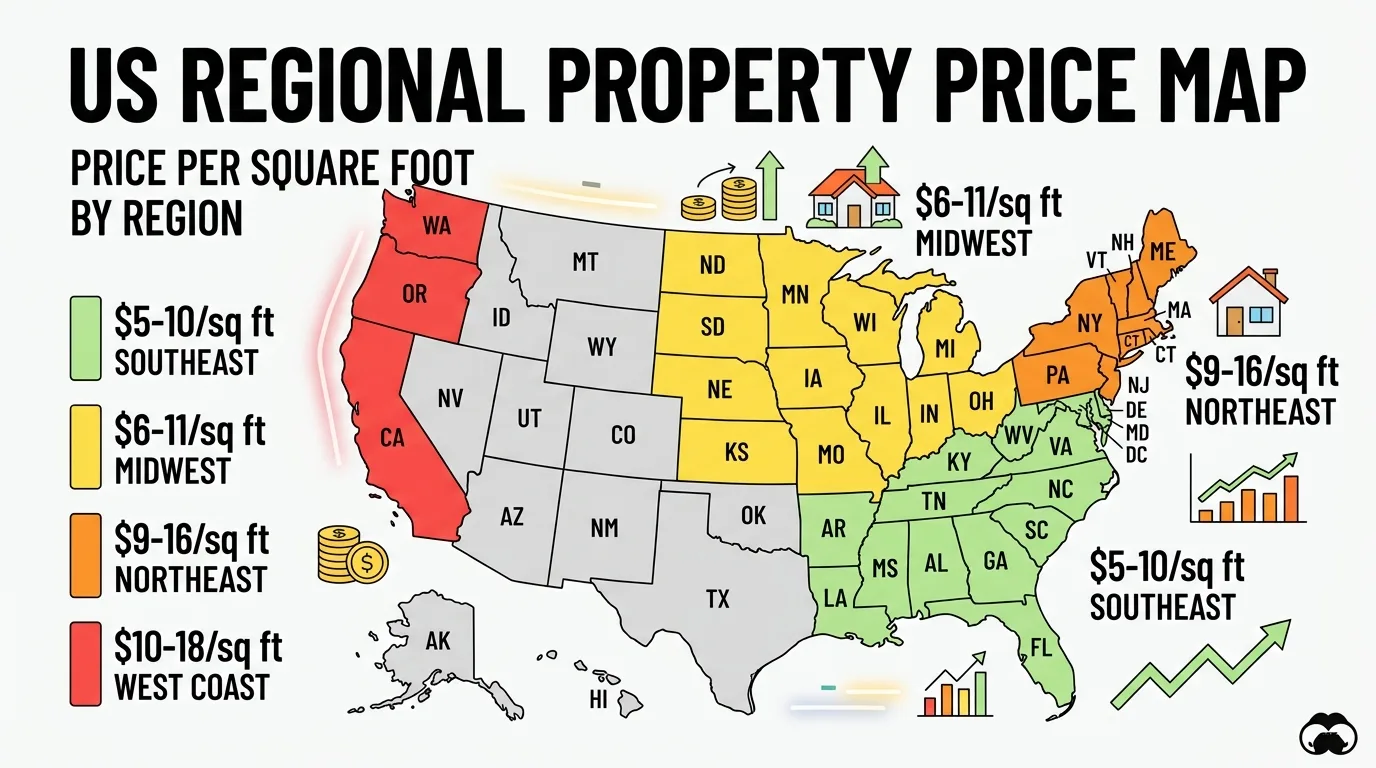
| Thickness | Best For | Load Capacity | Cost Impact |
|---|---|---|---|
| 4 inches | Patios, walkways, shed pads, pool decks | Foot traffic, patio furniture, light equipment | Baseline cost |
| 5 inches | Light driveway use, small RV pads | Light vehicles, delivery trucks | +25% over 4" |
| 6 inches | Driveways, garages, standard RV pads | Cars, trucks, SUVs, moderate loads | +50% over 4" |
| 8 inches | Heavy-duty driveways, commercial, bus depots | Heavy trucks, buses, commercial equipment | +100% over 4" |
What the data says: For most homeowners, 4 inches is enough for patios and walkways. If you plan to park cars on the slab, go with 6 inches. The extra $1-$2 per square foot for 6-inch thickness is cheap insurance against cracking under vehicle loads. A compacted gravel base does more for crack prevention than extra slab thickness on poor soil — a 4-inch slab on a solid base outperforms a 6-inch slab on soft ground.
One common mistake is ordering 8 inches "just to be safe." For residential use, 8 inches is almost never necessary unless you are parking an RV, running a commercial workshop, or building on expansive clay soil. The extra concrete doubles your material cost with no practical benefit for a standard patio or driveway. If you are unsure, ask your contractor — and if they immediately recommend 8 inches without discussing your actual use case, get a second opinion.
Factors That Affect Concrete Slab Cost
Size and thickness drive most of the cost, but several other factors can shift your final price by 30-50%. Here is a deeper look at each cost driver.
Reinforcement
Reinforcement prevents cracking and adds structural strength. The type you choose depends on load requirements and slab use.
| Type | Cost/sq ft | Best For |
|---|---|---|
| Wire mesh | $0.30 - $0.60 | Patios, walkways, standard residential |
| Rebar | $0.60 - $1.20 | Driveways, garages, structural slabs |
| Fiber mesh | $0.15 - $0.30 | Crack control, mixed into concrete |
Wire mesh is the standard for most residential pours. Rebar is required for driveways and any slab supporting vehicle loads. Fiber mesh is a cost-effective addition that reduces surface cracking but does not replace structural reinforcement.
Finish Type
The surface finish is one of the biggest cost variables. A plain broom finish is the baseline — every decorative option adds labor, materials, and skill.
| Finish Type | Cost/sq ft | Premium Over Plain |
|---|---|---|
| Broom finish | $6 - $12 | Baseline (included in base pricing) |
| Colored / integral | $8 - $16 | +$2 - $6/sq ft |
| Acid stained | $8 - $18 | +$3 - $8/sq ft |
| Stamped decorative | $9 - $22 | +$4 - $12/sq ft |
| Exposed aggregate | $8 - $16 | +$2 - $6/sq ft |
| Polished concrete | $10 - $20 | +$4 - $10/sq ft |
Decorative finishes can increase project costs by 50-150% compared to a basic broom finish. They also require more experienced crews — factor that into contractor selection.
Site Access and Preparation
If the concrete truck cannot reach the pour site directly, you will pay extra for a concrete pump ($400-$1,500 for a residential pour) or wheelbarrow transport. Site conditions also affect prep costs:
| Add-On | Cost | When It Applies |
|---|---|---|
| Excavation / grading | $1.50 - $5.00/sq ft | Depends on depth and soil conditions |
| Compacted gravel base | $0.80 - $1.50/sq ft | Recommended on nearly all slabs |
| Concrete pump | $400 - $1,500 | When truck chute cannot reach pour site |
| Vapor barrier | $0.30 - $0.50/sq ft | Below-grade slabs, moisture-sensitive areas |
A compacted gravel base does more for crack prevention than extra slab thickness on poor soil — a 4-inch slab on a solid base outperforms a 6-inch slab on soft ground.
Gravel Base
Standard crushed limestone or gravel base costs $20-$40 per ton. For a typical residential slab, expect to spend $150-$400 on base material alone. Order 10% extra to account for compaction loss.
Permits and Demolition
Some municipalities require permits for concrete work. Fees range from $50 to $500 depending on project size and location. If you are replacing an existing slab, demolition adds $3-$6 per square foot for standard 4-inch concrete.
DIY vs Professional Installation
Pouring concrete yourself saves 40-60% on labor, but it requires physical labor, timing precision, and the right tools. Concrete is unforgiving — once it starts setting, you have 2-4 hours to get the finish right. There is no undo button.
Here is how the numbers compare for two common sizes:
| 10x10 Slab (100 sq ft) | 20x20 Slab (400 sq ft) | |
|---|---|---|
| DIY (materials only) | $500 - $650 | $1,200 - $1,600 |
| Contractor (fully installed) | $600 - $1,200 | $2,400 - $4,800 |
| DIY savings | ~30-45% | ~50-67% |
| Tool rental (if needed) | $200 - $400 | $300 - $500 |
What the data says: A 10x10 slab is small enough for a confident DIYer with concrete experience. A 20x20 slab is a serious undertaking — you need 5+ cubic yards of concrete, a full crew, and the ability to finish before the concrete sets (typically 2-4 hours). Unless you have experience, hire a pro. Mistakes in mixing, leveling, or finishing cost more to fix than the savings.
Tools you will need for DIY: Concrete rake, screed board (straight 2x4), bull float, steel trowel, edging tool, jointer, and a plate compactor for the gravel base. Most of these can be rented for $200-$400 total. You will also need forms (2x4 or 2x6 lumber), stakes, and a way to level the gravel base. Budget a full weekend for a 10x10 slab — site prep on day one, pour on day two.
When to definitely hire a pro: Any slab over 200 square feet, any slab that will support vehicles, any project requiring a concrete pump, or any pour where you cannot guarantee uninterrupted work time without breaks. Concrete waits for no one — if you stop mid-pour, you get a cold joint that weakens the slab and looks bad.
Concrete Cost Per Cubic Yard
Ready-mix concrete is priced by the cubic yard and delivered from a batch plant. In 2026, national average delivered pricing for standard 3,000-4,000 PSI residential mix is:
- National average: $125-$195 per cubic yard delivered (within ~20 miles)
- Short-load fee: Orders under 3-4 yards add $50-$150
- Weekend delivery: Adds $50-$200 to most orders
- Distance surcharge: $5-$10 per mile beyond the base delivery radius
- Fuel surcharge: $20-$40 per load (varies with diesel prices)
Bagged vs ready-mix: For small projects under 1 cubic yard, bagged concrete (80-lb bags at $6-$9 each) can avoid delivery fees. It takes about 45 bags to make one cubic yard, costing roughly $270-$405 in materials. Ready-mix is much cheaper per yard for larger pours, but short-load fees and delivery charges can change the crossover point. For a 10x10 slab at 4 inches, you need 1.23 cubic yards — that is about 56 bags at $6-$9 each, or $336-$504 in bagged material vs. roughly $155-$215 for ready-mix delivered. The math favors ready-mix for anything over about half a cubic yard.
Regional Cost Differences
Location is one of the largest single variables. Labor markets, quarry proximity, and demand can shift a quote by 40% or more for identical work.
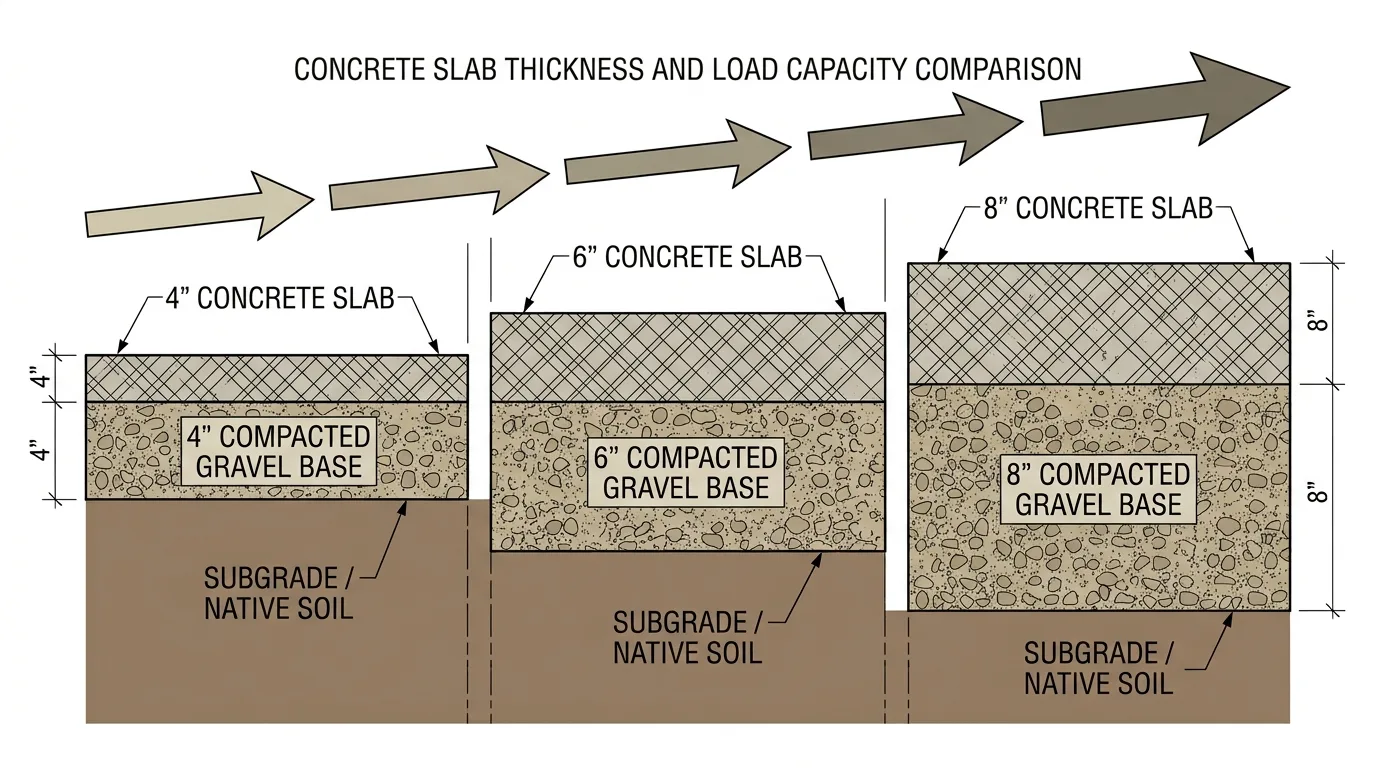
| Region | Installed $/sq ft | Ready-Mix $/yd³ | Notes |
|---|---|---|---|
| Southeast | $5 - $10 | $120 - $150 | Cheapest in the US, lower labor costs |
| Midwest | $6 - $11 | $125 - $160 | Moderate, varies by proximity to plant |
| Northeast | $9 - $16 | $140 - $180 | Higher fuel, labor, and urban delivery costs |
| West Coast | $10 - $18 | $150 - $200 | Highest typical pricing nationally |
| Rural / remote | +$1-2 over regional | +$10-20 over regional | Extra distance and limited suppliers |
Use Our Free Concrete Slab Calculator
Enter your slab dimensions, thickness, and finish type. Get instant estimates for cubic yards, bag count, and total cost — materials and installed.
Concrete Slab Cost CalculatorConcrete Price Trends: 2024 to 2026
Concrete slab costs have risen steadily in recent years. Here is what the data shows:
- U.S. cement prices: Approximately $160 per metric ton in 2024, rising to approximately $169 per metric ton in 2026 — roughly 5.9% annual growth over 2021-2026 (IBISWorld)
- Ready-mix Producer Price Index (PPI): Climbed from 393.5 in December 2025 to 400.0 by April 2026, confirming ongoing inflation in concrete manufacturing costs (FRED, St. Louis Fed)
- Installed slab ranges: Contractor quotes that averaged $5-$10/sq ft in 2023 now commonly come in at $6-$12/sq ft in 2026
Key drivers of 2026 price increases: Higher cement and aggregate costs, elevated fuel prices for delivery trucks, strong residential construction demand, and infrastructure spending pulling concrete supply toward commercial projects. If you are planning a slab project, get quotes soon — there is no data suggesting prices will fall in 2026.
Is a Concrete Slab Worth the Cost?
Concrete is one of the most cost-effective building materials for outdoor spaces. Here is why:
- Durability: A properly poured concrete slab lasts 30-50 years with minimal maintenance. That is 3-5x longer than asphalt and 5-10x longer than pavers
- Low maintenance: Annual maintenance costs are $0-$50 for concrete vs. $200-$400 for pavers and $100-$200 for asphalt
- Resale value: A concrete patio or driveway returns 50-70% of its cost in home value, according to Remodeling Magazine's Cost vs. Value report
- ROI calculation: A $3,000 concrete patio that lasts 40 years costs $75/year. The same space in pavers at $5,000 lasts 20 years at $250/year
For permanent outdoor structures, concrete is hard to beat on total cost of ownership. The upfront price is higher than gravel or dirt, but the 30-50 year lifespan means you pay once and forget about it. Compare that to asphalt driveways that need resurfacing every 10-15 years, or paver patios that shift and need re-leveling every few years.
When concrete does not make sense: If you need a temporary surface (a construction access path, for example), gravel is cheaper and can be removed easily. If your soil is highly expansive clay that shifts seasonally, a rigid concrete slab may crack regardless of thickness — in that case, pavers or compacted gravel may be more practical. And if you are in a freeze-thaw climate, make sure your contractor uses air-entrained concrete at 4,000 PSI minimum to prevent surface spalling.
Project Timeline
Most residential concrete pours follow a predictable 3-step schedule:
| Phase | Duration | What Happens |
|---|---|---|
| 1. Site prep | 1-2 days | Excavation, gravel base, forming, reinforcement placement |
| 2. Pour and finish | 1 day | Concrete delivery, pouring, screeding, floating, broom finish |
| 3. Curing | 7-28 days | Walkable in 24-48 hrs, full strength at 28 days |
The actual pour day is fast — a typical residential slab takes 2-4 hours from truck arrival to finished surface. The curing period is passive time, but you must keep the surface moist during the first 7 days.
How to Get Accurate Contractor Quotes
The difference between a good quote and a bad one can be hundreds or thousands of dollars. Here is how to make sure you are comparing apples to apples:
- Get at least 3 bids. More bids give you a better sense of the real market price for your project. Two bids are not enough — one high quote can make a fair quote look cheap by comparison.
- Specify the same scope to everyone. Tell each contractor the exact same thickness, reinforcement type, finish, and site conditions. If one bid includes a gravel base and another does not, the prices are not comparable.
- Ask what is included. Does the quote include excavation, gravel base, forms, reinforcement, concrete, finishing, and cleanup? Or is it just the pour? Hidden costs like grading, removal of old material, and pump truck rental can add $500-$2,000 to a quote that looked cheap on paper.
- Check for insurance and license. A contractor without proper insurance is a liability. Ask for proof of general liability and workers compensation coverage before signing anything.
- Ask about curing. A good contractor will explain their curing process — plastic covering, water spraying, or curing compound. If they do not mention curing at all, that is a red flag.
- Get the timeline in writing. When will they pour? How long will the project take from start to finish? What happens if it rains on pour day?
The cheapest bid is not always the best choice. A contractor who cuts corners on gravel base, reinforcement, or curing will cost you more in the long run when the slab cracks or settles. Look for a contractor who asks questions about your project, explains their process, and provides a detailed written quote.
Related Size Guides
Want a deep dive on a specific size? These guides break down every cost detail for the most popular residential slab dimensions:
- 10x10 Concrete Slab Cost 2026 — Complete price breakdown for the most common small slab
- 20x20 Concrete Slab Cost 2026 — The most popular residential slab size with full cost analysis
- 20x30 Concrete Slab Cost 2026 — 600 sq ft workshop and two-car pad pricing
- 30x30 Concrete Slab Cost 2026 — 900 sq ft garage and large pad pricing
- Concrete Slab Cost 2026 — General cost guide with factors, hidden costs, and regional pricing
- Concrete vs Asphalt Driveway Cost 2026 — Which material saves you more money
Frequently Asked Questions
How much does a concrete slab cost per square foot in 2026?
A standard 4-inch residential concrete slab costs $6 to $12 per square foot installed in 2026, with a national average near $8/sq ft. Basic slabs for patios or sheds may be as low as $4-$5/sq ft, while decorative stamped slabs can reach $20-$30/sq ft.
How much does a 10x10 concrete slab cost?
A 10x10 concrete slab (100 sq ft) costs $600 to $1,200 installed for a standard 4-inch pour. At 6 inches thick, expect $900 to $1,800. DIY material costs run $500-$650 depending on reinforcement and finish.
How much does a 20x20 concrete slab cost?
A 20x20 concrete slab (400 sq ft) costs $2,400 to $4,800 installed at 4 inches thick. At 6 inches, the range is $3,600 to $7,200. This size needs about 4.9 cubic yards of concrete at 4 inches.
How much does a 30x30 concrete slab cost?
A 30x30 concrete slab (900 sq ft) costs $5,400 to $10,800 installed at 4 inches thick. At 6 inches, expect $8,100 to $16,200. This is a large pour requiring about 11 cubic yards of concrete.
How thick should a concrete slab be?
Use 4 inches for patios, walkways, and shed pads. Use 6 inches for driveways, garages, and areas with vehicle traffic. Use 8 inches for heavy-duty commercial or RV pads. Each additional inch adds roughly $1-$2 per square foot.
How much concrete do I need for a slab?
Multiply length x width x thickness (in feet), then divide by 27 to get cubic yards. Example: a 12x12 slab at 4 inches thick = 12 x 12 x 0.33 = 47.5 cubic feet divided by 27 = 1.76 cubic yards. Always add 10% for waste.
Is it cheaper to pour concrete yourself?
DIY saves 40-60% on labor costs. A 10x10 slab costs $500-$650 DIY vs $600-$1,200 hired out. However, concrete work is time-sensitive and unforgiving — mistakes in mixing, leveling, or finishing are expensive to fix. Hire a pro for your first project.
How long does concrete take to cure?
Concrete is walkable after 24-48 hours, ready for light traffic after 7 days, and reaches full strength after 28 days. Keep the surface moist during curing by covering with plastic or spraying water for the first 7 days.
What is the cheapest way to pour a concrete slab?
The cheapest approach is a 4-inch slab with broom finish and wire mesh, poured by a contractor in the Southeast or Midwest where labor rates are lowest. For small slabs under 1 cubic yard, bagged concrete avoids delivery fees. For larger pours, get at least 3 quotes and make sure each includes the same scope of work.
Do I need a permit for a concrete slab?
It depends on your municipality. Most areas require permits for structural slabs, driveway replacements, and anything over a certain size (typically 200+ sq ft). Small patio slabs often do not require permits. Check with your local building department — fees range from $50 to $500.
Data Sources
- HomeAdvisor — Concrete Slab Cost Guide (2026)
- Angi — Concrete Foundation Cost Data (2026)
- Concrete Network — Concrete Prices (2026)
- NRMCA — Ready-Mix Concrete Pricing Data
- FRED St. Louis Fed — Ready-Mix Concrete PPI Index
- IBISWorld — U.S. Cement Price Forecast
Related Calculators
- Concrete Slab Cost Calculator — Get exact cubic yards, bag count, and cost for any slab size
- Mulch & Soil Calculator — Estimate mulch, soil, and compost for landscaping around your slab
- Landscape Rock Calculator — Calculate gravel and rock for base preparation
- Drywall Mud Calculator — Figure out joint compound for interior walls