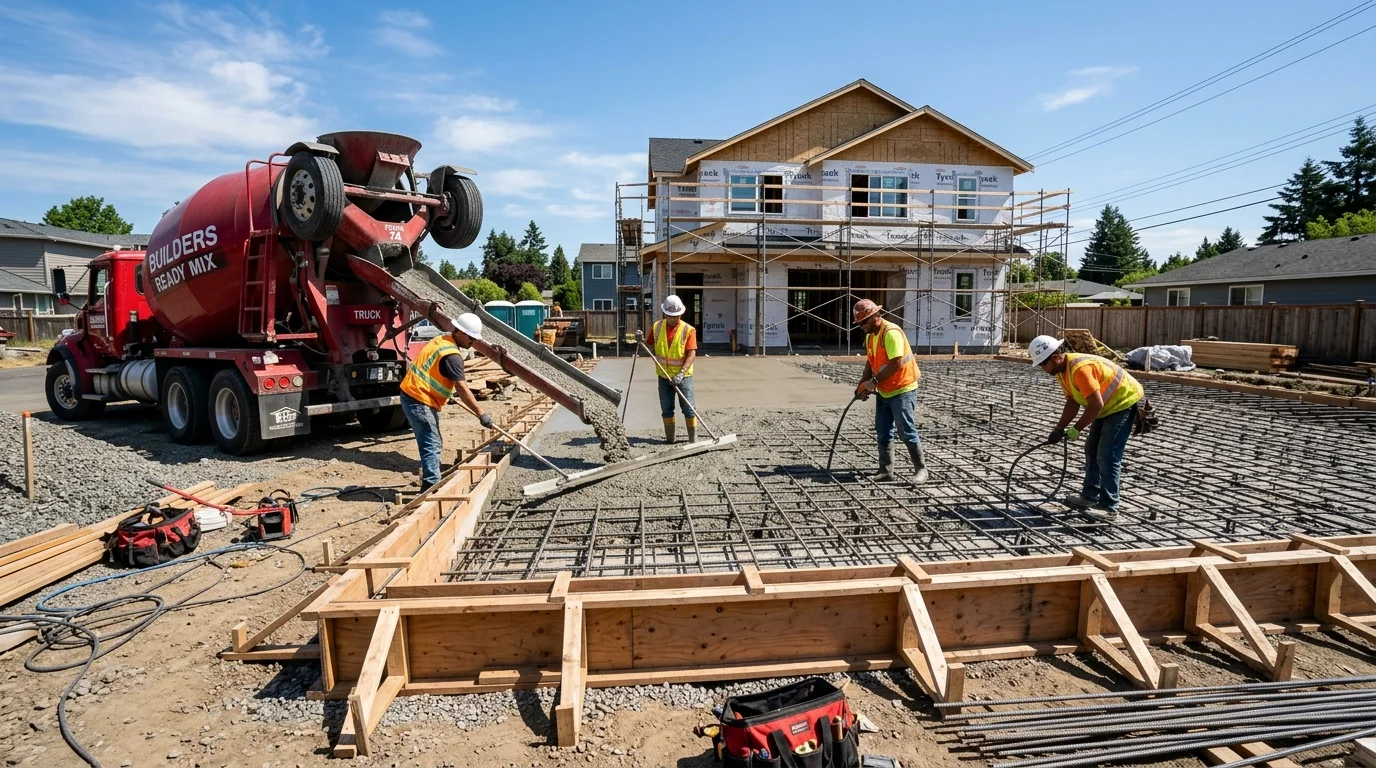
The cost to pour a concrete slab in 2026 ranges from $6 to $12 per square foot installed, with a national average of about $8 per square foot. For a standard 20×20 slab (400 sq ft), that works out to $2,400–$4,800 including materials and labor. If you're just buying the concrete itself, expect $3–$6 per square foot for the material alone.
Whether you're planning a patio, driveway, shed foundation, or workshop floor, knowing the real numbers before you call a contractor saves you from overpaying — or underbudgeting. This guide breaks down every cost component: concrete per yard, labor rates, thickness requirements, regional pricing, and the extras that catch most homeowners off guard.
Use our free Concrete Slab Calculator to get a custom estimate for your exact dimensions, or read on for the full breakdown.
Free Concrete Slab Calculator
Enter your dimensions and get instant cost estimates — cubic yards, bags, and total price.
Open CalculatorCost to Pour Concrete Slab: At a Glance
| Cost Component | Range | Average |
|---|---|---|
| Concrete material per yard | $160 – $195 | $180 |
| Cost per sq ft (material only) | $3 – $6 | $4.50 |
| Cost per sq ft (installed) | $6 – $12 | $8 |
| Labor per sq ft | $2 – $5 | $3.50 |
| Typical 20×20 slab (400 sq ft) | $2,400 – $4,800 | $3,200 |
| Typical 10×10 slab (100 sq ft) | $600 – $1,200 | $800 |
Cost to Pour a Concrete Slab by Size
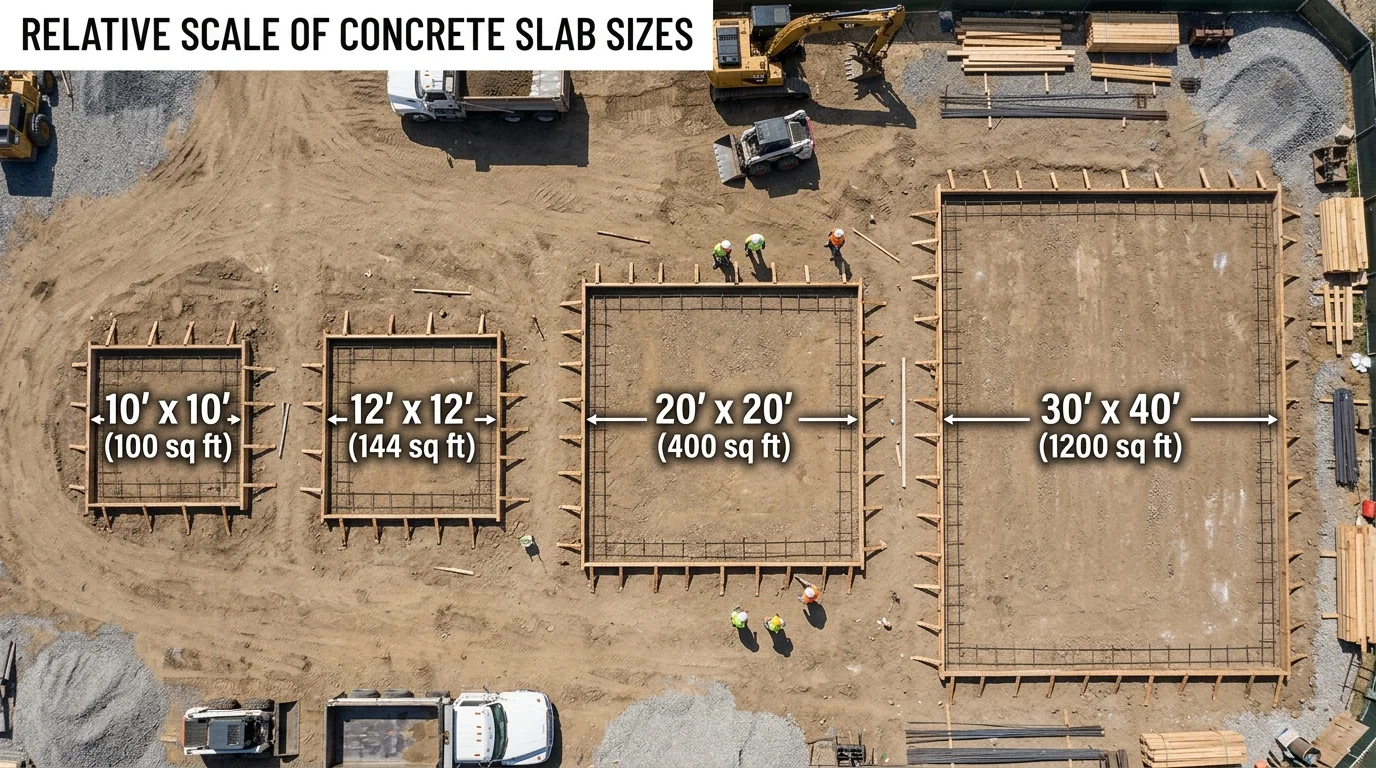
The table below shows estimated costs for the most common slab sizes. All figures assume a standard 4-inch residential slab at $6–$8 per square foot installed, which covers most patios, shed pads, and walkways.
| Slab Size | Square Feet | Cubic Yards (4") | Material Cost | Installed Cost |
|---|---|---|---|---|
| 10 × 10 | 100 | 1.23 | $170 – $200 | $600 – $1,200 |
| 12 × 12 | 144 | 1.78 | $250 – $290 | $860 – $1,730 |
| 15 × 15 | 225 | 2.78 | $390 – $460 | $1,350 – $2,700 |
| 20 × 20 | 400 | 4.94 | $790 – $965 | $2,400 – $4,800 |
| 20 × 30 | 600 | 7.41 | $1,035 – $1,220 | $3,600 – $7,200 |
| 24 × 24 | 576 | 7.11 | $995 – $1,175 | $3,450 – $6,910 |
| 30 × 30 | 900 | 11.11 | $1,555 – $1,835 | $5,400 – $10,800 |
| 30 × 40 | 1,200 | 14.81 | $2,075 – $2,445 | $7,200 – $14,400 |
How cubic yards are calculated: Length (ft) × Width (ft) × Thickness (ft) ÷ 27 = Cubic Yards. For a 4-inch slab, thickness in feet = 4 ÷ 12 = 0.33. For a 6-inch slab, thickness = 6 ÷ 12 = 0.5.
Cost by Slab Thickness
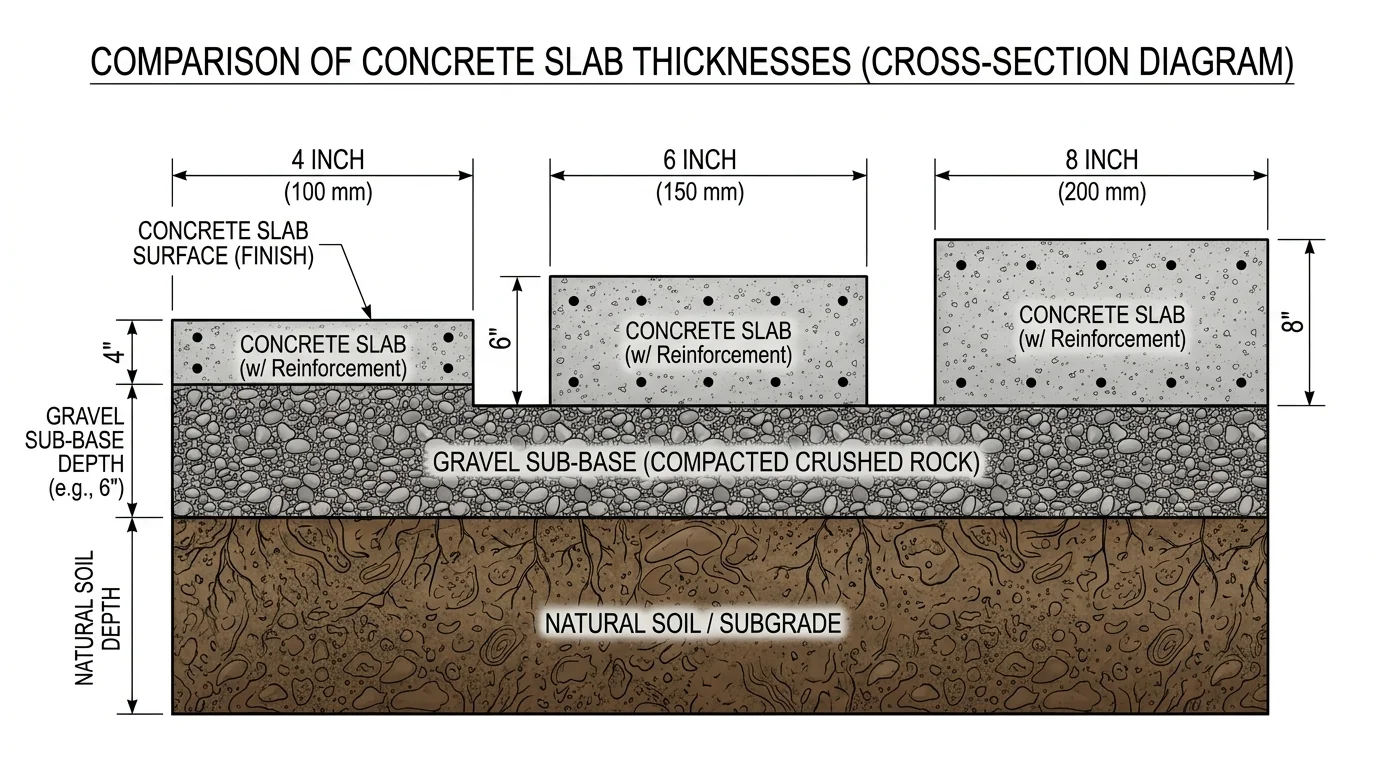
Thickness is the single biggest cost driver. A thicker slab means more concrete, more labor, and a higher total. But using more thickness than you need wastes money.
| Thickness | Best For | Material per Sq Ft | Installed per Sq Ft | 400 Sq Ft Total |
|---|---|---|---|---|
| 4 inches | Patios, walkways, shed pads | $3 – $5 | $6 – $8 | $2,400 – $3,200 |
| 5 inches | Light-use driveways, porches | $4 – $6 | $7 – $9 | $2,800 – $3,600 |
| 6 inches | Driveways, garage floors | $4.50 – $7 | $8 – $11 | $3,200 – $4,400 |
| 8 inches | Heavy equipment, RV pads, commercial | $6 – $9 | $10 – $14 | $4,000 – $5,600 |
The rule of thumb: Each additional inch of thickness adds roughly $1–$2 per square foot installed. For a 400 sq ft slab, going from 4 inches to 6 inches adds about $800–$1,600 to your total. For most residential projects, 4 inches is sufficient.
When to go thicker: Driveways and garage floors should be at least 6 inches because they support vehicle weight. If you plan to park an RV, heavy truck, or equipment on the slab, go 8 inches. For a simple patio or shed pad, 4 inches is all you need.
DIY vs Professional: Cost Comparison
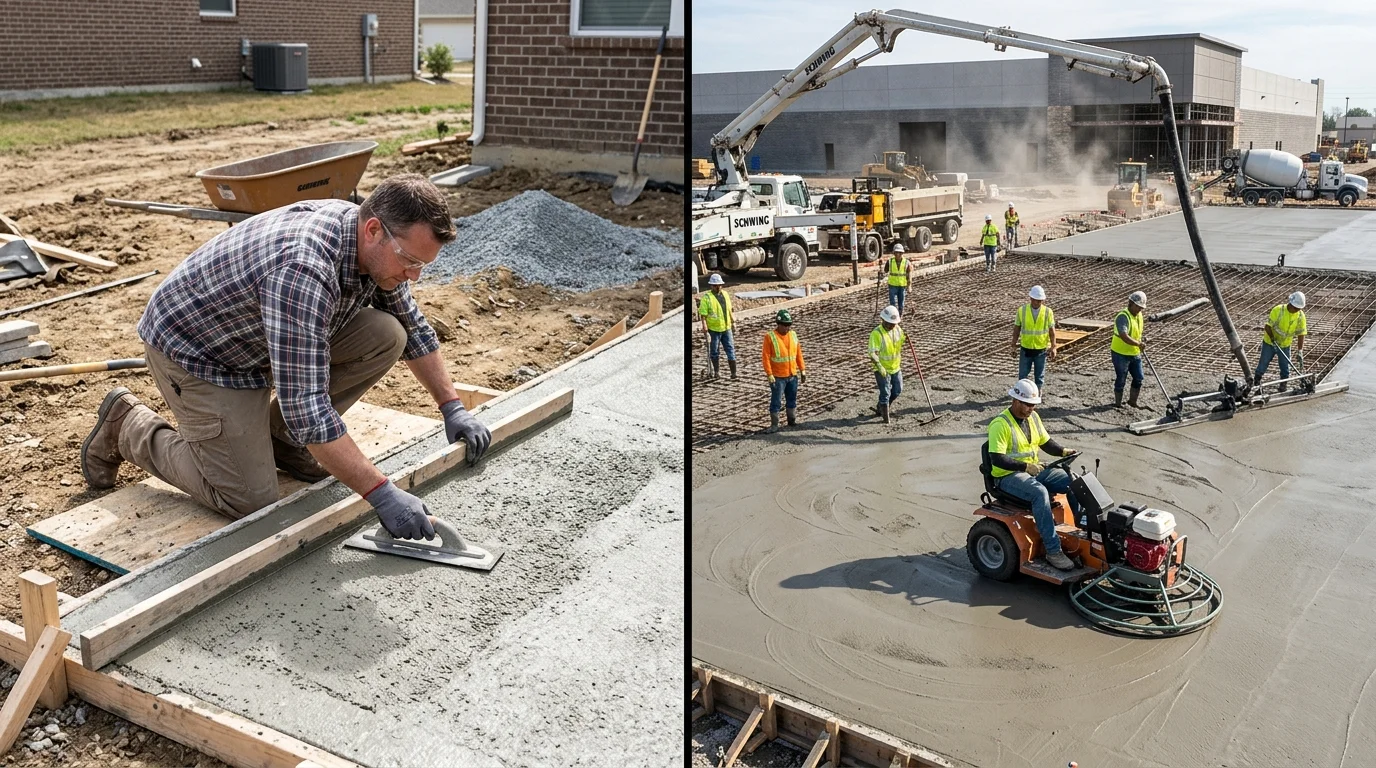
One of the biggest decisions is whether to pour the slab yourself or hire a contractor. Here's a realistic cost comparison for a 20×20 slab (400 sq ft, 4-inch thick):
| Cost Component | DIY | Professional |
|---|---|---|
| Concrete material | $790 – $965 | $790 – $965 |
| Reinforcement (wire mesh) | $160 – $400 | $160 – $400 |
| Forms (rental/lumber) | $100 – $250 | Included |
| Tool rental | $150 – $400 | Included |
| Labor | $0 (your time) | $1,200 – $2,400 |
| Gravel sub-base | $400 – $1,200 | $400 – $1,200 |
| Total | $1,600 – $3,215 | $2,550 – $4,965 |
DIY saves roughly $900–$1,750 on a 20×20 slab — but it requires 2–3 full days of hard physical work, proper tools, and at least one helper. Mistakes in mixing, leveling, or finishing can cost more to fix than you saved.
When DIY makes sense: Small slabs under 200 sq ft (shed pads, walkways, small patios). The work is straightforward, the stakes are low, and the savings are meaningful relative to the project size.
When to hire a pro: Driveways, garage floors, structural slabs, or any project over 400 sq ft. These require experience with finishing, proper reinforcement, and managing a continuous pour. A bad driveway slab is an expensive mistake.
For a detailed DIY cost breakdown, see our guide: Concrete Slab Cost in 2026: What the Data Actually Says
Regional Pricing: What You'll Pay by Area
Concrete costs vary significantly across the US. Labor rates, material availability, delivery distances, and local regulations all play a role.
| Region | Installed Cost per Sq Ft | Key Factors |
|---|---|---|
| Northeast | $8 – $14 | Higher labor rates, strict building codes, shorter construction season |
| Midwest | $6 – $10 | Lower labor costs, wide material availability, moderate pricing |
| South | $5 – $9 | Lowest labor rates, year-round building season, fewer frost concerns |
| West Coast | $8 – $15 | Higher transport costs, seismic requirements, permit complexity |
Metro vs rural: Urban areas typically cost 15–30% more than surrounding rural areas due to higher labor rates, delivery logistics, and permit fees. A slab in downtown Chicago or Los Angeles will run above the regional average.
For landscaping around your new slab, use our Mulch & Soil Calculator to estimate materials for the surrounding area.
What Affects the Price: The Full Breakdown
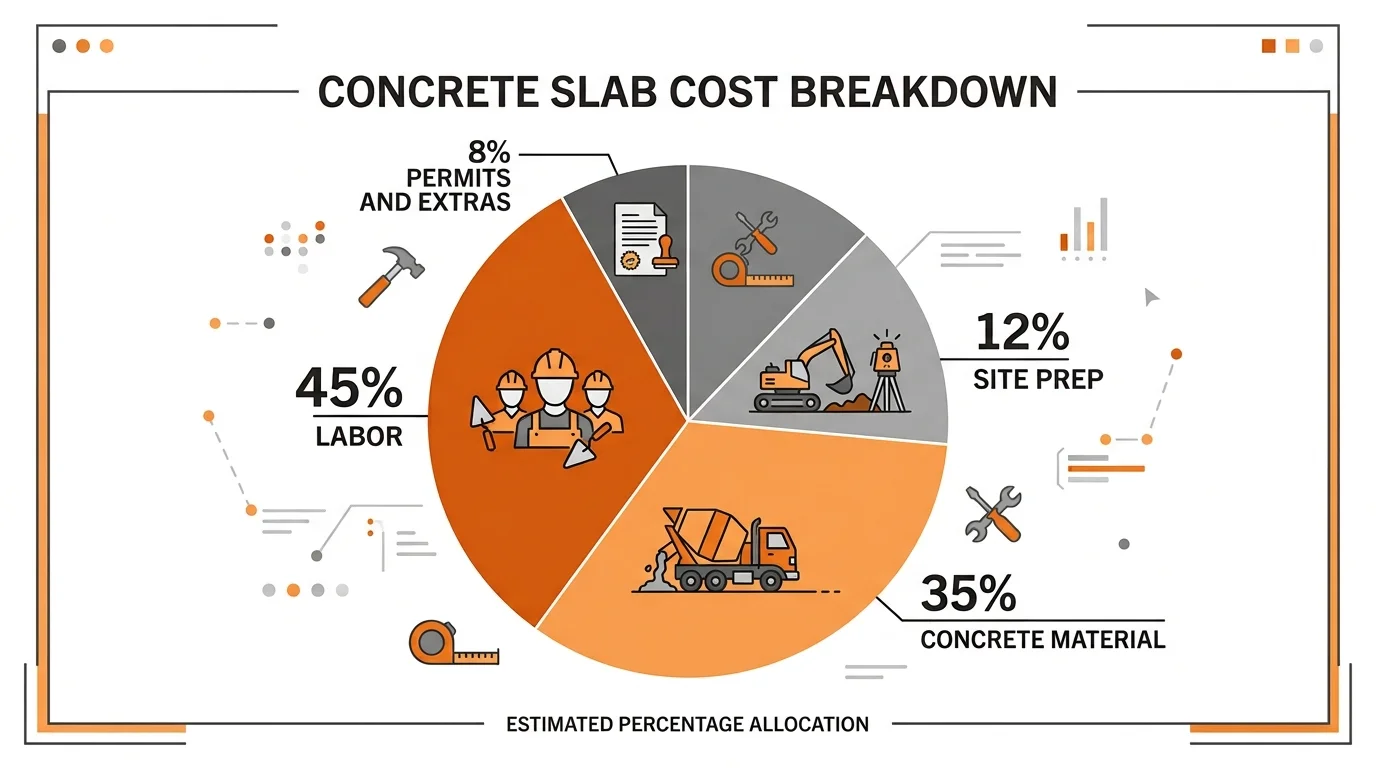
Understanding where your money goes helps you budget accurately and avoid surprises. Here's what drives the total cost:
1. Concrete Material
The concrete itself costs $150–$190 per cubic yard delivered, with $175 being the national average for standard 4,000 PSI residential mix. Higher PSI mixes (5,000+) cost $15–$25 more per yard but aren't necessary for most residential slabs.
If you need less than a full truck (10 cubic yards), you'll pay a short-load fee of $40–$110. For small slabs under 200 sq ft, bagged concrete ($5–$8 per 80lb bag) may be more practical. Our Concrete Slab Cost by Size Guide covers pricing in detail.
2. Labor
Labor accounts for 40–50% of the total cost. Professional concrete finishers charge $2–$5 per square foot depending on region, complexity, and finish type. This includes forming, pouring, finishing, and cleanup.
Decorative finishes add significantly: stamped concrete adds $5–$15/sq ft, stained concrete adds $2–$8/sq ft, and exposed aggregate adds $3–$6/sq ft over a basic broom finish.
3. Site Preparation
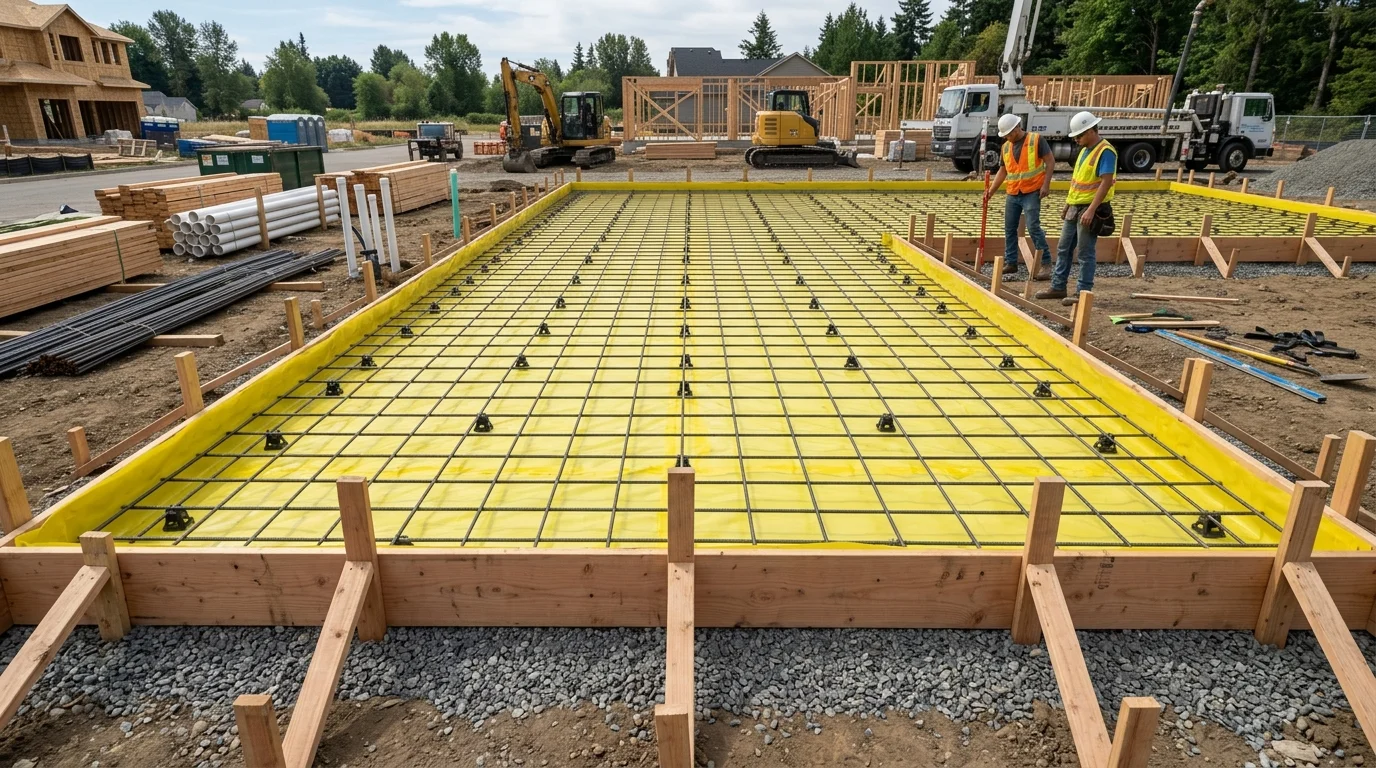
Site prep is often overlooked — and it's not optional. Proper preparation prevents cracking, settling, and drainage problems down the road.
| Prep Work | Typical Cost |
|---|---|
| Basic grading and leveling | $500 – $1,500 |
| Excavation (removing topsoil) | $1,000 – $3,500 |
| Gravel sub-base (4–6 inches) | $1 – $3 per sq ft |
| Old concrete removal | $2 – $6 per sq ft |
| Permits | $50 – $1,000 |
If you're also working with gravel or stone for the sub-base, check our Landscape Rock Calculator to estimate material quantities.
4. Reinforcement
Concrete is strong under compression but cracks under tension. Reinforcement prevents cracking and structural failure.
| Type | Cost | Best For |
|---|---|---|
| Wire mesh | $0.40 – $1.00 per sq ft | Patios, shed pads, light-duty slabs |
| Rebar (half-inch #4) | $1.40 – $1.85 per linear foot | Driveways, garages, foundations |
| Fiber mesh | $10 – $15 per cubic yard | Crack resistance, general use |
5. Delivery and Equipment
A standard concrete truck holds 10 cubic yards — enough for a 20×20 slab at 4.5 inches thick. Additional costs to factor in:
- Concrete pump: $400–$800 per day (needed if the truck can't reach the pour site)
- Vapor barrier: $0.50–$1.00 per sq ft (required in some jurisdictions)
- Expansion joints: $0.50–$1.50 per linear foot
The Formula: How to Calculate It Yourself
If you want to do the math manually, here's the step-by-step process:
Length (ft) × Width (ft) = Square Feet. Example: 20 × 20 = 400 sq ft.
Divide inches by 12. Example: 4 inches ÷ 12 = 0.33 ft. Example: 6 inches ÷ 12 = 0.5 ft.
Square Feet × Thickness (ft) = Cubic Feet. Example: 400 × 0.33 = 132 cubic feet.
Cubic Feet ÷ 27 = Cubic Yards. Example: 132 ÷ 27 = 4.89 cubic yards.
4.89 × 1.10 = 5.38 cubic yards. Always round up — running short mid-pour is expensive.
5.38 × $180 = $968 for concrete material. Add labor ($2–$5/sq ft) and extras for total project cost.
Skip the Math — Use Our Calculator
Our Concrete Slab Calculator does all of this automatically. Enter length, width, thickness, and adjust the concrete price per yard. Get instant results: cubic yards, bag count, and total cost. No signup required.
Try the Concrete Slab CalculatorWhat's Included in a Professional Pour?
When a contractor quotes you a price, here's what's typically included — and what's not:
| Included in Standard Quote | Usually Extra |
|---|---|
| Concrete material delivery | Gravel sub-base ($1–$3/sq ft) |
| Form setup and removal | Excavation and grading ($500–$3,500) |
| Basic reinforcement (wire mesh) | Rebar upgrade ($1.40–$1.85/ft) |
| Pouring, leveling, and finishing | Vapor barrier ($0.50–$1.00/sq ft) |
| Basic broom finish | Decorative finishes ($2–$15/sq ft) |
| Cleanup | Permits ($50–$1,000) |
| Concrete pump if needed ($400–$800) |
Pro tip: Always get 3+ detailed written quotes with the same specifications. Ask each contractor to itemize material, labor, and extras so you can compare apples to apples.
Frequently Asked Questions
How much does it cost to pour a 20×20 concrete slab?
A 20×20 concrete slab (400 sq ft) costs $2,400 to $4,800 for a professionally installed 4-inch slab. Material alone runs $790–$965. At 6-inch thickness for a driveway, expect $3,200–$4,400 installed.
Is it cheaper to pour your own concrete?
Yes, DIY saves roughly $900–$1,750 on a 20×20 slab by eliminating labor costs. However, it requires 2–3 days of physical work, proper tools, and at least one helper. Mistakes in mixing, leveling, or finishing can cost more to fix than you saved. DIY makes sense for small slabs under 200 sq ft; hire a pro for driveways and structural work.
How much does a 20×40 concrete slab cost?
A 20×40 slab (800 sq ft) costs $4,800–$9,600 installed at 4-inch thickness, or $7,200–$14,400 at 6-inch thickness. Material alone is $1,380–$1,630 at 4 inches.
How thick should a concrete slab be?
4 inches for patios, walkways, and shed pads. 6 inches for driveways and garage floors. 8 inches for heavy equipment, RV pads, or commercial use. Each inch adds roughly $1–$2 per square foot.
How much concrete do I need for a 10×10 slab?
A 10×10 slab at 4 inches thick needs 1.23 cubic yards (about 1.35 with 10% waste). At 6 inches, you need 1.85 cubic yards. That's roughly 55–60 80lb bags if mixing by hand, or just under 2 cubic yards ordered from a ready-mix supplier.
How long does concrete take to cure?
24–48 hours to walk on, 7 days for light traffic, 28 days for full strength. Keep the surface moist during curing (cover with plastic or spray with water) for the best results. Don't place heavy loads on the slab until after 28 days.
Do I need a permit to pour a concrete slab?
It depends on your location and the project. Most jurisdictions require permits for structural slabs, driveways, and foundations. Small patios and shed pads often don't require permits. Check with your local building department — permits typically cost $50–$1,000.
Can I pour concrete over dirt?
Not recommended. Pouring directly over soil leads to cracking, settling, and drainage problems. Always prepare a proper sub-base: compact the soil, add 4–6 inches of gravel, level it, and then pour. The gravel base costs $1–$3 per sq ft but prevents expensive repairs later.
Data Sources
- HomeAdvisor — Cost to Pour Concrete (2026)
- Angi — Concrete Foundation Cost Data (2026)
- Concrete Network — Concrete Prices (2026)
- HomeBuddy — Concrete Slab Cost Guide (2026)
- RM4L — Concrete Slab Cost Guide (2026)
- National Ready Mixed Concrete Association (NRMCA)
Related Posts
- Concrete Slab Cost in 2026: What the Data Actually Says
- Slab Foundation Cost 2026: Per Sq Ft by House Size
- Concrete Driveway Installation Cost 2026
- Ready Mix Concrete Cost Per Yard 2026: Price Guide
- 20x20 Concrete Slab Cost 2026
- 20x30 Concrete Slab Cost 2026
- 30x30 Concrete Slab Cost 2026
- Concrete Slab Cost by Size: Complete 2026 Guide
- Concrete vs Asphalt Driveway Cost 2026
- How Much Mulch Do I Need? Calculator & Guide
Related Calculators
- Concrete Slab Cost Calculator — Get exact cubic yards, bag count, and total cost
- Mulch & Soil Calculator — Estimate landscaping materials around your slab
- Landscape Rock Calculator — Calculate gravel for the sub-base
- Firewood Cord Calculator — Estimate firewood for your outdoor space